

How to Run a Strategic Alignment Workshop That Works
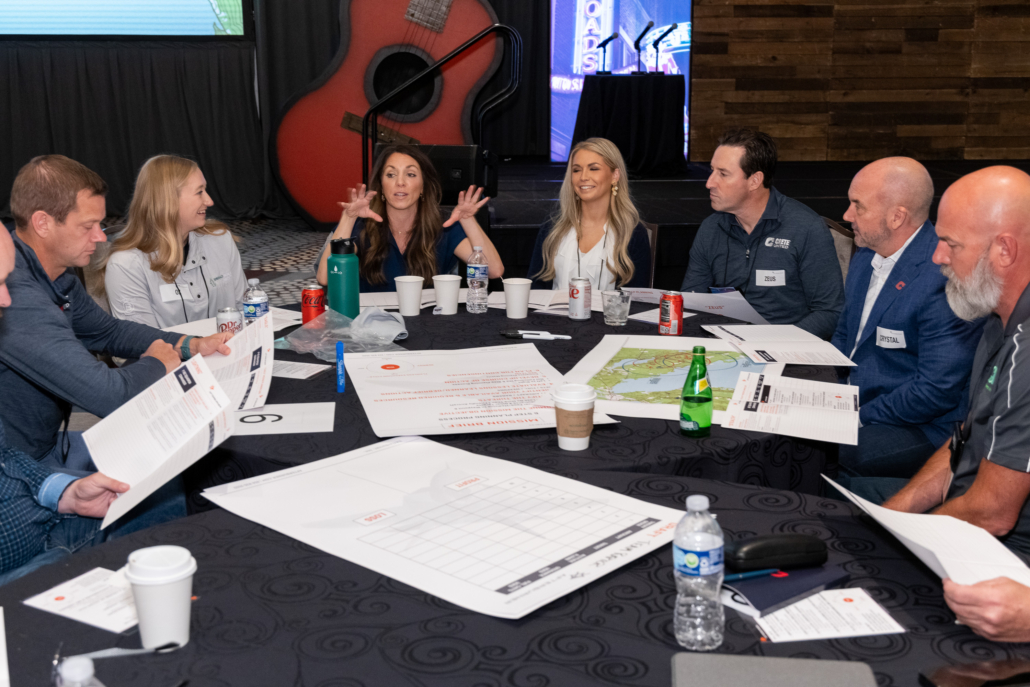
How to Run a Strategic Alignment Workshop That Works
Here’s a story I’ve told more than once because it never stops being relevant.
Early in my time at Afterburner, I sat in on a senior leadership offsite at a Fortune 500 company. Two days. A beautiful resort. Excellent catering. The team walked out energized, with a thick deck of slides and a shared sense of purpose. I checked in with the CEO six weeks later. He told me, with a rueful laugh, that most of the ideas were sitting in a folder no one had opened. Half the team had moved on to the next fire. The other half couldn’t remember which three priorities were supposed to be the priority.
Sound familiar?
A real strategic alignment workshop is the antidote to that cycle. Not the offsite that feels good in the moment and disappears by Monday. The kind that produces a concrete plan, crystal-clear priorities, and an accountability system that actually changes how your team operates when the room clears.
Here’s what that looks like in practice.
What Is a Strategic Alignment Workshop?
A strategic alignment workshop is a structured, dedicated session designed to get your leadership team pointed in the same direction, committed to the same outcomes, and equipped with a system to execute together.
It is not just another meeting with a different venue. It is a focused environment where you tackle the hard strategic questions, make the decisions that typically get avoided in day-to-day operations, and agree on the few things that matter most. Done right, it moves your team from abstract ideas to a unified plan with defined owners, clear timelines, and a system for tracking what happens next.
The goal isn’t inspiration. The goal is execution.
Why Alignment Is the Performance Differentiator
In my experience working across industries from hospitality and logistics to healthcare and publishing, the organizations that consistently outperform their competition aren’t necessarily the ones with the best strategy on paper. They’re the ones where everyone from the executive team down to the front line understands the mission and knows their role in it.
When your leadership team has genuine clarity and commitment to a shared direction, that clarity cascades. Every department can make better decisions because the main objective is visible and understood. Resources go toward the things that matter. Energy stops bleeding into conflicting priorities.
Without alignment, you get the slow, expensive erosion of performance that no one wants to name out loud. Projects stall. Budgets overrun. Good people leave because they can’t see the point of what they’re doing.
The numbers back this up. According to PMI’s Pulse of the Profession research, only 56% of strategic initiatives meet their original goals and business intent, and just 9% of organizations rate themselves as excellent at executing strategy. The same body of research shows that when project benefits are aligned to strategic goals, 57% more initiatives meet their original objectives compared to misaligned organizations.
The fact is, misalignment isn’t just frustrating. It’s expensive. And it’s usually invisible until the damage is done.
What a Good Workshop Must Produce
Let me tell you what I see most often when organizations run these sessions themselves. They get the venue right. They get people in the room. They have great conversations. And then they walk out with a long list of ideas and no clear picture of who does what by when.
A workshop that doesn’t produce tangible outputs is a waste of everyone’s time.
Here’s what you must walk out with.
A High-Definition Destination
In our world, we call this the HDD, which stands for High-Definition Destination. It’s a concept at the core of FLEX (FLawless EXecution), our methodology for translating strategy into disciplined execution.
An HDD isn’t a goal. Goals are nice to achieve. An HDD is a crystal-clear picture of what winning looks like, specific enough that everyone can answer yes or no to a single question: did we arrive? Not “grow the business.” Something like: “Increase market share in our core segment by a defined, measurable amount, by a specific date.” One of our clients built exactly that HDD. They hit it in seven months and exceeded it.
The test is simple. Can everyone on your team describe the destination in one sentence without looking at a document? If not, it isn’t clear enough yet.
Ruthless Prioritization
Your workshop must end with absolute clarity on the three to five strategic priorities that will have the biggest impact on your success. Not ten. Not twenty. Three to five.
That forces the hard conversations, which is exactly the point. Strategic alignment is as much about what you choose not to do as what you commit to.
A System for Accountability
This is the piece that most workshops miss entirely. A plan without an accountability structure is just a wish list.
In our Flawless Leadership℠ FLEX methodology, accountability runs through PBED: Plan, Brief, Execute, Debrief. The Debrief is where most organizations fall apart. They plan, they brief, they execute, and then they move straight to the next mission. No structured review. No learning loop. No course correction.
Every action item from your workshop needs a single owner. A deadline. A definition of what success looks like. And a rhythm of check-ins that keeps the work visible and moving.
Who Needs to Be in the Room
The first strategic decision you make isn’t about the agenda. It’s about the invitation list.
Your senior leadership team is non-negotiable. Their presence signals the seriousness of the work and ensures that decisions are made by the people with the authority to act on them. When the CEO and their direct reports are fully committed, that commitment cascades through the organization. When they’re physically present but mentally somewhere else, the whole room feels it.
Beyond the executive team, include key functional leaders who will be responsible for turning strategy into reality. These are the people who can pressure-test your plan against operational truth. They know where the bodies are buried, where the capacity gaps live, and what has actually been tried before. Including them doesn’t slow you down. It makes the plan survivable.
On group size: the sweet spot is typically 12 to 15 participants. Large enough for diverse perspectives. Small enough for genuine conversation and real decisions. More than 20 and you’ll spend half your time managing the room instead of the strategy.
How to Plan a Workshop That Gets Results
The outcome of your workshop is largely determined before anyone walks through the door. Here’s the framework that works.
Do the Pre-Work
Before the session, have your team complete a structured analysis of your current position. What are your genuine strengths and competitive advantages? Where are you most exposed? What opportunities are you leaving on the table?
This pre-work does two things. It creates a shared baseline so you’re not burning the first hour getting everyone to agree on what’s actually happening. And it shifts the session from theoretical discussion to data-informed decision-making.
Define What a Win Looks Like
Before you design the agenda, answer one question: what, specifically, must you walk out of the room with? Write down one to three non-negotiable outcomes. That clarity becomes the filter for every agenda item, every activity, and every conversation.
Vague objectives produce vague workshops. If you can’t state the output in a single sentence, keep working on it.
Build a Purpose-Driven Agenda
Your agenda is your flight plan. It should move the team from high-level vision to concrete action in a logical sequence. Start broad with mission and competitive landscape. Progressively narrow to specific priorities, owner assignments, and action plans. Each item should be a building block, not just a topic for discussion.
Get the Logistics Right
The environment shapes the quality of thinking. Whenever possible, go off-site. The physical separation from day-to-day operations matters more than people expect. Plan for three to six hours. Anything shorter rarely produces meaningful resolution. Anything longer risks the kind of fatigue where people start agreeing just to end the meeting.
Handle the small things early: materials, technology, food. The goal is for your team to stay fully present in the work, not distracted by logistical gaps.
Activities That Drive Clarity and Commitment
The agenda tells you what to discuss. The activities determine whether that discussion produces decisions or just more debate.
Analyze Your Strategic Position Together
Before you can chart a course, you need shared agreement on where you’re starting. Use a structured framework to get your current position onto the table. Where are you genuinely strong? Where are you exposed? What conditions in your market create real opportunity, and what could derail you?
The goal isn’t to produce a perfect analysis. It’s to build a common understanding that everyone in the room owns.
Align on Goals and Set Priorities
Once you have clarity on the current state, define your desired future. Where do you need to be in one year? Three years? Translate that vision into a handful of clear, measurable objectives. Then do the hard work of prioritization. Debate it. Challenge it. Commit to the few objectives that will have the greatest impact.
This is where your HDD gets its definition.
Surface What’s Helping and What’s Hurting
For each of your key goals, ask two direct questions. What will help you get there? And what stands in the way? This moves the conversation from strategy to execution reality. It surfaces risks before they become crises and helps you build a plan that’s not just ambitious but durable.
Make Decisions and Assign Owners
A workshop without clear decisions is just a long meeting. Define your decision-making process upfront. Who has the final authority on which calls? How will disagreements be resolved?
Then, for every action that comes out of the session, assign a single owner. Not a committee. One person who is responsible for seeing it through. This transforms the workshop’s ideas into a concrete plan with accountable leaders ready to execute.
How to Lead Discussions That Actually Matter
Great facilitation is the difference between a workshop that produces a dusty report and one that changes how your team operates.
Create Space for Honest Debate
Real alignment can’t happen without genuine conversation. And genuine conversation requires an environment where people feel safe enough to challenge the direction, ask hard questions, and disagree with the most senior person in the room.
Set the ground rules early. Challenge the problem, not the person. If you’re leading the session, consider speaking last on key questions to avoid anchoring the group on your view before others have contributed. The unvarnished perspective you’re looking for won’t surface unless people believe it’s safe to give it.
Manage Conflict Productively
If everyone in the room agrees on everything immediately, you’re probably not digging deep enough. Disagreement is a sign that you’re having the right conversation. The job isn’t to eliminate it. It’s to channel it toward a decision.
When tensions rise, bring the focus back to the mission. What are we actually trying to achieve here? That reframe almost always moves the conversation from positional to practical.
For particularly contentious issues, a neutral external facilitator can be worth every dollar. A skilled third party can navigate team dynamics and ensure every perspective gets a fair hearing without the politics that can distort internal facilitation.
Keep It Moving
Momentum matters. The fastest way to kill a workshop is to spend 90 minutes on a single issue while the rest of the agenda waits. A good facilitator knows when to push for a decision and when to park something for a separate conversation.
At the end of every agenda item, ask two questions: what did we just decide? And who is responsible for the next step? That practice turns discussion into commitment.
The Work That Happens After the Room Clears
Here’s the thing. The workshop isn’t the finish line. It’s the starting line.
The most critical phase of your strategic alignment effort is what you do in the hours and days that follow. Without a deliberate plan for follow-through, the energy from the session dissipates fast and your team slides back into old habits.
Document Everything Before Anyone Leaves
Before the session ends, create a shared record of every decision made and every action assigned. This document becomes the single source of truth. It eliminates the “I thought we agreed on X” conversations that otherwise surface within a week.
Be specific. For each action item: what is the task, who owns it, what does success look like, and when is it due.
Assign Clear Ownership
An action item without a name next to it is an orphan. It will not get done. Assign a single owner to every commitment that comes out of the workshop. One person who is accountable for progress, not a team, not a group, one person.
Build Your Communication Plan
The leaders in the room are now aligned. The rest of the organization isn’t yet. That gap needs to close deliberately. Build a communication plan that cascades the key decisions down through the business. What does each team need to know? How will managers translate the strategic priorities into team-level action? What’s the timeline for those conversations?
Strategic alignment that stays in the executive suite isn’t alignment. It’s a secret.
Set Your Follow-Up Rhythm Now
Before anyone leaves the room, schedule the first follow-up. This creates accountability immediately and signals that the workshop was a beginning, not a one-off event.
Your follow-up rhythm should be built into your regular leadership cadence. Weekly or bi-weekly check-ins on strategic initiatives keep them visible and allow you to catch problems before they compound.
This is what we call the X-Gap review in our FLEX methodology: a structured look across multiple missions to identify patterns, surface root causes, and make systemic adjustments. Weekly X-Gap reviews catch problems early. Monthly ones fix them before they compound. Quarterly ones ensure you’re still pointed at the right HDD.
Turning the Workshop Into an Operating System
The biggest mistake I see is treating the strategic alignment workshop as an event. You run it, you leave energized, and three months later the momentum has gone.
The workshop is only valuable if it becomes the launchpad for a new way of operating. That means weaving the outputs into your team’s daily and weekly rhythm. Every project kickoff connects back to the strategic priorities agreed in the workshop. Every decision gets filtered through the HDD. Every review cycle uses a structured debrief to assess what’s working and what needs to change.
This is how you build a culture of execution. Not through a single event, but through consistent, disciplined practice that becomes second nature over time.
When alignment becomes a continuous operating rhythm rather than an annual offsite, your team stops executing on instructions and starts executing on shared understanding. That’s the difference between a team that hits its targets and one that builds something lasting.
Explore the Afterburner 90-Day Accelerator to embed FLEX across your organization in a structured 12-week program.
Common Pitfalls That Kill Alignment
Unclear objectives going in. Walking into a workshop without defined outcomes is like launching a mission without a destination. You’ll burn time and resources without arriving anywhere meaningful. Define your non-negotiable outputs before you book the room.
Leaders who are physically present but not genuinely committed. If your most senior leaders appear disengaged, the message to the group is clear. Engagement is more than attendance. It’s active participation and visible commitment to the plan that follows.
Treating alignment as a one-time event. The most common failure point. Decisions made in a workshop will erode without a deliberate system for reinforcement. The work of alignment is ongoing, not episodic.
Frequently Asked Questions
What is a strategic alignment workshop? A strategic alignment workshop is a structured, facilitated session designed to get a leadership team to agree on strategic priorities, make key decisions, and build a concrete plan for execution. The goal is not inspiration or discussion for its own sake. It is a unified, actionable direction with clear owners and a system for accountability.
How is a strategic alignment workshop different from a regular leadership meeting? Your regular meetings are for running the business. A strategic alignment workshop is for shaping its future. It is a dedicated, distraction-free session where you step away from daily operations and focus entirely on the big picture: where you’re going, why you’re going there, and exactly how you’ll get there together.
What should we actually produce at the end of the workshop? At minimum: a clearly defined High-Definition Destination, three to five ruthlessly prioritized strategic goals, a single named owner for every action item, and a scheduled rhythm of follow-up check-ins. If you leave without those four things, run the workshop again.
How many people should be in the room? Your senior leadership team is non-negotiable. Beyond that, include key functional leaders who will drive execution. The ideal group size is 12 to 15 participants. Large enough for diverse perspectives. Small enough for genuine discussion and real decisions.
How do we make sure the plan doesn’t end up on a shelf? Treat the workshop as the starting line, not the finish line. Before anyone leaves the room, document every decision, assign a single owner to every action, and schedule the first follow-up meeting. Then build a regular review cadence into your leadership rhythm. The strategy stays alive when it becomes part of how your team operates every week, not something you revisit once a year.

