
What The CEO Coach Does & How to Find One
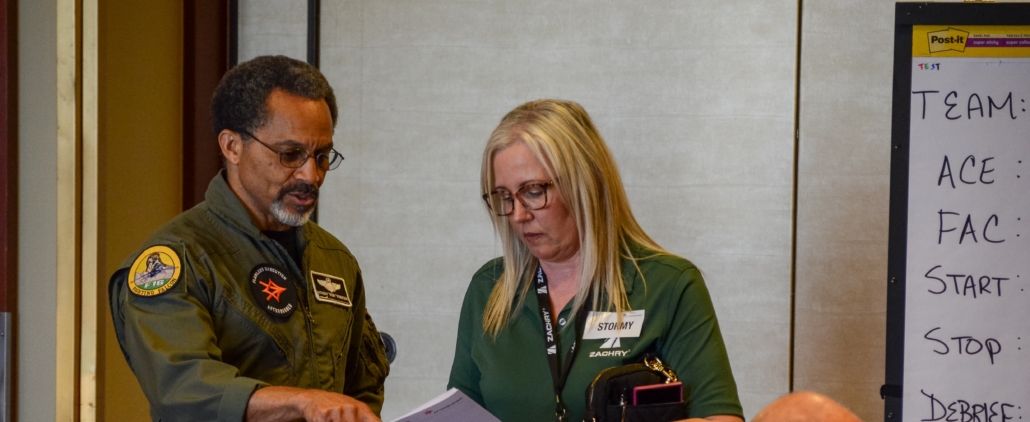
CEO Coach: A Fighter Pilot’s Guide to Your Leadership Edge
What Is a CEO Coach and Why Should You Care?
A CEO coach is a confidential strategic partner, often a former CEO or senior executive, who provides objective, external guidance focused on your leadership performance, strategic clarity, and the gap between your vision and your team’s ability to execute it. Unlike a consultant who hands you a plan or a mentor offering friendly advice, a coach’s only agenda is yours. They ask the questions no one inside your organization will ask, and they hold you accountable for turning self-awareness into action.
Here’s the thing. I’ve worked with over a hundred thousand leaders through Afterburner, CEOs of billion-dollar companies, startup founders running on fumes and willpower, mid-level managers trying to lead a team while their own boss is stuck in the spiral. And every single one of them, at some point, needed someone in their corner who wasn’t entangled in the politics, the org chart, or the quarterly pressure. That someone is a coach.
I’m Christian “Boo” Boucousis, CEO of Afterburner. I spent over a decade flying F/A-18 Hornets for the Royal Australian Air Force before a chronic autoimmune condition called ankylosing spondylitis grounded me permanently. I rebuilt from zero, founding a business in Afghanistan, then spending twenty years applying fighter pilot methodology to business leadership across hospitality, publishing, logistics, healthcare, and more. I bought Afterburner in 2024 because I believe the Fighter Pilot Mindset℠, and the coaching that installs it, is the single biggest lever an organization has to drive profound change.
Let me tell you what I’ve learned about what a great coach actually does, and what most people get wrong about the whole thing.
Why the Best Leaders Have a Coach
Let me be direct: the idea of hiring a coach can feel like an admission that something is broken. I get it. But that’s backward thinking, and it’s one of the most persistent myths in executive leadership.
The best athletes on the planet have coaches. Not because they’re failing. Because they’re obsessed with getting one percent better. The same applies to CEOs.
According to the RHR International CEO Snapshot Survey, fifty percent of CEOs report feeling lonely in their role, and sixty-one percent believe it hinders their performance. Seventy-two percent of leaders report feeling “used up” at the end of the workday. Fifty-six percent reported burnout in 2024, up from fifty-two percent the year before. Those numbers aren’t rising because leaders are getting weaker. They’re rising because the pressure is accelerating, and most leaders are navigating it alone.
In our world, we’d never send a pilot on a combat mission without a wingman. Someone watching your six o’clock, the blind spot behind you that you can’t see no matter how hard you turn your head. A coach is that wingman for the C-suite. They provide the external perspective that’s nearly impossible to find inside your own organization. You can’t exactly vent to your direct reports about your uncertainty, and you shouldn’t brainstorm your development areas with the board.
A coach fills that vacuum. Not with generic advice, but with structured accountability and a framework for getting better, every single cycle.
The Unique Pressures You’re Navigating
If you’re a CEO, you already know this: every major decision, risk, and opportunity ultimately lands on your desk. Success demands more than sharp business skills. It requires self-awareness, emotional intelligence, and the ability to lead people toward a future that doesn’t yet exist while growing with them along the way.
That’s my working definition of leadership, by the way. I wrestled with it for a long time while writing Flawless Leadership℠. And when you frame it that way, you realize something important: leadership is actually pretty hard. Like all hard things, it requires training, preparation, and investment.
Yet US companies spend somewhere in the vicinity of twenty-four billion dollars on leadership development, and eighty percent of people in business still don’t have faith in their leadership. That ROI drives me crazy. It doesn’t need to be like that.
What a CEO Coach Actually Does
A coach doesn’t give you the answers. They ask the right questions so you find the answers yourself. Their work is focused on building your capabilities, your capacity to lead, not creating dependency.
In practice, a coach helps you identify blind spots in your decision-making and leadership style. They build frameworks for handling pressure and managing complexity. They refine your communication to better inspire and align your teams. And they hold you accountable to your most important commitments, both personal and professional.
The goal is to make you more effective long after the coaching engagement ends. If a coach creates a situation where you need them forever, they’ve failed.
The Pattern I See in Every Leader
Over the last ten years, through keynotes, workshops, coaching, and executive consulting at Afterburner, I’ve noticed something. Every leader, regardless of industry, geography, or the specific challenge they’re facing, follows the same pattern. I call it the Perfection Death Spiral.
It runs in three predictable stages.
Stage one is perfectionism. Not the humble-brag kind you put on a resume. The deep, structural kind that was installed in you by every system you’ve ever been part of. School rewarded the right answer and punished the wrong one. Your parents praised outcomes more than effort. The organizations you grew up in promoted the overworker and celebrated the hero who pulled the all-nighter. Your entire conditioning taught you one thing: your value is inseparable from your output.
Stage two is control. Because the standard is impossible, you try to close the gap the only way your brain knows how. You grip tighter. You stop trusting anyone else with the important stuff. You micromanage without calling it micromanaging. Research published in the Leadership & Organization Development Journal found that the vast majority of micromanagers are completely unaware of the impact their style has on their team. The spiral disguises itself as thoroughness.
Stage three is overwhelm. The control is unsustainable. You’re running on fumes. Your patience is shorter than it used to be. Your team has stopped bringing you ideas because the last three got rewritten. The business depends entirely on you, not because you’re indispensable, but because you’ve made yourself a single point of failure.
Perfectionism to control to overwhelm. Always the same chain. Only the problems change.
Here’s what a great coach does: they help you see the spiral before it completes. They give you the tools to interrupt the cycle, not with more effort, but with a different system. That’s the real value of coaching. Not fixing what’s broken. Breaking the pattern that’s been running your leadership on autopilot.
Coach vs. Consultant: Know the Difference
People confuse these two roles constantly, and it matters. A consultant is hired to provide specific answers and solutions to a business problem. They analyze your operations and hand you a new strategic plan. Project-based, deliverable-focused. That’s valuable work.
A coach does something fundamentally different. They focus on developing you, your ability to create the plan, lead your team through it, and learn from the outcomes. A consultant fixes the immediate problem. A coach builds the leader who can solve future problems.
Think of it this way: a consultant gives you a fish. A coach teaches you how to fish, then holds you accountable for actually going fishing instead of just talking about it.
At Afterburner, our Flawless Execution Coaching is designed to install a repeatable framework, not just temporary advice. The framework is FLEX: FLawless EXecution, a methodology engineered from the fighter pilot community and derived from the same operational loop the US Air Force has used for over sixty years. If it’s kept aircrew alive at twelve hundred miles per hour, it’ll work in your boardroom.
How to Find the Right CEO Coach
Finding the right coach is less like hiring an employee and more like choosing a co-pilot for a high-stakes mission. The wrong coach is a waste of time and money, generic advice that doesn’t stick. The right one can reshape your leadership, your team, and your bottom line.
It comes down to three things: experience, framework, and fit.
Vet Their Experience
A great coach has real-world scars and successes, not just certifications. Look for someone who has led at the executive level, ideally as a CEO or senior operator. They need to understand the weight of your decisions because they’ve carried similar weight themselves.
Ask for case studies. Speak to former clients. And pay attention to emotional intelligence. This isn’t a one-size-fits-all relationship. You need someone you can be transparent with, someone whose feedback you’ll actually listen to rather than politely ignore.
Demand a Framework
A coach without a proven system is just an expensive friend. Before you sign anything, ask them directly: How do you work? What tools and assessments do you use? How will we set clear goals and measure success?
A credible coach will have a repeatable methodology for diagnosing issues, creating a plan, and tracking progress. They should be able to show you their approach and explain exactly how it closes the gap between your strategy and your results.
At Afterburner, that framework is FLEX, built on four phases: Plan, Brief, Execute, Debrief (PBED). Every engagement starts with a High-Definition Destination (HDD), a crystal-clear, measurable picture of what success looks like. Not “improve leadership” but a specific, binary outcome you can objectively measure. Then we run the cycle: plan the mission, brief it so everyone understands their role, execute with discipline, and debrief using ORCA (Objective-Result-Cause-Action) to feed the learning forward.
One percent better per day doesn’t sound like much. Compounded daily, it makes you thirty-seven times better in a year. That’s the accelerated learning curve, and it’s what separates sustainable growth from heroic effort.
Ensure the Fit
The coach must fit your context. While a great leadership framework is industry-agnostic, a coach who understands the speed of your market and the nature of your challenges will be far more effective. Beyond industry knowledge, consider the cultural fit. Is their style aligned with your values? The goal is a partnership built on trust, the kind of trust where you can admit what you don’t know and the coach can tell you what you don’t want to hear.
Understanding the Cost and ROI of CEO Coaching
Let’s talk about the bottom line, because that’s where the conversation always ends up.
The cost of high-caliber CEO coaching ranges from ten thousand dollars for a short-term engagement to well over one hundred thousand dollars for a comprehensive, year-long partnership. The structure varies: hourly, packages, or monthly retainers. The right model depends on your goals and the depth of support you need.
Several factors influence the investment: the coach’s experience and track record, the scope and complexity of the engagement, the frequency of sessions, and access to the coach between meetings. A seasoned coach who has led in high-stakes environments will command a higher fee than someone new to the field. You’re paying for judgment, not just time.
How to Measure the Return
Here’s the thing about ROI: it goes beyond feeling better about your leadership. It’s about tracking tangible business outcomes.
Start simple: ROI (%) = (Net Benefits / Coaching Cost) x 100. If a fifty-thousand-dollar engagement helps you identify an operational inefficiency that saves the company five hundred thousand dollars, that’s a nine hundred percent return. These net benefits can come from increased revenue, improved margins, or cost savings.
But don’t stop at the hard numbers. Consider what McKinsey found about high-performing leaders in complex roles: they deliver eight hundred percent more impact than their average peers. Each exceptional leader’s output equates to twelve employees. Flip that around: suboptimal leadership costs you the equivalent of twelve additional headcount, every year, invisibly.
A great coach doesn’t just improve your performance. They help you become the kind of leader who makes everyone around you better. When you calculate the full ROI, account for team alignment, decision-making speed, employee retention, and the prevention of costly strategic mistakes. Those are often the leading indicators of long-term financial success.
Three Myths That Keep Leaders From Getting Coached
Myth: Coaching Is Only for Leaders in Trouble
This is the most damaging misconception. The best athletes in the world have coaches not because they’re failing but because they’re committed to staying at the top of their game. CEO coaching is a proactive strategy for high-performers who know there’s another level to reach. Our approach is built on this idea: continuous improvement, one percent per day, is what separates good leaders from great ones.
Myth: A Coach Is Just Another Consultant
Different roles, different outcomes. A consultant delivers a new process. A coach develops your capacity to create better processes and lead your team through them. Consulting is project-based. Coaching builds long-term capability. Our Flawless Execution Coaching installs a repeatable system, FLEX, that stays with you and your team long after the engagement ends.
Myth: It Takes Too Much Time and Money
What’s the cost of not getting coached? Think about the price of a misaligned team, a failed strategic initiative, or high executive turnover. A great coach helps you make better, faster decisions. That saves incredible time and resources. The investment pays for itself, often many times over, by preventing the errors that come from leading in isolation.
Signs It’s Time to Bring in a Coach
You might be a candidate for coaching if any of these resonate:
Your company is growing or changing fast, and your old leadership style isn’t keeping up. You struggle to get your leadership team aligned and executing on the same strategic priorities. There’s a persistent gap between your strategy and your results. You feel like you’ve hit a plateau and need a new perspective to challenge your thinking. Or you need to build a more robust strategic planning and execution rhythm within your organization.
If you recognize yourself in any of those, you’re not broken. You’re ready. There’s a difference.
The Afterburner Approach
I’ll tell you what we do differently, because I think it matters.
Our coaching isn’t about abstract leadership theory or endless conversations about feelings. It’s a structured system designed to turn your executive team into a high-performing unit. We install the FLEX framework, the same Plan-Brief-Execute-Debrief cycle that fighter pilots have used for over sixty years, and we adapt it to your specific context, your industry, and your challenges.
The foundation is the Three Ms: Mindset, Method, and Moments. Mindset is the internal rewiring, breaking the Perfection Death Spiral and building the Biases, Beliefs, and Behaviors (the Three B’s) that drive sustainable performance. Method is FLEX, the execution system that replaces the illusion of control with real capability. Moments is the awareness to lead with intention across three distinct layers: People, Impact, and Now.
We don’t just coach you. We equip your entire leadership team with a shared process for planning, executing, and learning. This creates alignment and a sustainable rhythm for performance that lasts.
The goal isn’t to make you dependent on us. It’s to make you and your team so effective that you don’t need us anymore. That’s how you know it worked.
Frequently Asked Questions
What does a CEO coach actually do? A CEO coach provides confidential, objective guidance focused on your leadership performance and strategic clarity. They help you identify blind spots, build decision-making frameworks, and close the gap between your strategy and your team’s ability to execute. Unlike a consultant who delivers a plan, a coach develops your capacity to create and execute better plans on your own.
I’m already a successful CEO. Why would I need a coach? That’s exactly why you should consider one. The most accomplished performers in every field rely on coaches not because they’re failing, but because they’re committed to continuous improvement. A coach sharpens your edge, surfaces the blind spots that success can create, and helps you build a sustainable system for leading under pressure.
How is a CEO coach different from a mentor or board member? It comes down to agenda. A mentor offers advice based on their personal journey, valuable but subjective. A board member has a fiduciary duty to the company and its shareholders. A coach has only one agenda: yours. They provide a completely confidential space to work through your toughest challenges without competing interests or internal politics.
How do I justify the cost of coaching to my board or investors? Frame it as a direct investment in the company’s most critical asset: its leadership. McKinsey’s research found that high-performing leaders in complex roles deliver eight hundred percent more impact than average. Effective coaching helps you make better decisions, improve team alignment, and close execution gaps. That translates into faster growth, higher profitability, and the prevention of costly strategic mistakes.
Will a coach who hasn’t worked in my specific industry be effective? Often, they’re even more effective. The core challenges of executive leadership, managing team dynamics, driving accountability, making high-stakes decisions under pressure, are universal. A great coach brings a proven framework that transcends industry specifics. Their outside perspective is often exactly what’s needed to challenge the “that’s how we’ve always done it” assumptions that hold organizations back.