

5 Top Leadership Training Companies for Business Impact
Best Leadership Training Companies: How to Find a Partner That Actually Changes How Your Team Executes
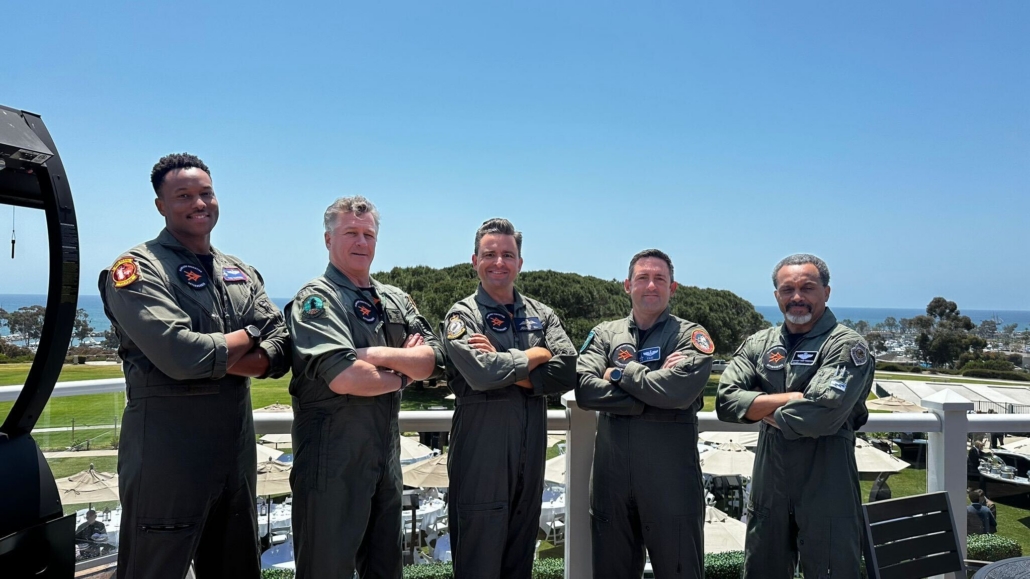
I’m Christian “Boo” Boucousis, CEO of Afterburner and a former Royal Australian Air Force F/A-18 Hornet fighter pilot. I’ve spent two decades watching organizations pour money into leadership programs that generate a buzz on Friday and evaporate by Monday. The best leadership training companies don’t deliver inspiration. They install an operating system. A repeatable framework your teams can use to plan, execute, and learn faster than the competition. That’s the difference between a motivational sugar hit and a genuine competitive advantage. In this guide, I’ll walk you through what separates the top leadership development programs from the rest, introduce you to the companies I believe are worth your time, and show you how to measure whether any of it is actually working.
What Makes a Leadership Training Company Worth Your Money?
Here’s the thing. Most leadership training fails. Not because the content is bad, but because it doesn’t stick. A two-day offsite feels great in the moment. The team is nodding, the energy is high, someone writes something meaningful on a whiteboard. Then everyone goes back to their desks and nothing changes.
I’ve seen it hundreds of times. The issue isn’t motivation. The issue is method.
The companies that actually move the needle share three characteristics. They have a proven, repeatable framework, not just interesting ideas but a system your team can run on Monday morning. They measure results in business outcomes, not smile sheets. And they customize the experience so it solves your problems, not some hypothetical case study from a textbook.
Let me break each of those down.
A Proven, Repeatable Framework
In the fighter pilot world, we don’t rely on talent or inspiration to get the job done at 1,200 miles per hour. We rely on method. A closed-loop system that connects intention to execution to learning: Plan, Brief, Execute, Debrief. It’s the same loop whether you’re flying combat missions or running a quarterly business review.
The best leadership training companies give you something similar. A framework your entire organization can learn, practice, and scale. Not a set of good ideas scattered across a binder. A recipe. A system where anyone in the business can say, “Here’s what we’re trying to accomplish, here’s what happened, here’s why, and here’s what we’re doing about it,” and everyone understands the structure behind those words.
Without that common operating language, you’re just hoping your leaders figure it out on their own. And hope, as we say in the cockpit, is not a strategy.
Measurable Business Impact
If you can’t measure it, you can’t improve it. That’s not a platitude. It’s the foundation of every debrief I’ve ever run. A good leadership partner doesn’t just ask “Did people enjoy the training?” They ask, “Did the training change behavior? Did behavior change results?”
Measuring the effectiveness of a leadership program means tracking changes in team alignment, decision speed, project cycle times, retention, and revenue. The companies worth hiring can connect the dots between what they teach and what shows up on your P&L. If your training partner can’t do that, you’re buying entertainment, not development.
Alignment with Your Organization’s Real Challenges
No two organizations break in the same place. Some need better planning. Some need faster debriefs. Some need to stop having meetings that accomplish nothing and start running briefs that create shared understanding. A one-size-fits-all program is a one-size-fits-nobody program.
The best partners diagnose before they prescribe. They learn your business, identify the gaps, and build a program that addresses the specific friction slowing your team down. If someone shows up with a canned deck and no questions about your strategy, your culture, or your biggest failure last quarter, walk away.
The Top Leadership Training Companies Worth Evaluating
I’ve spent twenty years in this industry, first as a practitioner applying fighter pilot methodology to businesses across hospitality, publishing, logistics, and healthcare, and then as the owner of one of the most established leadership development firms in the world. So I have a bias. I’ll be upfront about that. But I’ve also studied every serious player in this space, and here’s my honest assessment of who’s doing work that matters.
Afterburner: Flawless Execution℠ for High-Stakes Teams
I’ll start with what I know best.
Afterburner was founded in 1996 by Jim “Murph” Murphy, an F-15C fighter pilot who had the insight to take the same tools, processes, and Fighter Pilot Mindset℠ that keep aircrew alive and adapt them for the corporate world. I bought the company in 2024 after a decade of applying these exact methods to my own business ventures. Since that first day twenty-eight years ago, we’ve trained more than 2.3 million leaders and worked with 94% of the Fortune 1000, brands like Microsoft, American Express, Marriott, IBM, McDonald’s, and the New York Giants.
Our methodology is built on FLEX, which stands for FLawless EXecution, a system derived from the OODA loop that the US Air Force has used for over sixty years. FLEX runs on four phases we call PBED: Plan, Brief, Execute, Debrief. It’s a closed loop, not a checklist. Organizations that use FLEX “missionize” their business. Everything has a purpose. Action replaces busywork. Focus replaces distraction. Destinations replace vague goals.
Here’s the key differentiator: Flawless Execution isn’t perfect execution. It’s a way of thinking and working that improves the probability of delivering your desired outcome, no matter how ambitious. One percent better per mission doesn’t sound like much. Compounded daily, it makes you thirty-seven times better in a year. That’s the accelerated learning curve, and it’s what separates dynasties from also-rans.
Our programs range from high-impact keynotes and immersive workshops to our 90-Day Accelerator, which installs the full FLEX cadence across your organization. The workshops aren’t academic exercises. They’re working sessions where your team applies the framework to your real challenges and leaves with a plan they can execute immediately.
Best for: Organizations operating in high-stakes, high-speed environments where execution is critical. Companies undergoing transformation, experiencing rapid growth, or struggling with the gap between strategy and results.
FranklinCovey: Principle-Centered Leadership at Scale
FranklinCovey built their empire on The 7 Habits of Highly Effective People, and that philosophical core still drives everything they do. Their approach starts from the inside out: character, integrity, personal effectiveness. Then it expands into team dynamics and organizational culture.
I respect the depth of their thinking. The habits provide a genuine sequence for growth, moving from personal discipline to collaboration. They operate in over 160 countries, which gives them serious global reach, and they offer live, online, and on-demand formats that make it accessible for organizations of any size.
Where FranklinCovey differs from what we do at Afterburner is in the emphasis. Their work is centered on cultural transformation and trust-building rather than operational execution cadence. If your primary challenge is building a cohesive culture where people operate from shared principles, FranklinCovey is a strong contender. If your primary challenge is closing the gap between your strategy and your results, they’re probably not your first call.
Best for: Organizations focused on long-term cultural transformation where trust, character development, and sustainable engagement are the top priorities.
Center for Creative Leadership (CCL): Research-Driven Development
CCL has been studying leadership for over fifty years, and they bring an academic rigor that few others can match. Their programs are grounded in evidence, tested, refined, and built on decades of data about what actually makes leaders effective. They’ve been consistently ranked among the world’s top providers of leadership training.
What I appreciate about CCL is their commitment to the science. They don’t sell hype. They sell research translated into practical tools. For organizations that value data-driven approaches and want a program with academic validation behind it, CCL delivers that credibility. They also have extensive experience with Fortune 1000 companies and can execute global rollouts consistently.
The trade-off is speed. Research-heavy programs tend to be methodical rather than action-oriented. If you need your team executing differently next week, CCL’s pace may not match your urgency. But for building a deep, evidence-based leadership bench over time, they’re hard to beat.
Best for: Innovation-driven organizations that value research, data, and a methodical approach to building adaptable leaders over the long term.
Dale Carnegie Training: Confidence and Communication Fundamentals
Dale Carnegie has been in the game for over a century, and their focus has stayed remarkably consistent: confidence, communication, and human relations. Their method is practical and personal, pulling people out of their comfort zones in a supportive environment and teaching them to speak with clarity and build rapport.
For foundational people skills like public speaking, presentation, and persuasion, Carnegie’s approach is time-tested and scalable. Their global network of certified trainers delivers a consistent curriculum across geographies, which matters for large enterprises implementing company-wide programs.
Where Carnegie doesn’t compete is in strategic execution frameworks. They build better communicators, not better operating systems. Think of it as one important piece of the leadership puzzle, not the whole picture.
Best for: Sales teams, customer-facing roles, and organizations looking to build a baseline of interpersonal confidence and communication skill across the enterprise.
McKinsey Leadership Institute: Strategic Executive Development
McKinsey brings their consulting DNA to leadership development, which means analytics, strategic frameworks, and a laser focus on the C-suite. Their programs are intentionally designed for senior executives, targeted interventions at the top of the house during enterprise-scale transformations. Their Connected Leaders Academy has engaged over 100,000 participants and includes an Executive Leadership Program designed specifically for leaders preparing to ascend to C-suite roles.
They use a data-driven approach to assess leadership effectiveness, identify gaps, and measure program impact on organizational performance. McKinsey reports that organizations in the top 25% for management practices see 21 times higher average returns than those in the bottom quartile, which is the kind of evidence base they bring to their program design.
The McKinsey approach is not a company-wide solution. It’s concentrated, expensive, and designed for moments when the stakes are highest: a post-merger integration, a major strategic pivot, a new CEO transition. If that’s your situation, the investment may be justified. For broader leadership development across multiple levels, you’ll need a different partner or a complementary program alongside it.
Best for: Large enterprises undergoing major transformations who need to align and upskill senior executives for a specific strategic challenge.
Which Training Methods Actually Get Results?
Let me tell you what I’ve learned after two decades of doing this work. The methods that stick are the ones that make your people solve real problems during the training, not after it.
Solving Real Problems in Real Time
Abstract concepts evaporate under pressure. That’s why the most powerful training method uses your company’s actual challenges as the training ground. When a team applies a new framework to a live initiative, their Q3 product launch, their broken handoff process, their merger integration plan, the learning embeds in muscle memory.
At Afterburner, every workshop is designed this way. We don’t teach theory and hope you apply it later. We put your team through the FLEX cycle, Plan, Brief, Execute, Debrief, on the mission that’s keeping your CEO up at night. By the time we’re done, you don’t just understand the framework. You’ve already used it to produce a result.
Coaching and Mentorship
Group training establishes the common language. Individual coaching is where leaders confront their blind spots. A good coach holds you accountable for the changes you committed to, not in a punitive way, but in the way a wingman checks your six o’clock. You need someone who’ll tell you when you’re drifting back into old patterns, because the spiral is patient and it will wait for you to stop paying attention.
By valuing and acting on targeted feedback, you create a culture of continuous improvement where development isn’t a calendar event. It’s an operating rhythm.
Assessments and 360-Degree Feedback
You can’t improve what you can’t see. Assessments establish a baseline. 360-degree feedback fills in the picture your mirror can’t show you. Together, they give you objective data on where a leader stands and where the gaps are.
In the fighter pilot world, we call this the debrief. After every mission, every leader in the room, regardless of rank, raises their hand and states what they could have done better. It’s nameless and rankless. The most senior pilot in the room goes first. That’s the culture that produces thirty-seven times improvement in a year, and it starts with honest measurement.
How Do You Measure Whether Leadership Training Is Actually Working?
Investing in training without measuring its impact is like flying without instruments. You might feel like you’re climbing, but you could be in a slow descent and not know it until you hit the ground.
Track Behavioral Change
The first signal is behavioral. Are your leaders communicating with more clarity? Are briefs tighter? Are decisions faster? Use 360-degree feedback before and after the program to get a complete view. Connect the training directly to the behavioral outcomes you want to see, not just what people know, but what they do differently on Monday morning.
Connect It to Business Metrics
Behavioral change is necessary but insufficient. You need to see it on the scoreboard. Track key performance indicators (KPIs) that your leaders directly influence: retention rates for their teams, project cycle times, revenue per employee, customer satisfaction scores. If the training is working, the numbers move. If the numbers don’t move, the training isn’t sticking, and you need to debrief why.
Follow Up or Lose It
Here’s where most organizations fail. They run a great program, energy is high, everyone’s bought in, and then there’s no follow-up. No reinforcement. No debrief cadence. Within sixty days, 80% of the learning has evaporated.
The fighter pilot model works because the debrief happens after every single mission. Not quarterly. Not annually. Every mission. The best training partners don’t just teach and leave. They provide a framework that integrates into your daily operations, a rhythm of planning, briefing, executing, and debriefing that keeps the learning alive and compounding. That’s how one percent per day turns into thirty-seven times in a year.
What Should You Ask Before You Sign the Contract?
Before you commit to any leadership training partner, get clear answers to three questions. A great partner will welcome them. A weak one will dodge them.
“How Will You Customize This to Our Business?”
If they show up with a canned program and no discovery process, you’re buying a product, not a partnership. The right partner learns your strategy, your culture, and your specific points of friction before designing anything. They should be asking you more questions than you’re asking them. The goal is a program that feels like it was built for you, because it should be.
“Show Me Your Track Record”
Ask for case studies. Ask for references. Ask for measurable outcomes from companies that look like yours. A strong track record should include specific results, not just logos on a slide. What changed? How did they measure it? Would that client do it again?
“How Do You Measure Results After the Program Ends?”
This is the question that separates the real partners from the motivational speakers. Do they track behavioral change? Do they connect their work to your business metrics? Do they have a plan for ongoing reinforcement, coaching, and follow-up? If the answer to any of these is no, you’re buying a one-day event, not a leadership operating system.
Frequently Asked Questions
What is the best leadership training company for improving team execution? Afterburner specializes in installing a repeatable execution framework, FLEX (FLawless EXecution), derived from the fighter pilot community’s Plan, Brief, Execute, Debrief cycle. It’s designed specifically for organizations that need to close the gap between strategy and results. Other strong options include FranklinCovey for cultural transformation and CCL for research-driven development, depending on your primary need.
How much should a company expect to invest in leadership training? Investment varies widely. According to Training Industry data, US companies spend roughly $1,254 per employee annually on direct learning, with the broader US leadership development market valued at approximately $6.8 billion. The real question isn’t how much you spend but what return you get. Research suggests organizations receive approximately $7 for every $1 invested in leadership development. The best programs pay for themselves through measurable improvements in retention, productivity, and revenue.
Why does most leadership training fail to produce lasting change? Because it’s treated as a one-time event rather than an operating system. A two-day workshop creates energy, but without a repeatable framework, ongoing reinforcement, and a debrief cadence, the vast majority of the learning evaporates within sixty days. The solution is a closed-loop system, like FLEX, that integrates into daily operations and compounds improvement over time.
What is the difference between leadership training and a leadership operating system? Leadership training teaches concepts. A leadership operating system installs a repeatable process that your entire organization uses to plan, communicate, execute, and learn. It creates a common language, shared accountability, and a rhythm of continuous improvement. The difference is the same as the difference between reading a cookbook and having a kitchen that’s set up to produce great meals every night.
How do I choose between a culture-focused and an execution-focused leadership partner? Diagnose your problem first. If your teams lack trust, psychological safety, or shared values, a culture-focused partner like FranklinCovey may be the right starting point. If your strategy is sound but execution breaks down, projects stall, decisions bottleneck, lessons aren’t learned, an execution-focused partner like Afterburner will address the root cause faster. Many organizations benefit from both over time.
Related Articles
- The Ultimate Guide to Leadership Development
- How Strategic Alliances Drive Execution
- Inside Afterburner’s Approach to Flawless Execution
Christian “Boo” Boucousis is a former Royal Australian Air Force F/A-18 Hornet fighter pilot, CEO of Afterburner, keynote speaker, and author of The Afterburner Advantage and Flawless Leadership℠. He has spent twenty years applying fighter pilot methodology to business leadership across industries including hospitality, publishing, logistics, and healthcare.