
Building a High-Performance Team PowerPoint
Building a High Performance Team PowerPoint That Actually Drives Execution
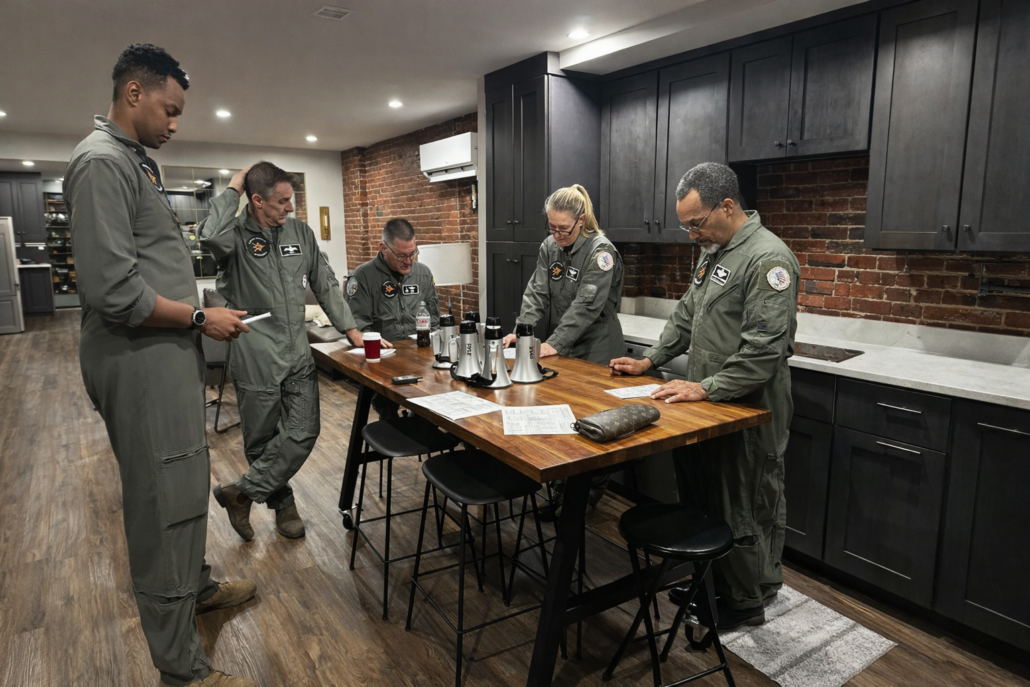
We all know what a high-performance team looks like on a spreadsheet. They hit their numbers. But what does it feel like to be on one? It feels like clarity, trust, and unstoppable momentum. The problem is, most leaders struggle to create those conditions intentionally, and when they try to communicate their vision in a presentation, it falls flat. A high performance team PowerPoint should do more than display charts. It should function as a mission briefing: aligning every person in the room around a shared destination, defined roles, and a repeatable rhythm for getting better every single cycle.
I’m Christian “Boo” Boucousis, CEO of Afterburner and a former Royal Australian Air Force F/A-18 Hornet fighter pilot. I’ve spent over twenty years applying fighter pilot methodology to business leadership, and here’s what I’ve learned: the presentation isn’t the strategy. It’s the briefing tool for the strategy. And if you get the briefing wrong, the execution never stands a chance.
This article breaks down how to build a team performance presentation that actually works, grounded in the same frameworks we use with Fortune 500 teams, NFL athletes, and surgical units around the world.
Key Takeaways
- Define success with absolute clarity. Ground your team in a High-Definition Destination (HDD) and well-defined roles. This eliminates ambiguity and builds the psychological safety required for honest communication and calculated risk-taking.
- Install a consistent rhythm for execution. High performance is a result of disciplined habits, not a one-time event. Implement the FLEX cycle of Plan-Brief-Execute-Debrief to create a culture of accountability and continuous improvement.
- Use every meeting as a mission brief. Transform your presentations from passive updates into active alignment tools. Facilitate genuine conversation that ends with specific, accountable next steps, not vague commitments.
What Actually Defines a High-Performance Team?
Here’s the thing. A high-performance team isn’t just a collection of talented individuals who happen to share an office or a Slack channel. It’s a cohesive unit that consistently delivers results, adapts when the ground shifts beneath them, and holds itself to a standard that most groups never even articulate.
In our world, the fighter pilot world, we don’t have the luxury of figuring this out on the fly. At Mach speed, ambiguity gets people hurt. So we define it. Precisely.
It Starts with a Shared Destination
In FLEX (FLawless EXecution), we don’t set goals. We define destinations, what we call a High-Definition Destination, or HDD. An HDD is a crystal-clear picture of what success looks like, specific enough that there’s no ambiguity about whether you’ve arrived. Not “grow the business” but “increase market share in the mining sector by 800,000 gallons of fuel-oil per month by November 30.” One of our clients built exactly that HDD. They hit it within seven months and exceeded it.
The HDD test is simple: can everyone on your team describe your destination in one sentence without checking a document? If not, it isn’t defined clearly enough yet. And if it isn’t clear enough for a conversation, it definitely isn’t clear enough for your team performance presentation.
When you’re building a high performance team PowerPoint, the HDD belongs on the very first slide after your title. Not buried in an appendix. Not summarized in a footnote. Front and center, because every piece of data that follows should connect back to it. This is the foundation of our Flawless Approach to execution.
Clearly Defined Roles Eliminate Friction
Ambiguity is the enemy of execution. In a fighter formation, every pilot knows exactly what they are responsible for. There’s no confusion about who owns which task or who makes the final call at any given moment. The reason is simple: at three and a half football fields per second, you don’t get a do-over.
In business, the stakes aren’t usually life-or-death. But the principle is identical. When roles are well-defined, team members are empowered to take initiative within their lanes, trusting that their colleagues are doing the same. When roles are ambiguous, you get duplicated effort, dropped tasks, and the kind of internal friction that drains energy without producing anything useful.
Your presentation should make role clarity visible. Not in a generic org chart, but in a mission-aligned structure that shows who owns what outcome and how each role connects to the HDD.
Psychological Safety Is the Bedrock
Google’s Project Aristotle studied over 180 teams across two years to identify what makes a team effective. The number one predictor wasn’t talent. It wasn’t experience. It wasn’t resources. It was psychological safety, the shared belief that the team is safe for interpersonal risk-taking.
In plain language: can your people say what they actually think without fear of punishment, humiliation, or career consequences?
I’ve seen this play out in the debrief room more times than I can count. In our world, after every mission, rank insignia comes off. General or cadet, senior leader or new hire, everyone speaks openly about what worked and what didn’t. Mistakes aren’t punished; they’re mined for insight. The gap between what people think and what they say is the most expensive real estate in any organization. Every insight that goes unshared, every warning that stays quiet, that’s silent awareness. And silent awareness is what brought down United Airlines Flight 173 in Portland, 1978, when the first officer and flight engineer knew the fuel was running out but couldn’t break through the authority gradient to say so. Ten people lost their lives.
Your presentation needs to address this directly. Not with a motivational quote about trust on a slide. With a specific commitment to how your team will communicate, and a framework that makes it safe to do so.
Open Communication at Speed
High-performance teams communicate with clarity, candor, and speed. Information flows freely across the team, not just from the top down. This ensures everyone has a shared operational picture and can make informed decisions in real time.
In FLEX, we build this into the system through the BRIEF mnemonic and structured communication protocols that ensure key information is never missed and every voice is heard. This is how you break down silos and build the alignment needed to plan and execute complex strategies effectively.
How Teams Actually Reach Peak Performance
Teams don’t show up on day one ready to execute flawlessly. They move through predictable stages, and as a leader, your job isn’t to prevent that process. It’s to guide your team through it faster and with less unnecessary damage.
The classic model is Forming, Storming, Norming, and Performing. I won’t bore you with the textbook version. Here’s what it actually looks like in practice.
Forming is the starting line. Everyone’s polite. Nobody wants to rock the boat. Communication is surface-level. The team isn’t productive yet; they’re orienting. Your job: provide extreme clarity on the mission, objectives, and individual roles. This is where the HDD and role definitions from your presentation pay off immediately.
Storming is where it gets real. Different ideas, working styles, and personalities start to clash. This stage is both normal and necessary. Healthy conflict is where trust is forged and the best ideas emerge. Your job: ensure the conflict remains focused on ideas, not individuals. Over-communicate the mission. Clarify roles that have become ambiguous. A strategic planning workshop can be invaluable here.
Norming is when the team finds its rhythm. Members start to resolve their differences, appreciate each other’s strengths, and develop genuine unity. Your leadership style can now evolve from directing to facilitating and empowering.
Performing is the destination: a cohesive, self-sufficient unit operating at its peak. Deep trust. Open environment. Problems solved quickly without heavy oversight. Your role shifts to coach and delegator, developing individuals, celebrating wins, and scanning for the next challenge.
Here’s what most leadership books don’t tell you: teams can regress. A new team member, a strategy shift, a major setback, any of these can push a performing team back into storming. The key is not to be discouraged. Recognize the shift and re-apply the frameworks. This is why a repeatable system like FLEX matters more than any single moment of team chemistry.
The Leader’s Role: Architect, Not Micromanager
Let me tell you what happened when I transitioned from the cockpit to the boardroom. I thought leadership was about knowing the answer and directing traffic. I was wrong. The best leaders I ever flew under, the ones who led thirty-six-aircraft packages through hostile airspace, didn’t micromanage a single pilot. They set the mission, clarified the roles, built the plan collaboratively, briefed it until everyone understood their part, and then trusted the team to execute.
Your role as a leader is to create the conditions where every individual can contribute their best work toward a common objective. That means four things.
Provide Clarity Through Mission Planning
Your team cannot hit a target they can’t see. FLEX planning uses a deliberate Six-Step Mission Planning process: set a clear, measurable objective aligned to the HDD; identify threats (internal and external); match resources to threats; evaluate lessons learned; build a course of action (who does what by when); and plan contingencies. Each step is collaborative. Each step is simple. And each step connects daily action to the long-term destination.
In your presentation, this translates to a clear slide that cascades from the HDD down to team objectives down to individual actions. When this cascade works, every action on every team connects upward to the destination. When it breaks, usually because the HDD is vague or objectives aren’t explicitly linked to it, teams execute energetically toward nothing in particular.
Build Trust by Giving It First
I’ve learned that the fastest way to build trust is counterintuitive: give it first. Don’t make your team earn it. When you operate with transparency, sharing the “why” behind your strategy, being open about challenges, involving them in the planning process, you demonstrate your trust in them. That creates a cycle where your trust inspires theirs. This is the foundation of our team building experiences, where shared high-stakes challenges forge trust faster than months of normal working conditions.
Install the Debrief as a Non-Negotiable
Here’s where most teams leave massive performance gains on the table. They plan well. They brief adequately. They execute with effort. But they never close the loop.
In FLEX, we use a four-step debrief framework called ORCA (Objective, Result, Cause, Action). After every mission, you restate the objective (did we achieve it, yes or no?), examine the result (what actually happened, with zero ambiguity), identify the root cause of any execution gap (not “the market was tough” but the specific decision someone made), and define one strong action that gets implemented before the next mission.
ORCA actions from each debrief feed directly into the next plan. That’s the loop closing. That’s the 1 percent compounding. That’s FLEX working as a system rather than a collection of tools.
The New York Giants learned this in 2011. Already strong at planning, briefing, and execution, they were missing the debrief. Once Coach Coughlin brought in Afterburner to implement the fighter pilot debrief, players started openly owning their mistakes week by week, learning together, growing 1 percent per day. That compounding growth carried them to a Super Bowl XLVI victory against one of the greatest dynasties in NFL history. The shift wasn’t in their talent. It was in their learning rate.
The Beer Cartel, a specialty retailer, grew revenue by 400 percent in a year by committing to daily debriefing. A mid-size manufacturer used the X-Gap (ORCA applied at periodic scale, examining patterns across multiple missions) and discovered that while revenue was up 22 percent, acquisition costs had risen 40 percent and their sales team was burning out. Without the X-Gap, they would have kept “winning” until the business imploded.
Drive Accountability Through Feedback, Not Blame
Accountability is the natural outcome of clarity and trust. When people know exactly what they are responsible for and trust their leader to have their back, they take ownership of the results. The ORCA framework reinforces this because the focus is always on what’s right, not who’s right. On causes, not culprits.
A structured debrief, run nameless and rankless, creates a forum for honest assessment. A meta-analysis of 46 studies by the Group for Organizational Effectiveness found that properly conducted debriefs improved team and individual performance by 20 to 25 percent on average, with more structured and disciplined debriefs improving performance by 35 to 40 percent. The researchers also found that debriefs required little time and very few material resources. The return on investment is massive for what amounts to a simple, consistent practice.
Common Barriers That Derail High-Performance Teams
Even talented teams stumble. Recognizing the obstacles is the first step toward removing them.
Uneven workloads and disengagement. When a few people carry the weight for everyone, your top performers burn out and the rest disengage. A clear HDD with cascading objectives and defined roles prevents this by making the distribution of effort visible and intentional.
Poor communication and unresolved conflict. If things are being said but others haven’t heard them, that’s a communication system failure. If things aren’t being said because people aren’t comfortable saying them, that’s a culture failure. Both are solvable with the right framework, but only if you address them directly.
Unclear roles and responsibilities. “I thought you were handling that” is a phrase that signals a critical breakdown. True accountability is impossible without clarity. This is a foundational focus of our team building experiences.
Slow decisions and execution gaps. Analysis paralysis creates gaps between planning and results. High-performance teams aren’t reckless, but they are decisive. They have a clear framework for making decisions, and they use the X-Gap to catch small deviations before they compound into mission failure.
How to Structure Your Team Performance Presentation
Think of your presentation as a briefing room before a critical mission. You aren’t reading off numbers from a spreadsheet. You are focusing your team, clarifying the objective, and ensuring everyone understands their role in the outcome.
Open with Your HDD and Mission Objectives
Before you show a single chart, ground your team in the “why.” Restate the High-Definition Destination and the specific objectives you are collectively working toward. This context frames everything that follows and connects individual tasks to the bigger picture. When people see how their work directly contributes to the destination, engagement deepens. This is a foundational step in effective strategic planning.
Create a Clear Narrative Flow
Your presentation should tell a coherent story, not present a collection of disconnected facts. A strong flow moves from the HDD down to specific performance areas, addresses key execution gaps (using ORCA language), and concludes with a clear action plan. Connect the dots between past efforts, current reality, and future priorities.
Design for Clarity, Not Complexity
Avoid dense, text-heavy slides. Use strong visuals, simple infographics, and plenty of white space. For every piece of data you share, be prepared to explain what it means for the team. Your goal isn’t to impress with data. It’s to equip with understanding.
Plan for Conversation, Not Monologue
The most effective performance briefings are conversations. Build pauses into your structure. Ask direct questions: “What obstacles are you seeing?” “Does this align with what you’re experiencing on the ground?” “What have we missed?” This transforms your team from a passive audience into active participants in a team debrief, creating a rhythm of continuous improvement and shared accountability.
Close with Actionable Next Steps
A presentation without a clear call to action is just a conversation. Summarize the key decisions made. Outline specific actions. Define who is responsible and establish deadlines. Your team should leave with absolute clarity on the path forward. This focus on execution is what turns a good plan into measurable results.
What to Include in Your Building a High Performance Team PowerPoint Template
A great template is a strategic tool, not just a design exercise. Here are the essential elements.
Branded title and agenda slides. Reinforce your team’s identity and set expectations from the outset. Your agenda should outline the mission objectives, roles review, performance data, and expected outcomes.
HDD and mission alignment visual. Show how the HDD cascades to team objectives and individual actions. This single visual can do more for alignment than twenty slides of bullet points.
Team development stage visual. A simple graphic illustrating Forming, Storming, Norming, and Performing helps the team identify where they are and what to expect next. Frame challenges as progress, not problems.
ORCA debrief framework slide. Include the four steps (Objective, Result, Cause, Action) as a reference your team can use in every subsequent meeting. Make the debrief language part of your team’s operating vocabulary.
Communication protocols. Add a slide with your team’s agreed framework for updates, check-ins, and escalations. High performance depends on disciplined communication, not assumed skills.
Discussion prompts and feedback tools. Seed your template with open-ended questions: “What is the single biggest obstacle standing in our way?” or “What is one thing we can do this week to improve how we communicate?” These prompts prevent passive listening and create the honest dialogue that high-performance teams run on. This is a technique we use in our interactive keynotes to turn audiences into active participants.
Delivering Your Presentation for Maximum Impact
Hook Them in the First Thirty Seconds
You have about half a minute to get everyone focused on the mission. Don’t waste it with pleasantries. Start with a critical question, a startling data point, or a direct statement of the challenge. Frame the “why” immediately. Your opening should signal that this meeting is about something that matters.
Facilitate, Don’t Lecture
Pause frequently. Ask direct questions. Solicit different perspectives. This isn’t about seeking consensus. It’s about ensuring every voice is heard to create a more complete operational picture before you move forward. The leader who makes more than 60 percent of the statements and fewer than 40 percent are questions has an authority gradient that’s too steep.
Gather Feedback in Real Time
Use polls, shared whiteboards, or simple show-of-hands to check for understanding and alignment during the presentation. Don’t wait until the end to find out your message didn’t land. Address confusion and disagreement in the moment. It prevents execution gaps later.
End with Commitments, Not Conclusions
The final moments are the most critical. Define who does what by when. Make it binary. Make it specific. Make it owned by a named individual, not “the team” or “leadership.” This is where ORCA discipline meets presentation craft, and where your building a high performance team PowerPoint becomes a living execution tool.
Frequently Asked Questions
What is the best framework for building a high-performance team presentation? The most effective framework is FLEX (FLawless EXecution), developed from fighter pilot methodology by Afterburner. FLEX uses a repeatable Plan-Brief-Execute-Debrief cycle, anchored by a High-Definition Destination (HDD) that gives the entire team a clear, measurable picture of success. Structure your presentation around the HDD, cascading objectives, defined roles, and the ORCA debrief process. This turns your presentation from a passive update into an active alignment tool.
My team seems stuck in conflict. How do I get them through it without damaging morale? Recognize that the “Storming” stage is normal and necessary. Your role isn’t to eliminate conflict. It’s to keep it focused on ideas, not individuals. Refocus everyone on the shared HDD. Clarify roles that have become ambiguous. Establish ground rules for communication. When you frame friction as a necessary step toward becoming a stronger unit, the team stops seeing it as a threat and starts seeing it as progress.
What’s the difference between setting clear roles and micromanaging? Setting clear roles is about defining the “what” and the “why,” ensuring every person understands their responsibilities and how their work connects to the mission. This empowers autonomous action. Micromanagement is about controlling the “how,” dictating every step, which stifles initiative and signals a lack of trust. In FLEX, we ensure team members understand what to do but are not told how to do it. That distinction is everything.
How do I build trust quickly on a new, remote, or recently disrupted team? Give trust first. Operate with transparency. Share the challenges alongside the wins. Create predictable communication rhythms like daily check-ins or weekly ORCA debriefs so people know when and how they’ll hear from you. Create opportunities for shared wins, even small ones. And establish the nameless, rankless principle early: in this team, we focus on what’s right, not who’s right. Trust compounds fastest when vulnerability comes from the top.
Can a high-performing team regress to an earlier stage? Absolutely. A new team member, a strategy shift, a major setback: any of these can push a team backward. This isn’t a failure. It’s the natural dynamics of human performance. The key is to recognize the shift quickly and re-apply the frameworks: re-clarify the HDD, reinforce roles, facilitate open communication, and debrief the transition itself. A repeatable system like FLEX means you never have to start from scratch.
Related Articles
- High-Performance Team Building for C-Suite Leaders Guide
- Our Flawless Approach to Execution
- Leadership & Execution Insights Blog | Afterburner
Christian “Boo” Boucousis is a former Royal Australian Air Force F/A-18 Hornet fighter pilot, CEO of Afterburner, keynote speaker, and author of The Afterburner Advantage and Flawless Leadership℠. He has spent over twenty years applying fighter pilot methodology to business leadership across industries including hospitality, publishing, logistics, and healthcare.