
A Leader’s Guide to Corporate Team Alignment Strategies
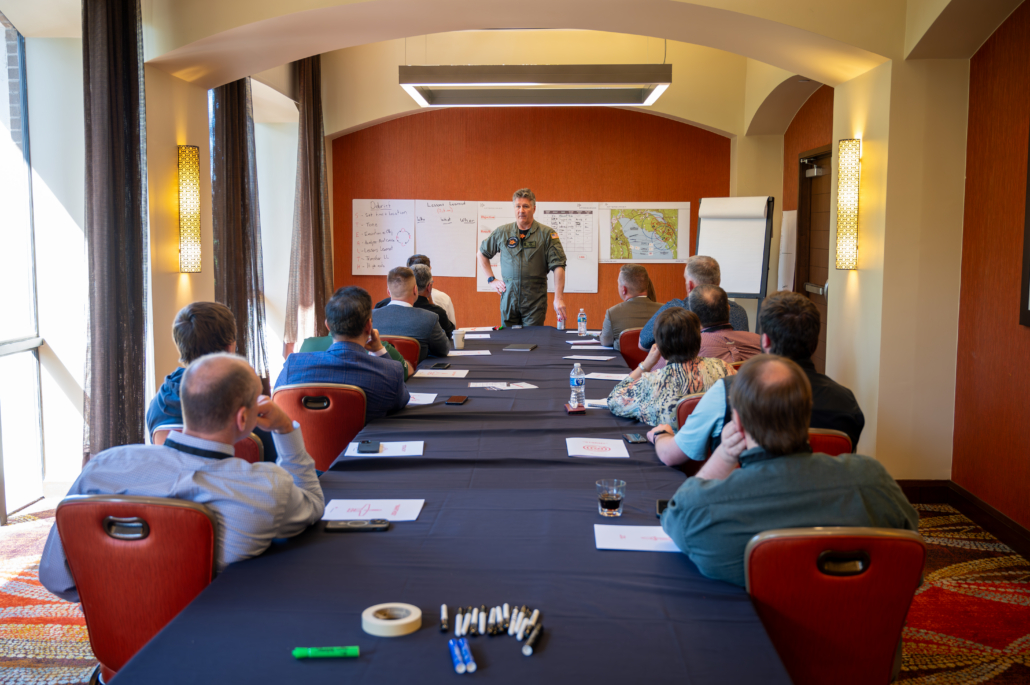
Corporate Team Alignment Strategies: How to Close the Gap Between Your Strategy and Your Results
I’ve led fighter formations of a hundred aircraft, all connected by real-time data link, all flying at speeds where a miscommunication isn’t an inconvenience but a potential catastrophe. And I can tell you this: alignment is not a cultural aspiration. It is an engineered outcome. It’s the result of deliberate systems that create clarity, communication, and accountability at every level of the organization.
Corporate team alignment strategies are the deliberate systems and frameworks leaders use to ensure every individual and every team understands the mission, their specific role, and how their daily work connects to the organization’s strategic destination. When done right, alignment turns a collection of talented people into a coordinated force that executes with precision.
Most leaders treat alignment like something that should emerge naturally from a good offsite or a well-written mission statement on a wall. It doesn’t. In my experience, the gap between strategy and execution, what we call the X-Gap, is the single most expensive problem in any organization. And it’s almost always an alignment problem in disguise.
I’m Christian “Boo” Boucousis, CEO of Afterburner, former Royal Australian Air Force F/A-18 Hornet fighter pilot, and author of The Afterburner Advantage and Flawless Leadership℠. I’ve spent the last twenty years helping leaders close that gap using the same methodology that keeps fighter pilots alive and on target at 1,200 miles per hour. The methodology is called FLEX, which stands for FLawless EXecution. And alignment is where it starts.
What Is Team Alignment, and Why Do Most Organizations Get It Wrong?
Team alignment is the state where every person on your team can answer three questions without hesitation: What are we trying to achieve? What is my role in achieving it? And how does my daily work connect to the bigger picture?
That sounds simple. It is not. In most organizations, if you asked ten people to name the company’s top three priorities, you’d get ten different answers. That’s not a communication problem. That’s a structural problem. It means your strategy, no matter how brilliant, is getting lost in translation somewhere between the boardroom and the people doing the actual work.
In the fighter pilot world, we solve this with a concept called the alignment cascade. Your organizational HDD, your High-Definition Destination, shapes team-level HDDs. Team HDDs shape mission objectives. Mission objectives focus daily actions. Every person can trace their daily work upward to the destination in two steps. When they can’t, and most teams can’t, the plan has broken somewhere in the chain.
The Real Cost of Misalignment
When teams aren’t aligned, you see the symptoms everywhere. Projects stall. Deadlines slip. Different departments work on overlapping initiatives without realizing it. Meetings feel like everyone is speaking a different language. People prioritize what feels urgent rather than what’s truly important. Effort gets duplicated. Budgets get wasted. And your best people get frustrated and leave, because nothing is more demoralizing than pouring energy into work that doesn’t connect to anything meaningful.
Here’s what I’ve learned from watching this pattern across hundreds of organizations: misalignment doesn’t announce itself. It shows up as a series of seemingly unrelated problems that are actually symptoms of a deeper structural issue. The root cause is almost always the same: a lack of shared clarity about where the organization is going and how each person’s work contributes to getting there.
The Competitive Edge of Aligned Teams
On the other side of that equation, aligned teams are a force multiplier. When people work together with a clear plan, decisions happen faster at every level. Energy that was being wasted on internal friction gets redirected toward the customer and the competition. Google’s Project Aristotle studied over 180 teams and found that the highest-performing teams shared clarity of roles, plans, and goals, and believed their work mattered. Alignment creates the conditions for all of that.
One of our clients built an HDD to “increase market share in the mining sector by 800,000 gallons of fuel-oil per month by November 30.” That’s not a vague goal. That’s a High-Definition Destination, crystal clear, measurable, with a deadline. Every person in that organization could see exactly where they were going and whether their work was pointed in the right direction. They hit it in seven months and exceeded it.
The Four Building Blocks of Alignment
Alignment doesn’t happen by accident. It’s built on four foundational elements that reinforce each other. Get one wrong and the whole structure wobbles.
A High-Definition Destination
The starting point for any aligned team is what we call the HDD, the High-Definition Destination. This is not a mission statement. It’s not a vague aspiration like “be the market leader” or “delight our customers.” An HDD is a crystal-clear picture of what success looks like, specific enough that there’s no ambiguity about whether you’ve arrived.
In FLEX, we don’t set goals. We define destinations. The distinction matters. Goals are “nice to achieve.” Destinations are “necessary to arrive.” Imagine boarding a flight and the captain says, “Ladies and gentlemen, our goal today is to fly to Boston.” You’d want to get off the plane. You didn’t pay for a goal. You paid for a destination.
Your HDD should pass a simple test: Can everyone on your team describe it in one sentence without checking a document? If not, it isn’t defined clearly enough yet. That clarity is the foundation of everything else. It’s where our strategic planning process begins, because you can’t hit a target you haven’t clearly identified.
A Deliberate Communication Rhythm
A clear destination is only effective if it’s supported by consistent communication. In the fighter pilot world, we don’t have the luxury of hoping everyone is on the same page. We verify it, constantly, through a structured rhythm of briefings and debriefs.
This isn’t about adding more meetings to your calendar. In fact, most organizations have too many meetings and too little communication. There’s a difference. A meeting is a calendar event. Communication is shared understanding. The BRIEF mnemonic gives your team a structure for every interaction: Big picture (connect to the HDD), Restate the objective, Identify threats and resources, Execute (who does what by when), and FLEXibility (contingencies). When your team uses this structure, meetings get shorter, sharper, and actually produce aligned action.
Clear Roles and Accountability
Once your team shares a destination and a communication rhythm, the next step is to clarify who is responsible for what. Role ambiguity is one of the primary causes of task saturation in both aviation and business. When ownership is unclear, everyone tries to do everything, or everyone waits for someone else. Both outcomes increase friction and slow execution.
In FLEX, every mission objective has a single owner. Every action has a person and a deadline. This isn’t about putting people in boxes. It’s about empowering them with the clarity they need to execute their part of the mission with confidence. When people know exactly what they’re accountable for and how it connects to the bigger picture, you create a culture of ownership that drives performance.
Cross-Functional Collaboration
In today’s business environment, very few objectives can be achieved by one team working in isolation. Silos are the enemy of execution. When departments operate in isolation, they lose sight of the bigger picture, duplicate efforts, and create friction that slows everything down.
The fighter pilot world solved this decades ago with the wingman principle. We know that when you’re deep in the details of your own task, it’s easy to lose situational awareness of the broader mission. That’s what your wingman is for: they hold the big picture when you can’t. The same principle applies across functions. Your sales team needs to understand what marketing is doing. Your engineering team needs visibility into customer commitments. Effective team-building experiences can help build the trust and mutual respect necessary for different functions to work together as a single, cohesive unit.
How to Find Your Team’s Alignment Gaps
Before you can fix alignment, you have to see where it’s broken. In the cockpit, we call this building situational awareness: the ability to perceive what’s happening, understand what it means, and anticipate what will happen next. Most leaders skip this diagnostic step. They assume they know where the problems are. They’re usually wrong.
Run an Alignment Audit
An alignment audit is a health check for your strategy. Start by asking your leadership team to independently name the organization’s top three priorities. Compare their answers. If they don’t match, your alignment problem starts at the top.
Then go deeper. Ask individual contributors to describe their top three priorities and explain how those connect to the company’s objectives. The gaps between their answers and your strategic plan will show you exactly where communication has broken down. Around 83 percent of corporate debriefs stall at the very first step because the objective was never clear enough. The same principle applies to alignment audits: if people can’t state the objective, everything downstream is compromised.
Watch for the Red Flags
Misalignment shows up in predictable patterns: departments working on overlapping projects without coordination, meetings where teams seem to be speaking different languages, a general lack of urgency or ownership, and declining trust and morale. These aren’t separate problems. They’re symptoms of a single root cause: your team doesn’t have a shared, clear picture of where you’re going and how each person’s work contributes to getting there.
Use the X-Gap as Your Diagnostic Tool
The X-Gap, short for Execution Gap, is how you stay situationally aware without micromanaging. It’s the discipline of periodically stepping back from the day-to-day action to ask one question: is what’s actually happening aligned with what we planned?
One of our clients, a midsize manufacturing company, was hitting quarterly revenue targets. On paper, everything looked healthy. But the CEO felt something was off. A monthly X-Gap revealed the truth: revenue was up 22 percent, but customer acquisition cost had increased 40 percent. Gross margin was down 8 percent. Sales team burnout was at an all-time high. Customer satisfaction was declining. The cause? The compensation structure rewarded closed deals, not profitable ones. Without the X-Gap, they would have kept “winning” until the business imploded. The X-Gap gave them a year’s head start on fixing the system.
How to Build and Maintain Alignment with FLEX
Once you’ve diagnosed the gaps, you need a system to close them. Not a one-time initiative. A repeatable operating rhythm that keeps alignment alive through the inevitable turbulence of growth, market shifts, and new priorities. That system is FLEX, built on the four phases of Plan, Brief, Execute, Debrief (PBED).
Plan: Define the Destination and the Path
Every aligned organization starts with a planning process that answers six questions: What’s the mission? What could stop us? What resources do we have? What have we learned before? Who does what? What if something goes wrong? By the time a pilot leaves the planning room, every variable has been thought through.
Your HDD sits at the top of this process. It cascades down through team-level HDDs, mission objectives, and individual actions. The alignment cascade is the chain reaction: the HDD shapes objectives, objectives focus actions, and actions generate impact. When your team members can trace their daily tasks upward to the destination in two steps, alignment is working.
Brief: Create Shared Understanding
Planning is thinking. Briefing is communicating. The brief is where the plan comes alive in the minds of your team. In FLEX, a brief is not a meeting. It’s a precision communication tool. The rule is non-negotiable: nobody leaves with unanswered questions.
Use the BRIEF structure for every significant team interaction. Big picture first, so people understand why this mission matters. Restate the objective in binary terms. Identify the threats and who owns each one. Walk through the execution plan, who does what by when, with three-quarters of briefing time spent here. Close with contingencies so the team knows what to do when things change. If people walk out of your brief saying “we’ve got this,” you’ve done it right.
Execute: Fly the Brief with Discipline
Execution is where leadership stops being theoretical. It’s also only one of four phases in FLEX, and in most organizations, it’s treated like the only one. Execute, execute, execute, and hope the targets get hit. Without the plan, brief, and debrief surrounding it, execution is just organized chaos with an irrelevant deadline.
The fighter pilot principle for execution is simple: fly the brief. Execute the course of action you planned. Don’t improvise. Don’t drift. When reality diverges from the plan, adapt based on your contingencies. And the leader’s job during execution is not to do the work. It’s to maintain situational awareness, monitoring the mission against the plan, watching for execution gaps, and keeping the team’s cognitive bandwidth free for the actual work.
Debrief: Close the Loop and Compound Growth
The debrief is the engine of alignment. Without it, wins are wasted because no one knows how to repeat them. Mistakes recur because no one analyzed the cause. The same meetings happen again because last week produced no actions worth implementing.
We use ORCA, which stands for Objective, Result, Cause, Action. Restate the objective. Assess what actually happened. Trace the root cause to a specific decision or process. Commit to one to three actions, each owned by a named person, that feed directly into the next mission’s plan. Every debrief operates under the nameless, rankless principle: the leader goes first in owning mistakes, the focus is on what’s right not who’s right, and every debrief closes on a High Note.
This is where the compounding happens. One percent better per mission doesn’t sound like much. But compounded daily, it doesn’t make you 365 percent better by year’s end. It makes you thirty-seven times better. That’s the accelerated learning curve that keeps fighter pilots, and the teams we work with, continuously improving.
The Leader’s Role in Driving Alignment
Set the Destination, Not Just the Direction
Your team can’t hit a target they can’t see. The first job of a leader is to define and communicate the HDD with absolute clarity. If you can’t explain your destination in one sentence, it’s too complicated. That destination becomes the foundation for your entire strategic planning process. Every project, task, and goal can be measured against it.
Model the Behavior You Expect
In a fighter squadron, the lead pilot owns their mistakes first in every debrief. That single act sets the standard for the entire room. In your organization, the same principle applies. When you prioritize projects that support the HDD, when you brief your team instead of just sending emails, when you debrief honestly instead of just moving to the next thing, you’re modeling what alignment looks like in practice. Your team will follow your lead, not your words.
Build the Rhythm That Sustains It
A great destination and good intentions need structure to survive the pressures of daily execution. That structure is the FLEX cadence: weekly X-Gaps (fifteen to thirty minutes) to catch emerging patterns, monthly X-Gaps (sixty to ninety minutes) to address systemic issues, and quarterly X-Gaps (half day) to ensure you’re still pointed at the right destination. This rhythm replaces the unfocused leadership meetings most organizations run with a disciplined learning conversation that keeps alignment alive. It’s the operating system behind our Flawless Approach to execution.
Frequently Asked Questions
What is corporate team alignment? Corporate team alignment is the state where every individual and team in an organization understands the mission, their specific role, and how their daily work connects to the strategic destination. In FLEX (FLawless EXecution), alignment is engineered through a cascading system of High-Definition Destinations, mission objectives, and daily actions, supported by a repeatable rhythm of planning, briefing, executing, and debriefing.
What is the single most important first step to improve alignment? Start with your destination. Before you introduce any new process, make sure your team’s HDD is crystal clear, measurable, and understood by everyone. Sit down with your leadership team and agree on the top one to three strategic priorities. Then communicate those priorities relentlessly. If your leaders can’t independently name the same priorities, your alignment problem starts at the top.
How is team alignment different from having a good company culture? Culture is about shared values and how people treat each other. Alignment is about shared direction and how people work together toward a specific objective. You can have a friendly, positive culture where everyone gets along but still works at cross-purposes because they don’t share a clear plan. Alignment provides the structure and systems that channel your culture’s positive energy toward a measurable destination.
How do I implement alignment without overwhelming my already busy team? The right system should reduce your team’s workload, not add to it. FLEX isn’t about more meetings. It’s about better ones. Replace your unfocused status updates with a structured BRIEF. Replace your post-project reviews with a fifteen-minute ORCA debrief. Replace your monthly all-hands with a focused X-Gap that scans for execution gaps. This structure eliminates confusion and wasted effort, which frees up your team’s time and energy for the actual mission.
How can I tell if my team is becoming more aligned? You’ll hear the change before you see it in the numbers. People will start talking about their work in the context of the HDD. Cross-functional conflicts will decrease because teams understand how their work connects. Deadlines will be met more consistently. Decisions will happen faster because everyone is working from the same plan. And your debrief conversations will shift from blame and excuses to genuine root cause analysis and forward-looking action.
Christian “Boo” Boucousis is the CEO of Afterburner, a former Royal Australian Air Force F/A-18 Hornet fighter pilot, and author of The Afterburner Advantage and Flawless Leadership℠. He helps leaders and teams close the gap between strategy and execution using the same methodology that keeps fighter pilots alive at 1,200 miles per hour.