

Dallas Leadership Training That Turns Strategy Into Action

Dallas Leadership Training That Turns Strategy Into Action
I’ve sat in more executive conference rooms than cockpits at this point in my career, and I can tell you the view is surprisingly similar. Data streaming in from every direction. Multiple teams operating at speed. And a plan that looked brilliant on the whiteboard slowly losing coherence as it moves through the organization. Christian “Boo” Boucousis here, former Royal Australian Air Force F/A-18 Hornet pilot, CEO of Afterburner, and a guy who learned the hard way that a strategy without an execution system is just an expensive wish.
Dallas leadership training, done right, gives your team something most training programs don’t: a repeatable operating rhythm for turning priorities into coordinated action. Not a motivational speech. Not a binder that collects dust. A system (Plan, Brief, Execute, Debrief) that your people actually use on Monday morning to close the gap between what you intended and what actually happens.
Schedule a Dallas-Fort Worth strategy call to identify the execution gaps slowing your team down.
At Afterburner, we call that system FLEX, which stands for FLawless EXecution. It was engineered from the fighter pilot community in 1996, derived from the original OODA loop, and it’s been pressure-tested for decades in environments where the margin for error is measured in inches and milliseconds. We’ve adapted it for boardrooms, factory floors, hospital systems, and sales teams across North Texas and beyond. The goal isn’t to turn your people into fighter pilots. It’s to give them the same cognitive framework we use to simplify complexity, make better decisions under pressure, and learn from every outcome.
Why DFW strategies lose altitude
Here’s the thing about Dallas-Fort Worth. The market rewards speed. You’ve got major players across financial services, technology, aviation, logistics, healthcare, energy, and professional services, many of them operating across offices in Plano, Irving, Fort Worth, and beyond. The Federal Reserve Bank of Dallas tracks these shifting conditions monthly, and the picture is clear: the operating environment doesn’t stand still. A plan that looked right last quarter may need to adjust today.
Speed without alignment, though? That creates expensive rework. And I see it constantly.
The translation problem
Strategy usually begins as an executive-level decision. Execution happens through hundreds of smaller decisions made by managers and frontline teams. Momentum stalls when people can’t translate the larger priority into the next action they own.
Consider a North Texas company integrating a newly acquired business. The executive team agrees that customer retention is the central priority. Sales interprets that as more account outreach. Operations focuses on service consistency. Finance tightens approval rules. Each function acts with good intent. Yet the actions conflict because nobody defined what success actually looks like or how each team supports the mission.
I’ve seen this pattern play out in hotels, in logistics companies, in healthcare systems. The problem isn’t talent. The problem is the absence of a shared execution language.
The complexity trap
Fast-growing organizations respond to uncertainty by adding layers: more meetings, more dashboards, more approvals, more initiatives. Those layers feel productive, but they make the mission harder to see. Leaders spend more time coordinating activity and less time removing obstacles.
The answer isn’t a more detailed presentation. It’s a simpler system that identifies a limited number of priorities, clarifies ownership, and gives teams permission to adapt within clear boundaries. That’s where leadership development stops being theoretical and starts being operational.

What is Dallas leadership training with Flawless Execution?
Dallas leadership training built on the Flawless Leadership℠ methodology gives DFW teams a common operating rhythm called FLEX (FLawless EXecution), structured around four phases: Plan, Brief, Execute, Debrief (PBED). Instead of treating strategy as a yearly offsite, teams run this cycle repeatedly, weekly, daily, even hourly when the stakes demand it. The result is a shared system where every person understands the mission, knows their role, and improves with each iteration.
Let me walk you through it the way I’d walk a team through it in a briefing room.
Plan around a High-Definition Destination
In FLEX, we don’t set goals. We define High-Definition Destinations, or HDDs. An HDD is a crystal-clear picture of what success looks like, specific enough that there’s no ambiguity about whether you’ve arrived. Not “grow the business” but “increase market share in the mining sector by 800,000 gallons of fuel-oil per month by November 30.” One of our clients built exactly that HDD. They hit it in seven months and exceeded it.
The HDD test: can everyone on your team describe it in one sentence? If not, it isn’t clear enough yet. Binary. Yes or no. Did we arrive? That’s the only acceptable answer.
FLEX planning then runs six steps: set a mission objective aligned to the HDD, identify threats, identify resources, evaluate lessons learned from previous debriefs, build the course of action (who does what by when), and create contingencies. The whole process is fast yet considered. It’s far wiser to act now with an 80 percent plan than to launch a perfect plan when it’s too late.
The Strategic Planning Workshop helps DFW teams build that level of clarity while keeping plans practical enough to execute the same afternoon.
Brief until everyone understands, not just hears
Here’s a rule I learned in the Air Force that changed how I think about communication: it’s not what you say; it’s what’s understood. A brief is not a leader reading slides to the room. It’s a disciplined conversation that confirms ownership, dependencies, timing, and the decision boundaries each person has.
We use a simple mnemonic called BRIEF: Big picture, Restate the objective, Identify threats and resources, Execution (who does what by when), and FLEXibility (contingencies). Team members should leave knowing the mission, their role, and how their work connects to everyone else’s.
For a distributed DFW enterprise, the brief is especially valuable. It surfaces conflicts before work begins. A product launch team can discover that marketing’s timeline depends on legal review, or that operations needs supplier confirmation before sales makes commitments. Those issues are cheaper to solve before execution starts, not after.
Execute with commander’s intent
Conditions change after the plan begins. That’s not a failure. That’s reality. Leaders can’t prescribe every move, and teams shouldn’t need permission for every decision. Clear commander’s intent defines the outcome and the boundaries, then gives people room to adjust intelligently.
In the cockpit, I had a wingman. Two jets, two pilots, two brains. One busy doing, working the systems in the now. The other keeping tabs on the big picture, thinking one step ahead. We call that situational awareness. In your business, it means your people are free to make real-time decisions because they understand the mission deeply enough to adapt without losing the thread.
This balance creates accountability without micromanagement. In a market as dynamic as Dallas-Fort Worth, that ability to adapt quickly protects both momentum and customer trust.
Debrief: where the real learning happens
The fact is, the debrief is where FLEX earns its reputation. After every mission, fighter pilots gather in a nameless, rankless room. General, colonel, or cadet, it doesn’t matter. Everyone speaks openly about what worked and what didn’t. Mistakes aren’t punished; they’re mined for insight.
We use a structured framework called ORCA: Objective, Result, Cause, Action. What did we set out to do? What actually happened? Why was there a gap? What specific action will we take to do it better next time? Simple. Powerful. And when teams do it consistently, they stop hiding problems until the quarterly review. They identify small gaps early and fix them before they compound.
I’ve learned that this is exactly what separates teams that improve from teams that just repeat. The New York Giants adopted this approach during their 2011 season. Players openly owning mistakes, learning together week by week. The alignment and accountability carried them to a Super Bowl win. They shifted from “what went wrong?” to “what do I do next time?”
Build an executable strategy with an Afterburner planning workshop, then give every team a clear role in delivering it.
What DFW leaders gain from a shared execution system
When I talk to executives across North Texas, they don’t usually describe their problem as “we need leadership training.” They describe symptoms: missed handoffs, slow decisions, too many priorities competing for the same resources, a strategy that sounds great in the boardroom but never reaches the frontline. Those symptoms point to an execution system problem, not a talent problem.
Here’s what changes when your team operates with a shared FLEX rhythm.
Sharper strategic focus
A shared planning process forces leaders to choose. Instead of asking a team to pursue ten “urgent” priorities, leaders identify the few that deserve resources now. That focus matters most during rapid growth, a merger, or a transformation initiative, exactly the kind of moments DFW companies face regularly.
Stronger cross-functional alignment
DFW enterprises frequently coordinate work across headquarters, regional offices, field teams, and external partners. FLEX gives those groups a shared language. A clear brief reveals dependencies before work begins. A structured debrief shows where handoffs or assumptions broke down.
Consider a logistics company preparing for a seasonal surge. Operations, staffing, sales, and customer support each build separate plans. A shared mission and brief connect those plans before demand rises. The debrief captures lessons while the details are still fresh.
Faster decisions at the right level
Leaders sometimes mistake control for clarity. Requiring every decision to move upward slows execution and teaches managers to wait. A clear mission lets the people closest to the work act within agreed boundaries. This doesn’t remove accountability. It strengthens it. Every decision can be evaluated against the mission, and every result feeds the next planning cycle.
Compounding improvement through the X-Gap
Beyond the mission-level debrief, FLEX includes a discipline called the X-Gap, which is ORCA applied at strategic scale. The debrief is the microscope: what happened in this mission? The X-Gap is the telescope: is what we’re doing consistently creating the intended impact across many missions?
One of our clients, a mid-size manufacturing company, was hitting quarterly revenue targets. On paper, everything looked healthy. But the CEO felt something was off. We ran a monthly X-Gap and the truth surfaced: revenue was up 22 percent, but customer acquisition cost had increased 40 percent. Gross margin was down 8 percent. Sales team burnout was at an all-time high. Customer satisfaction was declining. The root cause? A compensation structure that rewarded closed deals, not profitable ones. Without the X-Gap, they would have kept “winning” until the business imploded. The X-Gap gave them a year’s head start on fixing the system.
Weekly X-Gaps run 15 to 30 minutes. Monthly X-Gaps run 60 to 90 minutes. Quarterly X-Gaps take half a day. Same ORCA structure. Wider lens. The teams that run this rhythm outperform the ones that don’t, not because they’re more talented, but because they learn faster.
Generic training events versus an execution system
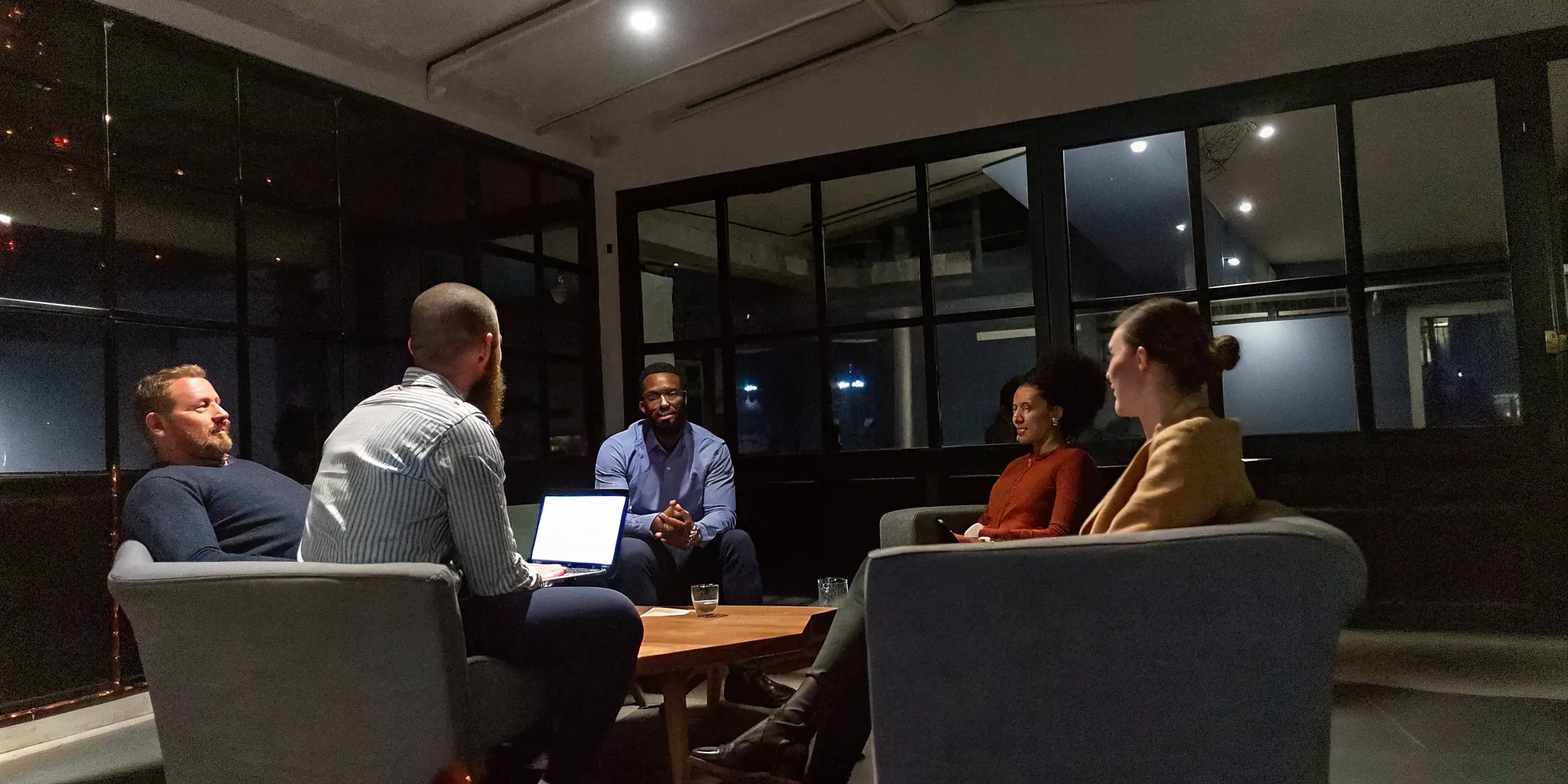
I’ll be direct. A keynote or a two-day workshop can create energy. I know. I deliver them. But energy alone doesn’t change an operating model. Teams need a way to apply new ideas during real work, under real pressure, with real stakes. That’s the difference between an isolated training event and a leadership system.
| Focus | Generic training event | Afterburner execution system |
|---|---|---|
| Primary outcome | New ideas and short-term motivation | Repeatable habits tied to business priorities |
| Strategy | Discussed at a high level | Translated into clear actions and ownership |
| Decision-making | Depends on individual style | Guided by mission and commander’s intent |
| Follow-through | Left to participants | Reinforced through briefs and debriefs |
| Learning | Measured by participant satisfaction | Built into each execution cycle via ORCA |
Afterburner brings principles developed in the fighter pilot community into a practical business context. The value isn’t the analogy. It’s the system. A repeatable approach created for situations where people must simplify complexity, coordinate action, and learn quickly.
Organizations can begin with a focused workshop, strengthen leadership alignment through the Flawless Execution approach, or embed new habits through a longer engagement. The right format depends on the execution challenge and the level of change required.
How to make Dallas leadership training stick
Training sticks when leaders connect it to active business priorities. Asking people to practice a new framework in addition to their work makes it easy to abandon. Using the framework to run the work makes it valuable immediately. Here’s what that looks like in practice.
Choose a live mission
Start with an initiative that matters now: improving a customer handoff, integrating a new business unit, accelerating a product launch. A real mission creates urgency and lets the team see how the system affects actual outcomes. Don’t practice on hypotheticals. Practice on the thing that’s keeping you up at night.
Build a visible operating rhythm
Decide when planning, briefing, execution reviews, and debriefs will occur. Keep the rhythm simple. The goal is not to add a new layer of meetings. It’s to replace scattered coordination with a small number of purposeful conversations. As we say in Flawless Leadership℠: everything you currently call a meeting is an X-Gap waiting to be structured properly.
Measure behavior and outcomes
Track both the business result and the behavior that supports it. If the mission is to improve customer retention, monitor the retention number, but also check whether account risks are surfaced during briefs and examined during debriefs. The behavior is the leading indicator. The number is the lagging one.
Reinforce the system long enough for it to become normal
One workshop establishes the language. Lasting change requires repetition. The 90-Day Accelerator helps teams apply the framework to real priorities, establish a rhythm, and build momentum over a focused period. But here’s what matters most: leaders make the system credible by using it themselves. When executives arrive prepared for briefs, state priorities clearly, and participate honestly in debriefs, the rest of the organization sees that this is how the business operates, not a flavor-of-the-month initiative.
FLEX creates a growth mindset even in the most stubborn and fixed of thinkers. It was born from years of taking everyday pilot candidates and turning them into people who think, plan, and learn as a way of life. The Three Ms (Mindset, Method, Moments) form the foundation. Mindset delivers internal clarity. Method delivers the system. Moments deliver the ability to lead with intention when the pressure rises.
Is Dallas leadership training right for your team?
The honest answer: this kind of training is most valuable when capable people are working hard but results remain inconsistent. When handoffs get missed. When decisions move too slowly. When the strategy doesn’t reach the people who execute it. Those symptoms usually point to an execution system problem, and that’s exactly what FLEX is designed to solve.
Leadership teams should consider a structured program when they’re navigating growth, transformation, post-merger integration, succession, or a shift toward more distributed work. These moments expose gaps in clarity and alignment, but they also create a strong reason to change old habits.
The Dallas Regional Chamber reflects the breadth of industries and organizations active across the region. That diversity means there’s no single playbook for every DFW company. But there is a common need: leaders who can communicate intent, coordinate action, and improve performance without adding unnecessary complexity.
Afterburner works with DFW teams to identify the specific execution gap first. From there, the engagement can focus on strategic planning, leadership alignment, team performance, or the routines needed to sustain change. We don’t sell training for training’s sake. We solve execution problems.
Frequently asked questions
What is Dallas leadership training?
Dallas leadership training develops the practical skills and operating habits leaders need to guide teams in the Dallas-Fort Worth business environment. Afterburner’s approach focuses on clarity, alignment, accountability, and repeatable execution through the FLEX (FLawless EXecution) cycle of Plan, Brief, Execute, and Debrief, not theory alone.
How does Flawless Execution help business teams?
Flawless Execution gives teams a recurring Plan, Brief, Execute, and Debrief cycle called FLEX. The cycle translates strategy into owned actions through High-Definition Destinations (HDDs), creates room for informed decisions during execution through commander’s intent, and turns every outcome into lessons through the ORCA (Objective, Result, Cause, Action) debrief framework.
Can leadership training improve cross-functional alignment?
Yes. A shared mission, clear roles, and disciplined briefs help teams identify dependencies before work begins. The BRIEF mnemonic (Big picture, Restate the objective, Identify threats and resources, Execution, FLEXibility) ensures everyone leaves aligned. Structured debriefs then show where communication or handoffs need to improve, creating a compounding learning cycle.
How long does it take to make new leadership habits stick?
A workshop can establish a shared language in a day. Sustained behavior change typically requires 60 to 90 days of consistent application. The 90-Day Accelerator gives teams time to apply, reinforce, and refine the habits through real work, turning a new vocabulary into an operating system.
Does Afterburner serve teams across Dallas-Fort Worth?
Yes. Afterburner serves teams across Dallas, Fort Worth, and the wider North Texas region, as well as organizations nationally and internationally. The Fighter Pilot Mindset℠ methodology applies wherever leaders need to turn strategy into aligned action and measurable execution.
Turn your Dallas-Fort Worth strategy into action
Your team doesn’t need another plan that disappears into the noise of daily work. It needs a clear mission, a shared execution rhythm, and the discipline to learn from every result. That’s what FLEX delivers, not inspiration, but a system that compounds improvement over time.
I’ve spent 20 years proving that the same cognitive model that keeps fighter pilots alive at 1,260 miles per hour works just as well in a boardroom, on a sales floor, or inside a startup trying to beat the odds. The DFW market moves fast. Your execution system should move faster.
Blue skies.
Schedule your Dallas-Fort Worth strategy call and start closing the gap between the plan and the work.