• I'm a Speaker's Bureau
  • Contact Us
Afterburner
  • Keynotes
  • Team Building Experiences
    • The Top Gun Experience
    • LEGO Challenge
  • Workshops
    • Strategic Planning
    • Red Team Workshop
    • Debriefing Workshop
  • Programs
    • Full 90-Day Accelerator Program
    • Flawless Leadership Program
    • Flawless Execution Coaching
    • 1:1 Coaching
  • Our Flawless Approach
    • Mindset
    • Method
    • Moments
  • Resources
    • Leadership Blog
    • Books
    • Media
      • Podcasts
  • About Us
    • Why Us
    • Meet the Team
    • FAQ
    • Areas We Serve
    • Testimonials
    • Case Studies
  • Menu Menu

Building High Performing Teams: Psychological Strategies from Keynote Leaders

Most organizations strive for high-performance teams, yet achieving that level of cohesion and productivity can feel elusive. It’s not just about hiring the smartest people or having the latest technology. Some of the biggest breakthroughs in team success come from subtle psychological factors—like how trust is formed, how people stay motivated, and how conflicts are handled.


In this blog, we’ll look at how keynote leaders use behavioral science to uncover those hidden elements and turn average teams into exceptional powerhouses. Whether you’re in HR, manage a large department, or simply want your group to run more smoothly, understanding these psychological principles can make all the difference.

The Psychology Behind High-Performance Teams

Building high performing teams doesn’t happen overnight. They’re shaped by a range of psychological factors that influence how individuals interact, how they see their roles, and how they respond to challenges. Teams that understand and harness these factors can achieve more than those that rely solely on process improvements or technology upgrades.

Why Understanding Behavior Matters

Human behavior is at the heart of any successful group effort. It shapes how we communicate, solve problems, and support one another. In many cases, conflict arises because team members have different emotional triggers or communication styles—and those differences are misunderstood. By bringing psychological principles to the forefront, organizations can identify what tasks need to get done and how each person’s mindset and actions contribute to team success.

Key Traits of High-Performing Teams

  • Trust: High-trust teams are willing to take risks and share honest feedback, knowing they won’t be punished for it.
  • Shared Purpose: Everyone understands the “why” behind their tasks, which fosters deeper engagement.
  • Clear Roles: People know their responsibilities and how they fit into the bigger picture, reducing conflict over “who does what.”
  • Open Communication: Conflicts are addressed quickly and openly, rather than allowed to fester under the surface.
  • Adaptability: In a fast-changing environment, teams that can pivot without losing cohesion are more likely to succeed.

Common Psychological Barriers to High Performance

If it were easy to implement the traits listed above, every team would be unstoppable. In reality, hidden obstacles often stand in the way.

Fear of Conflict

Many people are conflict-averse, meaning they’ll do just about anything to avoid disagreements, even if it means quietly bottling up frustrations. Over time, suppressed issues build resentment, which can implode when stress levels rise. High-performance teams embrace constructive conflict, seeing it as a way to clarify misunderstandings and reach better decisions. Keynote speakers on team performance with a background in behavioral science might walk audiences through real scenarios showing how “healthy conflict” can actually strengthen relationships.

Lack of Psychological Safety

If team members feel they can’t speak up without facing ridicule or backlash, they’ll hold back their insights and opinions. This means creating an environment where people can make mistakes, ask questions, and challenge ideas without fear of negative consequences.

Misaligned Incentives

Sometimes, the way a workplace measures success can unintentionally pit team members against each other. If one department’s metrics for success don’t align with another’s, you may inadvertently encourage siloed behavior. Behavioral science-informed keynotes often highlight how aligning rewards and goals at the team level can inspire collaboration rather than competition.

How Keynote Leaders Elevate Team Dynamics for Corporate Team Building

Keynote leaders specializing in behavioral science have a knack for pulling back the curtain on what really drives team performance. They connect scientific principles to everyday workplace scenarios, helping teams see their own patterns in a new light.

The Role of Storytelling

Compelling stories captivate an audience’s attention. When a keynote speaker tells a relatable story about a team that overcame trust issues or navigated a difficult conflict, it breaks down defenses and helps people see how change is possible. Story-driven approaches resonate because they illustrate how abstract concepts play out in real life.

Tools and Frameworks

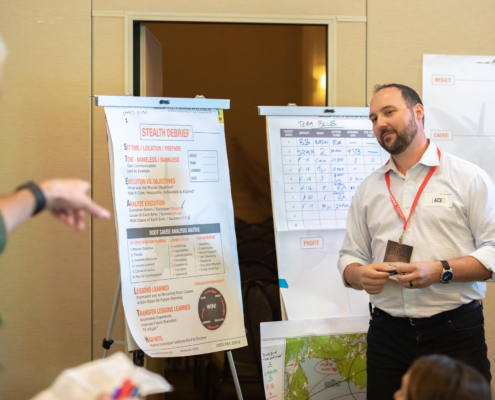
Insight alone doesn’t create change; you need practical methods to apply that insight. That’s where frameworks come in. Whether it’s a structured debrief process borrowed from aviation or a three-step method for conflict resolution, having a clear blueprint encourages people to experiment with new behaviors. A good keynote will often leave the audience with tangible tools they can use immediately in their next meeting or project.

Engaging the Whole Person

Behavioral science acknowledges that humans aren’t just rational decision-makers; we’re driven by emotions, biases, and subconscious triggers. Keynote leaders who understand this go beyond logic-based arguments. They create experiences that tap into emotion. This holistic approach ensures the message resonates at a deeper level, making it more likely to stick.

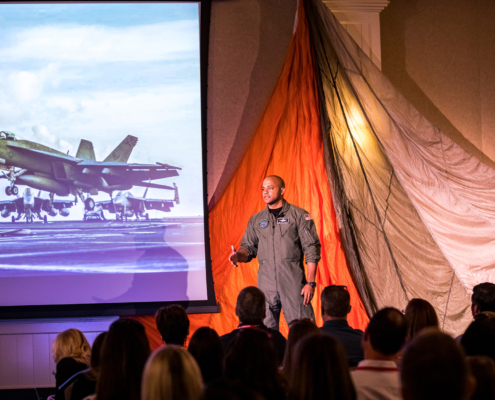
Supercharge collaboration and motivation through insights from our fighter pilot-inspired keynotes. Build high performing teams around shared objectives and drive unstoppable results.

Our Team Building Keynotes

Psychological Factors That Foster High-Performance Team Building

These factors are the “secret sauce” behind building high performing teams:

Autonomy and Ownership

People are more motivated when they feel they have control over their work. If everything is dictated from the top, creativity and initiative can stagnate. A psychology-savvy keynote might demonstrate how small shifts can massively boost engagement.

Social Proof and Modeling

We’re wired to mimic and learn from people we respect or perceive as leaders. If a team sees their manager openly admitting mistakes and offering empathy, they’re more likely to follow suit. Keynote speakers often share vivid examples of leaders who model the behavior they want to see, proving that culture change starts at the top.

Setting and Achieving Meaningful Goals

Keynotes grounded in behavioral science emphasize SMART (Specific, Measurable, Achievable, Relevant, Time-Bound) goals. They also explore the role of intrinsic motivators—like personal growth or alignment with values—in sustaining long-term drive.

Translating Insights into Everyday Practices

Even the most insightful keynote won’t make a difference if the ideas don’t leave the auditorium. Organizations need a structured way to apply these behavioral principles in the day-to-day grind of work life.

Action-Oriented Debriefs

After a keynote, schedule a series of short debrief sessions. In these sessions, team members discuss what they learned and, more importantly, how they plan to use it. Treat these debriefs like mini-workshops, where people leave with an immediate action item.

Behavioral Metrics

Quantifying “behavioral change” might sound odd, but it can be as simple as tracking how frequently the team practices new behaviors. If the team struggles with trust, you might measure how often people volunteer for collaborative tasks or offer peer recognition. Over time, these metrics provide feedback on whether the team is moving closer to high-performance territory.

Long-Term Reinforcement

Regular check-ins, continued training, and leadership that actively supports new habits can embed these shifts into the company culture. Some organizations even appoint “culture champions” who keep psychological strategies top of mind by sharing success stories or tips every couple of weeks.

Decision-Makers’ Guide: Applying Psychology to Team Efficiency

For decision-makers, HR leaders, and executives, the appeal of using psychology to build high performing teams is clear. But what exactly should you do first?

Define Clear Objectives

What do you hope to achieve by tapping into behavioral science? Maybe you want to reduce turnover, increase innovation, or improve cross-departmental collaboration. Having specific goals helps you measure success and keeps everyone aligned.

Choose the Right Keynote Speaker

Seek out experts who have a proven track record of implementing psychological principles in team settings. Listen to their content beforehand and see if they resonate with your organization’s values and needs.

Commit to Follow-Through

A single keynote can spark interest, but it’s up to you to fan that spark into a flame. Provide the resources, time, and leadership support necessary to turn insights into real, sustainable changes in how your teams operate.

Build High Performing Teams With Afterburner Today

If you’re serious about building high performing teams that thrive on trust, motivation, and collaboration, it’s time to bring Afterburner into the picture. Our specialized keynotes distill the best of behavioral science into inspiring, actionable steps your teams can implement right away. Rather than short-lived excitement, we deliver enduring change that powers efficiency and innovation long after the event wraps up. Reach out now and see for yourself how our team building keynotes can ignite a new era of success for your organization.

Share This Post

  • Share on Facebook
  • Share on X
  • Share on WhatsApp
  • Share on Pinterest
  • Share on LinkedIn
  • Share on Tumblr
  • Share on Vk
  • Share on Reddit
  • Share by Mail

More Like This

Copy Of Compass Group Plc 25jun2025 Tgx 27 At 09.30.28 (2)

Popular Keynote Speakers by Topic and Budget

Keynote
https://www.afterburner.com/wp-content/uploads/2026/03/Copy-of-Compass-Group-Plc-25jun2025-TGX-27-at-09.30.28-2-scaled.jpeg 1920 2560 Boo Boucousis /wp-content/uploads/2024/07/Afterburner-Logo-Resize-Fullcolor-300x93.png Boo Boucousis2026-03-20 22:39:102026-05-17 15:56:33Popular Keynote Speakers by Topic and Budget
Afterburner Two Presenters In Flight Suits Take The Stage, With A Large Screen Showcasing A Military Aircraft, Musicians, And People In Costume. The Backdrop Reads All Systems Go At The Fat Brands Franchise Summit, As They Ignite The Room Like An Afterburner.

Keynote Speakers in San Diego: Fueling the Rise of High-Impact Leadership Events

Keynote
https://www.afterburner.com/wp-content/uploads/2025/04/Game-Changing-Insight.jpg 683 1024 Abstrakt Marketing /wp-content/uploads/2024/07/Afterburner-Logo-Resize-Fullcolor-300x93.png Abstrakt Marketing2026-02-24 07:28:392026-05-17 15:56:45Keynote Speakers in San Diego: Fueling the Rise of High-Impact Leadership Events
How To Pick The Right Keynote Speaker For Your Company

How to Ensure Leadership Keynotes Speakers Lead to Behavioral Change

Behavior Change, Execution, Keynote, Leadership, ROI
https://www.afterburner.com/wp-content/uploads/2024/12/How-To-Pick-the-Right-Keynote-Speaker-for-Your-Company.jpg 1250 2000 Christian Boucousis /wp-content/uploads/2024/07/Afterburner-Logo-Resize-Fullcolor-300x93.png Christian Boucousis2026-01-12 09:00:002026-05-17 15:56:48How to Ensure Leadership Keynotes Speakers Lead to Behavioral Change
Laptop Webinar, Woman Or Video Conference Training On Online Zoom

Virtual Keynote Speakers for Remote & Hybrid Teams: Best Practices

Keynote, Leadership, Modern Workplace Culture, Virtual Leadership
https://www.afterburner.com/wp-content/uploads/2026/01/Laptop-webinar-woman-or-video-conference-training-on-online-zoom.jpg 1250 2000 Christian Boucousis /wp-content/uploads/2024/07/Afterburner-Logo-Resize-Fullcolor-300x93.png Christian Boucousis2026-01-05 10:28:282026-05-17 15:56:48Virtual Keynote Speakers for Remote & Hybrid Teams: Best Practices
Close Up Of Female Speaker On Stage At Keynote

How to Measure the Long-Term Impact of a Leadership Keynote Speech

Impact, Keynote, Leadership
https://www.afterburner.com/wp-content/uploads/2024/10/Close-up-of-female-speaker-on-stage-at-keynote.jpg 1250 2000 Christian Boucousis /wp-content/uploads/2024/07/Afterburner-Logo-Resize-Fullcolor-300x93.png Christian Boucousis2025-11-21 08:00:002026-05-17 15:56:49How to Measure the Long-Term Impact of a Leadership Keynote Speech
Boo Team Image

10 Ways a Keynote Speech Can Positively Impact Your Leaders

Executive level, Keynote, Leadership
https://www.afterburner.com/wp-content/uploads/2024/10/BOO-Team-Image.jpg 800 800 Christian Boucousis /wp-content/uploads/2024/07/Afterburner-Logo-Resize-Fullcolor-300x93.png Christian Boucousis2025-11-14 08:00:002026-05-17 15:56:4910 Ways a Keynote Speech Can Positively Impact Your Leaders
2462040 Photoshopimagesblackflightsuits 04 091524

Is Your Organization Ready for a Leadership Keynote? These Signs Say Yes

Keynote, Leadership
https://www.afterburner.com/wp-content/uploads/2024/10/2462040_PhotoshopImagesBlackFlightSuits_04_091524-scaled.jpg 1707 2560 Christian Boucousis /wp-content/uploads/2024/07/Afterburner-Logo-Resize-Fullcolor-300x93.png Christian Boucousis2025-11-07 09:43:312026-05-17 15:56:50Is Your Organization Ready for a Leadership Keynote? These Signs Say Yes
Top Gun Experience Effective Leadership

Think Fast, Lead Faster: Effective Leadership in a World of Declining IQ

Keynote
https://www.afterburner.com/wp-content/uploads/2025/06/Top-Gun-Experience-Effective-Leadership.jpg 1365 2048 Christian Boucousis /wp-content/uploads/2024/07/Afterburner-Logo-Resize-Fullcolor-300x93.png Christian Boucousis2025-05-01 09:56:132026-05-17 15:56:58Think Fast, Lead Faster: Effective Leadership in a World of Declining IQ
Red Team Workshop Participants

Think Like the Enemy: How Red Teaming Exposes Weaknesses Before Reality Does

Keynote
https://www.afterburner.com/wp-content/uploads/2025/05/Red-Team-workshop-participants-scaled.jpg 1707 2560 Christian Boucousis /wp-content/uploads/2024/07/Afterburner-Logo-Resize-Fullcolor-300x93.png Christian Boucousis2025-04-24 18:08:002026-05-17 15:56:58Think Like the Enemy: How Red Teaming Exposes Weaknesses Before Reality Does
Previous Previous Previous Next Next Next

Categories

  • Behavior Change
  • Business Culture
  • Common Mistakes
  • Communication Styles
  • Corporate Planning
  • Debrief
  • Engagement Cycles
  • Event Planning
  • Event ROI
  • Execution
  • Executive level
  • Generational Differences
  • Goal Execution
  • Impact
  • Industry-Specific
  • Inspiration
  • Keynote
  • Leadership
  • Leadership Development
  • Leadership Keynotes
  • Media
  • Miscellaneous
  • Modern Workplace Culture
  • Motivation
  • Orlando Businesses
  • Regional Events
  • ROI
  • Sales Enablement
  • San Diego Events
  • Speaker Selection
  • Strategic Planning
  • Strategy
  • Strategy Execution
  • Task Saturation
  • Team Building
  • Team Dynamics
  • Thought Leadership
  • Timing Strategy
  • Virtual Leadership
  • Workplace
  • Workshop Effectiveness

Newsletter Sign-Up

"*" indicates required fields

This field is for validation purposes and should be left unchanged.

Afterburner Logo Resize White
  • Link to Facebook
  • Link to LinkedIn
  • Link to Instagram

About Us

Building Strong Teams Through the Guidance of Fighter Pilot Keynote Speakers.

Speaking Engagements

Keynotes

Team Building

Leadership Development Workshops

Customized Afterburner Experience

Top Gun Experience

Callsign Generator

Contact Us

255 Giralda Ave, Floor 5,
Coral Gables, FL 33134

+1 305 239 3539

[email protected]

Website by Abstrakt Marketing Group ©
  • Privacy Policy
  • Sitemap
Scroll to top Scroll to top Scroll to top
X
Fill out this form to access content.

"*" indicates required fields

This field is for validation purposes and should be left unchanged.
This field is hidden when viewing the form