

The Ultimate Guide to Hire a Fighter Pilot Speaker
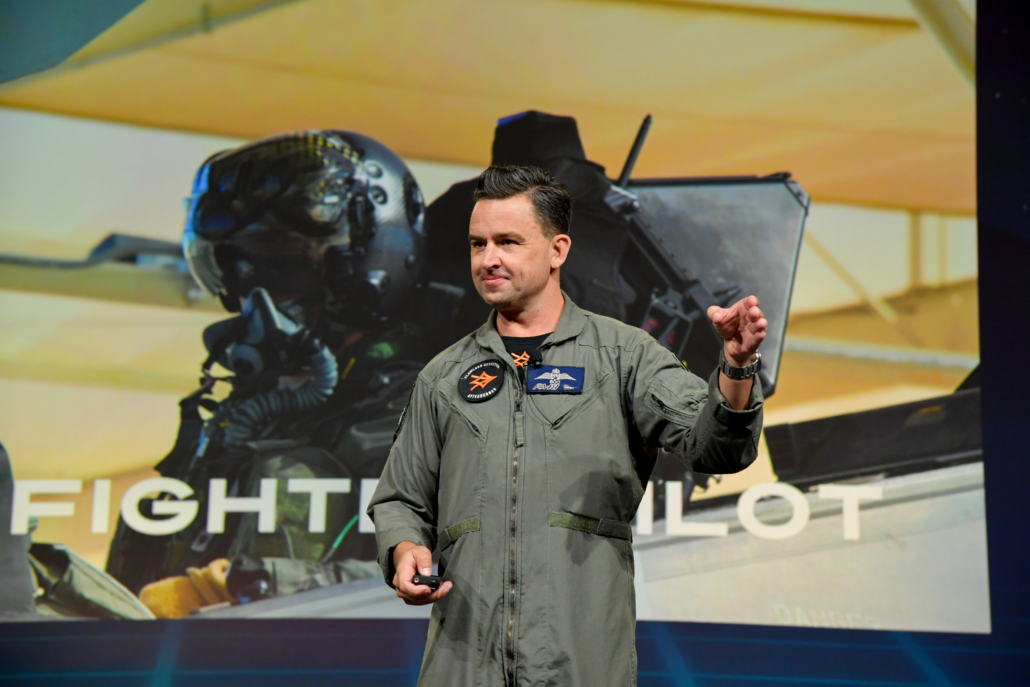
How to Hire a Fighter Pilot Speaker That Actually Delivers
The short answer to hiring a fighter pilot speaker: look past the flight suit and find the mindset and the framework. A compelling war story is an entry point, not the product. What your team needs is a repeatable system for leading, planning, executing, and learning, one that came from an environment where getting it wrong wasn’t a bad quarter. It was a long walk home.
I know that environment. I flew F/A-18 Hornets for the Royal Australian Air Force. I’ve also spent twenty years applying those same principles in boardrooms, hotel projects, logistics operations, and healthcare organizations. What I can tell you, without equivocation, is this: the best fighter pilot speakers don’t inspire you and disappear. They install a new operating system in your organization. If you’re about to make this investment, here’s how to do it right.
Why Hire a Fighter Pilot Speaker in the First Place?
Your leaders are tired. Not just physically, but mentally and emotionally. They’ve sat through enough keynotes filled with polished anecdotes and zero tools. They’ve been told to “think differently” without being shown how. They’ve been motivated for forty-eight hours before the whole thing faded like a New Year’s Eve workout resolution in February.
Here’s the thing: a fighter pilot speaker’s value isn’t the story. The story is the hook. The value is what the story is attached to, a proven methodology that works under pressure, built from decades of real consequence.
When I was flying, there was no margin for ambiguity. Vague instructions, unclear objectives, poor debriefing: these weren’t inefficiencies. They were threats. The frameworks we used to eliminate those threats are the same ones I now teach to executive teams, founders, and leaders across every industry imaginable.
That’s the proposition. Not excitement. Capability.
What Makes This Different from Standard Leadership Content?
Most leadership theory is built on observation. Fighter pilot methodology is built on survival and getting the job done. The difference shows up in how it’s taught. Instead of abstract principles, you get a structured process. Instead of inspiration, you get an operating rhythm. And instead of a speaker who references other people’s stories, you get someone who has lived the consequences of getting it wrong.
What You’ll Actually Learn
When you bring in the right fighter pilot speaker, your team walks away with something they can use on Monday morning. Not a metaphor. Not a poster for the break room. A system.
That system is built on FLEX, FLawless EXecution, a methodology engineered from the fighter pilot community and built around four phases: Plan, Brief, Execute, Debrief. We call them PBED. It’s a closed loop, not a checklist. Each debrief feeds the next plan. Each cycle is sharper than the last. That’s how elite teams compound their learning instead of repeating the same mistakes in slightly different uniforms.
Leading Through Uncertainty
In the cockpit, you can’t control the weather, the enemy’s decision cycle, or the equipment that decides today is a good day to malfunction. You can only control what’s next. It comes down to how well you’ve prepared and how clearly you’ve communicated. A fighter pilot speaker teaches your team the same discipline: stop wasting energy on what you can’t influence, and build ruthless clarity around what you can.
Focus on what you can control.
The mental model we use creates and distributes situational awareness, you’ll sense that as clarity. Not the general concept, but the trained version, the ability to process information at speed, filter the noise, and make sound decisions when everything is moving fast. Your leaders face the same challenge every day. The mindset and the tools transfer directly, and quickly.
Driving Team Alignment and Accountability
Misalignment is one of the most expensive problems a business can have. It drives confusion, and confusion creates friction. It’s quiet. It doesn’t show up on a P&L line. But it bleeds out through missed deadlines, duplicated work, and strategy that never quite lands the way it looked in the slide deck.
In the fighter pilot world, we solve this with the brief. Before every mission, the flight lead walks the entire team through the plan: roles, threats, contingencies, and decision triggers. Nobody leaves with unanswered questions. The rule is simple: it’s not what you say, it’s what’s understood.
Apply that to your business. Apply it to your next product launch, your next client engagement, your next cross-functional initiative. The brief creates shared ownership. It replaces meetings that update people with briefings that align them.
Mastering the Debrief
I’ll tell you what separates good fighter pilot squadrons from great ones. It’s not the hardware. It’s not the training hours. It’s the debrief.
After every mission, pilots gather in a nameless, rankless room. It doesn’t matter if you’re a four-star general or a first-year cadet. The question is always the same: what happened, why did it happen, and what are we going to do differently? We call this ORCA, which stands for Objective, Result, Cause, Action. It’s the structured engine behind continuous improvement.
Most businesses review performance. They look at the numbers, run a retrospective, and close the file. That’s not a debrief. A debrief is where you mine the gap between what you planned and what actually happened, and you do it without ego, without rank, and without the usual organizational defensiveness that turns honest feedback into a turf war.
Communicating with Clarity
Ambiguity is the enemy of execution. I’ve seen it destroy projects that had every other ingredient for success. The right speaker will show your team how to strip communication down to its essential components: clear objectives, explicit roles, and decision triggers that are pre-agreed, not improvised under pressure.
Understanding the Investment
Hiring a top-tier speaker is not an event expense. It’s a capability investment.
Typical Speaking Fee Ranges
For most professional keynote speakers at corporate events, fees typically range from $10,000 to $30,000. At Afterburner, we focus on investment over fees. Speakers with a background in high-stakes aviation and business, who bring a specific methodology with measurable outcomes, reflect that differentiated value. You’re paying for a framework that reshapes how your team operates, not just an hour of compelling content.
What Influences the Cost?
Experience, reputation, and demand are the starting point. But the scope of the engagement matters just as much. A sixty-minute keynote at your annual sales conference carries a different investment than a half-day strategic planning workshop with your executive team. Audience size, location, and the level of customization required will all move the number.
Travel and Additional Expenses
Budget an additional $750 to $2,000 on top of the speaking fee for travel, accommodation, and logistics. Get the full cost picture in the contract before you sign. The best speakers run a clean, professional process here. No surprises.
How to Choose the Right Fighter Pilot Speaker
Finding someone with an impressive biography is easy. Finding someone who can translate those credentials into practical capability for your team is a different task entirely.
Look for Real-World Business Acumen
The most effective speakers in this space have lived on both sides: the cockpit and the boardroom. Aviation experience gives them credibility and a unique set of frameworks. Business experience gives them the ability to apply those frameworks where it actually counts for your organization.
Look for someone who speaks in business outcomes, not aviation analogies. The analogies are tools for memorability. The outcomes are what you’re paying for.
Verify Their Speaking Experience
Flying a high-performance jet and commanding a stage are two completely different disciplines. A decorated pilot isn’t automatically a compelling presenter. Watch video footage of them speaking to corporate audiences. Check references from organizations with comparable team size and industry context. A history of delivering to major enterprise clients is a reasonable signal. Reputation in this space is earned, not assumed.
Insist on Customization
A generic keynote is a missed opportunity. Your organization has specific challenges, a distinct culture, and a clear goal for the event. The right speaker invests time to understand all three and builds the content around your reality, not a template they’ve delivered forty times before.
Ask them directly: how do you tailor your content to our industry and our team’s specific challenges? The answer will tell you everything.
Find Someone Who Connects
The best keynotes don’t feel like lectures. They feel like a conversation in which someone you respect tells you the truth about something important. Look for authenticity, not polish. Look for someone who leaves your team feeling equipped, not just energized.
How to Find and Book Your Speaker
Speaker Bureaus vs. Booking Direct
Speaker bureaus are useful if you’re in the early stages of exploring options across multiple themes and backgrounds. They act as a marketplace, which has value when you don’t have a clear direction yet.
If you already know you want a speaker with deep expertise in execution frameworks and fighter pilot methodology, booking direct is almost always the better path. It gives you a direct relationship, faster communication, and a cleaner customization process. Organizations like Afterburner have a dedicated team that handles this from initial inquiry through post-event follow-up.
Your Vetting Checklist
Before you sign anything, do this: watch video of them speaking, call two or three references from companies you respect, and ask for a pre-event briefing call to assess how they listen. The best speakers ask better questions than most executives. That’s not an accident. It’s training.
Navigating the Contract
Make sure the contract clearly outlines all costs: speaking fee, travel, accommodation, technical requirements, and any follow-up or reinforcement materials. A professional speaker has a clean contracting process. Budget approximately 20 to 30 percent on top of the speaking fee to cover travel and logistics expenses.
Prepare Your Team for Maximum Impact
Brief Your Speaker and Your People
This is the piece most organizations skip, and it’s the one that matters most. Your speaker needs to understand your current situation, your goals for the event, and the specific challenges your team is facing. Give them a genuine briefing, not a one-page overview. The more context they have, the more precisely they can target the content.
Brief your team too. Tell them why you chose this speaker and what you’re hoping they’ll take away. Context transforms passive listeners into active participants.
Define What Success Looks Like Before the Event
Vague goals produce vague outcomes. Before the speaker takes the stage, agree internally on what a successful engagement looks like in measurable terms. Is it a new debrief cadence implemented within thirty days? A structured briefing process introduced to every project team? A common language around execution that sticks across departments? Whatever it is, define it clearly. Then measure it.
Create a Post-Event Action Plan
The energy in the room after a powerful keynote is real. It also has a half-life. Without a plan for application, the best keynote in the world fades into a good memory. Schedule follow-up sessions. Integrate the frameworks into your next project kickoff. Give people an immediate opportunity to practice what they’ve just learned. That’s how the keynote becomes a turning point instead of a data point.
Beyond the Keynote: What Are Your Options?
Interactive Workshops
Workshops are where theory becomes muscle memory. Your team doesn’t just hear about how elite aviators plan and debrief. They do it themselves, applied to your organization’s real challenges. A skilled facilitator will walk them through the PBED cycle on a live initiative, and they’ll leave with a process they can repeat independently.
Immersive Team Experiences
Nothing aligns a team like a shared high-stakes experience. Immersive events take people out of their normal environment and put them in scenarios that require clear communication, trust, and disciplined execution. The lessons land differently when your team earns them through participation rather than just witnessing them from a seat.
Executive Coaching
For the principles to take hold at an organizational level, they have to be modeled from the top. Executive coaching provides personalized, long-term support for leaders who want to internalize the frameworks and build them into their daily leadership practice. Think of it as the ongoing wingman relationship, someone who keeps you honest, sharpens your thinking, and helps you apply the methodology to your specific challenges over time.
What Is a Fighter Pilot Speaker?
A fighter pilot speaker is a professional keynote presenter with a background in military aviation who translates high-stakes operational frameworks into practical leadership and execution tools for corporate audiences. The most effective ones don’t just share stories from the cockpit. They provide repeatable systems for planning, briefing, executing, and debriefing that organizations can embed into their day-to-day operations.
Frequently Asked Questions
What makes a fighter pilot speaker different from other leadership speakers? The core difference is methodology. Most leadership speakers draw on observation, research, or business experience. Fighter pilot speakers draw on an environment where the consequences of poor planning, miscommunication, and failed execution were immediate and severe. That experience produces a different kind of framework, one built for pressure, not just performance.
Will my team be able to relate to the aviation concepts? Yes, because the best speakers don’t ask you to think like a pilot. They show you how the same principles that kept a formation of fighter jets alive apply directly to your quarterly plan, your next client pitch, or your cross-functional team that can’t seem to stay aligned. The aviation context makes the lessons memorable. The business application makes them useful.
How do we make sure the lessons actually stick after the event? Start by briefing the speaker on your specific goals so the content is targeted, not generic. Then build a follow-up plan before the event happens. That might be a workshop, a project kickoff using the new framework, or a leadership team debrief on the keynote itself. Application is what makes content stick. A great keynote without a plan for practice is just a very expensive motivational moment.
Is the FLEX framework adaptable to different company cultures? FLEX, which stands for FLawless EXecution, is built on four universal phases: Plan, Brief, Execute, Debrief. The principles of clarity, alignment, and honest feedback are not industry-specific or culture-specific. They’re human. Whether you run a fast-growth tech startup, a family-owned logistics company, or a healthcare system with ten thousand employees, the framework adapts to your environment. The discipline is in the process, not the jargon.
What’s the difference between booking directly and using a speaker bureau? A bureau is a marketplace, which is useful when you’re exploring options broadly. Booking direct is more efficient when you know what you’re looking for. Working directly with an organization like Afterburner means you’re dealing with the people who built the methodology, not a third-party intermediary. The customization conversation is sharper, the turnaround is faster, and the alignment between your goals and the content is tighter.