

How Leadership Coaching Services Drive Real Growth
Leadership Coaching Services That Actually Drive Results
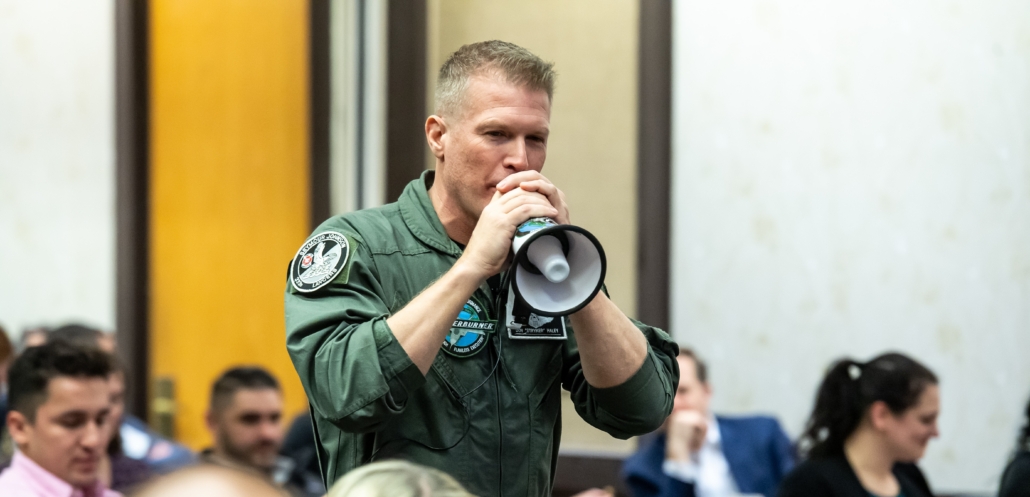
Christian “Boo” Boucousis, CEO of Afterburner, explains why leadership coaching services work only when they install a repeatable execution system, not just motivation. The best coaching doesn’t give leaders advice. It gives them a method: a simple, structured operating rhythm for turning strategy into aligned action, every single day. If your team has a brilliant plan that keeps stalling between the slide deck and reality, the problem isn’t talent or intent. It’s the absence of a system. Effective leadership coaching services close that gap by embedding a framework your people can use under pressure, when it matters most, not just in a workshop when the energy is high.
I learned this the hard way. Not in a boardroom, but in a cockpit.
What I Learned About Coaching from a Stalled Hotel Project
In 2010, I got a call from a group of investors financing the construction of a major hotel property. The project was stalling and perilously close to collapse. Contractors were behind schedule. Budgets were bleeding. Everyone was busy. Nobody was aligned.
I came in and did what any fighter pilot would do: I threw out the to-do lists and replaced them with a single, inflexible focus on outcomes. What are we trying to accomplish? Then we’ll see what we need to do. At the time, I didn’t even realize that this management style was a reflection of my decades of training as an F/A-18 Hornet pilot in the Royal Australian Air Force. I was just doing what worked.
The hotel was built ahead of time and below budget. It became one of the most successful properties of its kind. And that project became the jumping-off point for a twenty-year career applying fighter pilot methodology to business leadership across industries as diverse as publishing, logistics, and healthcare.
Here’s the thing: what I brought to that project wasn’t industry expertise. I knew nothing about hotel construction. What I brought was a method, a way of planning, aligning, executing, and learning that had been tested in environments where getting it wrong meant someone didn’t come home. That’s what real leadership coaching services should deliver. Not advice. Not motivation. A system.
What Are Leadership Coaching Services, Really?
Let me tell you what leadership coaching isn’t: it’s not therapy, it’s not a corporate retreat with trust falls, and it’s not a remedial program for your worst performers. The world’s best athletes don’t fire their coaches when they start winning. They lean in harder. The same principle applies in business.
Leadership coaching services are a structured, action-oriented partnership designed to install a better operating system for how your leaders think, plan, and execute. At Afterburner, we use a methodology called FLEX, which stands for FLawless EXecution, a four-step cycle reengineered from the fighter pilot community: Plan, Brief, Execute, Debrief (PBED). It’s the same process that has driven mission success in military aviation for over sixty years. If it works at 1,260 miles per hour with lives on the line, it works in your quarterly planning meeting.
The goal isn’t to talk through problems. It’s to build repeatable habits that close the gap between your strategy and your team’s ability to execute it. Through our Flawless Execution® approach, leaders learn to define what they can control, clarify their mission using a High-Definition Destination ((HDD), a goal so specific it can only be answered yes or no, and then align their teams to act with precision and purpose.
Individual Coaching vs. Team Coaching
Individual coaching is for the high-performer you want to invest in, the leader stepping into a bigger role, or the executive carrying the weight of a major change initiative. It provides dedicated support to sharpen specific skills in a confidential setting.
Team coaching focuses on how the group functions together. It helps team members understand how their individual actions contribute to collective success or collective failure. By improving how the team plans, briefs, and debriefs, you create a unit that’s genuinely in sync, not just co-located.
Both are valuable. But here’s the distinction that matters: executive coaching operates at the strategic altitude, helping senior leaders guide the organization forward. Team coaching operates on the ground floor, ensuring the people responsible for execution are rowing in the same direction. Our 90-Day Accelerator combines both.
Why Most Leadership Development Doesn’t Stick
US companies spend somewhere around $1,283 per employee on workplace learning annually, with a dedicated leadership development market estimated at $7.6 billion. The return? Global employee engagement fell to twenty-one percent in 2024, down from an already dismal twenty-three percent the year before. According to Gallup’s State of the Global Workplace 2025 report, global engagement fell from twenty-three percent to twenty-one percent in 2024. Manager engagement dropped from thirty to twenty-seven percent in the same period. A separate DDI study found that only twenty-nine percent of employees trust their immediate manager, a seventeen-point decline from 2022.
The spending isn’t the problem. It’s what the spend is pointed at. Most corporate leadership development addresses behavior, what to do differently, without addressing why leaders can’t. In my book Flawless Leadership℠, I put it this way: it’s like paying for running shoes to run a marathon, then giving them to someone with a broken leg.
Compare that to thirteen weeks of immersive Officer Training for a nineteen-year-old like me, plus a $15 million program to build that kid into a fighter pilot. The investment isn’t just in skills. It’s in the complete rewiring of how that person operates under pressure. The spiral doesn’t get addressed in a two-day offsite. It gets dismantled through repeated, deliberate, high-stakes practice with immediate feedback.
You don’t need $15 million. You don’t need thirteen weeks in the mountains. But you do need a simple, consistent, and iterative system, one that works on your mindset, gives you a clear method to follow, and coaches you through the leadership moments that matter. That’s what I call the Three Ms: Mindset, Method, and Moments.
How Leadership Coaching Drives Real Business Growth
I’ve learned that coaching drives growth across four levels, and the order matters.
It Develops Sharper Individual Leaders
McKinsey’s research on complex leadership roles found that one high-performing leader outproduces eight average ones, 800 percent more impact. Each exceptional leader’s output in the top one percentile equates to twelve employees in the bottom percentile. This data comes from McKinsey’s “Attracting and Retaining the Right Talent” research, building on the Aguinis and O’Boyle “Best and the Rest” study of more than 633,000 individuals. Or looked at from the other direction: suboptimal leadership could cost you the equivalent of twelve additional headcount, every year, invisibly.
Coaching sharpens that edge. Not by giving leaders a pep talk, but by equipping them with a framework, FLEX and the ORCA (Objective, Result, Cause, Action) debrief, that turns every project, every meeting, every decision into a learning cycle. The compound effect is what fighter pilots call the accelerated learning curve: get one percent better after every mission, and the gains stack exponentially.
It Builds Teams That Execute Together
Individual improvement is the foundation, but organizational growth happens at the team level. When a leader learns to communicate a clear HDD, facilitate a proper brief using the BRIEF mnemonic (Big picture, Restate objectives, Identify threats and resources, Execute, Flexibility), and debrief using ORCA after every project, the whole team’s performance improves.
The New York Giants were one of the lowest-performing NFL teams before Coach Tom Coughlin brought in Afterburner to implement the fighter pilot debrief. Players openly owned their mistakes week by week, learning together, growing one percent per day. That compounding growth delivered a Super Bowl win. As Quarterback Eli Manning put it: “I wasn’t coaching anybody. I was just coaching myself, looking at what I needed to do better, and telling everybody. Then everybody would talk about what they needed to do to improve.”
It Shapes a Culture of Execution
When coached leaders and their teams consistently apply a proven framework, you stop having isolated pockets of excellence and start building a Flawless Execution® culture. Accountability becomes ingrained. Communication gets clear and concise. Everyone understands their role in achieving the company’s strategic objectives. The framework becomes the cultural norm, not a special initiative.
It Closes the Strategy-to-Action Gap
A brilliant strategy is useless if it stays on a slide deck. Leadership coaching addresses this directly by creating the link between your strategic plan and the daily activities of your teams. Through structured planning and debriefing cycles, teams stay aligned and can quickly identify and close execution gaps, what we call X-Gaps, when reality diverges from the plan.
What the Coaching Process Looks Like
Effective coaching isn’t a series of abstract conversations. It follows a clear flight plan with three phases.
Phase 1: The Assessment: Know Your Starting Coordinates
Before you can get to your destination, you need to know where you are. The process begins with a comprehensive assessment: skill evaluations, interviews, and 360-degree feedback. This isn’t judgment. It’s discovery. It helps identify blind spots, pinpoint development areas, and define what success looks like in binary, measurable terms, just like an HDD.
Phase 2: The Coaching Rhythm: Installing the Framework
Once the mission is defined, the focus shifts to execution. Your coach equips you with practical frameworks, FLEX, ORCA, the Six-Step Mission Planning process, and works with you to apply them to real-world challenges. Regular sessions create a consistent rhythm: plan, act, debrief, improve. This cycle turns new behaviors into ingrained habits. It’s the same principle we use in fighter pilot training. Repetition isn’t about boredom, it’s about mastery.
Phase 3: Measuring What Matters
You can’t improve what you don’t measure. We track progress against the goals set during assessment and connect coaching directly to tangible business outcomes: skill development, team performance improvements, and comparisons of annual performance reviews before and after the engagement. This isn’t about satisfaction surveys. It’s about proving a return on investment.
What Challenges Can Coaching Solve?
Communication and Alignment Gaps
When teams operate in silos, even the best strategy falls apart. Marketing launches a campaign that sales isn’t ready for. Engineering builds a feature that doesn’t solve the customer’s actual problem. These aren’t communication breakdowns. They’re alignment failures. Coaching installs a common language and a single source of truth for your mission.
Decision-Making Under Pressure
In our cockpits, we train ourselves to trust our instruments over our instincts. According to BARC research, fifty-eight percent of companies base at least half of their regular business decisions on gut feel rather than data. Coaching provides the mental models to cut through the noise, assess the variables, and make disciplined choices when the outcome is uncertain. The structured approach to decision-making that PBED installs produces measurable outcomes across individual performance, team effectiveness, and organizational results.
Leading Through Change
Whether you’re navigating a merger, a market shift, or an internal restructuring, change is constant. Coaching equips you to lead through ambiguity with confidence and transparency, to articulate the “why” behind the change and empower your team to adapt and execute.
Performance and Engagement Dips
Sometimes a team just loses its edge. Deadlines get missed. Energy is low. The sense of shared purpose fades. These dips are often symptoms of what I call the Perfection Death Spiral, the belief, buried so deep you don’t even know it’s running, that your value is inseparable from your performance. Coaching helps you diagnose the underlying problem and reinstall the systems that drive high performance using a rhythm of accountability and learning, not a motivational speech.
How to Choose the Right Coaching Partner
The market is crowded. Here’s what to look for.
A Proven Methodology, Not Just Credentials
Certifications are a starting point, but they don’t guarantee results. The most critical factor is a proven, structured methodology that simplifies complexity and drives consistent action. Ask potential partners to walk you through their process and explain how it translates into tangible behaviors and business outcomes. If they can’t show you the system, they don’t have one.
A Framework That Fits Your Culture
A coaching framework shouldn’t feel like a foreign implant. It needs to integrate with your company’s values and operational rhythm. The right partner provides a system that gives your team a shared language and a common set of tools, one that you can measure the impact of on work culture and execution quality.
Leadership Expertise Over Industry Experience
Here’s a misconception I run into constantly: “You need to understand our industry.” In reality, the fundamental challenges of leadership, such as communication, alignment, and accountability, are universal. I knew nothing about hotel construction when I turned that stalled project around. I knew nothing about professional football when we helped the New York Giants debrief their way to a Super Bowl. A great coach’s expertise isn’t in your industry’s technical problems. It’s in the patterns of human dynamics and the leadership frameworks that solve execution gaps, regardless of context.
Measuring the ROI of Leadership Coaching
Track Behavioral Changes
The most immediate impact shows up in how a leader acts. Are they communicating with more clarity? Delegating more effectively? Making faster, more confident decisions? We track this through structured 360-degree feedback before and after the engagement.
Monitor Engagement and Retention
Great leaders create environments where people want to stay and do their best work. After implementing coaching, track improvements in team morale, satisfaction, and commitment. A drop in voluntary turnover, especially among your top performers, is a strong signal that coaching is working.
Connect to Business Results
Did project completion rates improve? Did the sales team hit targets for two consecutive quarters post-coaching? Did operational efficiency go up? By correlating performance data with the coaching timeline, you build a strong business case. The Beer Cartel, a specialty retailer, grew revenue 400 percent in a year by committing to daily debriefing. That’s not motivation. That’s method.
Assess Long-Term Impact
The real value isn’t a temporary fix. It’s the installation of a new operating system. The long-term impact is visible when a leader continues using FLEX frameworks for planning, communication, and problem-solving long after the engagement ends, and when they start developing those same skills in their direct reports. That’s how you build a sustainable culture of high performance.
How to Make Coaching Stick
Integrate It into Your L&D Strategy
Coaching can’t operate in a silo. It needs to be a core component of your broader learning and development strategy, directly tied to your most important business goals. When coaching reinforces what your leaders are learning elsewhere, it becomes the connective tissue that makes everything stick.
Build Internal Coaching Capability
External coaches introduce new frameworks and provide an objective perspective. But to make change sustainable, you need to build coaching capabilities within your own teams. The most effective programs empower your leaders to become coaches themselves, creating a scalable system where the language and habits of high performance spread organically. That’s what the Fighter Pilot Mindset℠ is all about: it’s not about being a fighter pilot. It’s about thinking like one.
Install Repeatable Systems
Motivation fades. Systems endure. The key to lasting change is equipping your leaders with simple, repeatable frameworks they can use every single day. When everyone uses the same process for debriefing a project or aligning on a strategic objective, you eliminate confusion and create clarity. That consistency is what FLEX provides, a proven methodology that becomes your daily operating rhythm.
Frequently Asked Questions
What are leadership coaching services, and how do they work? Leadership coaching services are structured partnerships that help leaders and teams improve execution, alignment, and decision-making. At Afterburner, coaching installs the FLEX (FLawless EXecution) framework, a four-step cycle of Plan, Brief, Execute, Debrief, that gives leaders a repeatable system for turning strategy into action. The process begins with an assessment, moves into framework implementation through regular coaching sessions, and tracks progress against measurable business outcomes.
My leaders are already high-performers. Why would they need coaching? That’s exactly who coaching is for. The world’s best athletes don’t fire their coaches when they start winning. They lean in harder. Coaching isn’t a remedial program. It’s a strategic investment for your best talent, helping them identify blind spots, refine their approach, and perform under increasing complexity.
How is leadership coaching different from a leadership seminar? A seminar is an event. Coaching is a process. Many leaders have experienced the temporary high of a great keynote, only to find themselves back in the same habits weeks later. Coaching installs a new operating system, repeatable habits and practical frameworks embedded into your team’s daily rhythm, so the changes stick long after the engagement ends.
Does a coach need to be an expert in my industry? In my experience, the answer is no, and an outside perspective is often a significant advantage. The core challenges of leadership, such as communication, alignment, and accountability, are universal. A great coach’s expertise is in the patterns of human dynamics and the frameworks that solve execution gaps, regardless of context.
What results can I expect, and how quickly? You can expect to see tangible shifts in behavior and team dynamics within the first 90 days. Initially, this looks like leaders communicating with greater clarity and teams that are more aligned on their objectives. Over the longer term, these behavioral changes create a culture of accountability where your teams can consistently translate strategy into action.
Related Articles
- Executive Coaching Cost: What Smart Leaders Actually Pay
- Executive Coaching Online: A Fighter Pilot’s Guide to Finding the Right Partner
- C-Suite Executive Coaching
Christian “Boo” Boucousis is a former Royal Australian Air Force F/A-18 Hornet fighter pilot, CEO of Afterburner, keynote speaker, and author of The Afterburner Advantage and Flawless Leadership℠. He applies fighter pilot methodology to help business leaders close the gap between strategy and execution.