

The Leader’s Guide to Professional Management Training
Professional Management Training That Actually Works
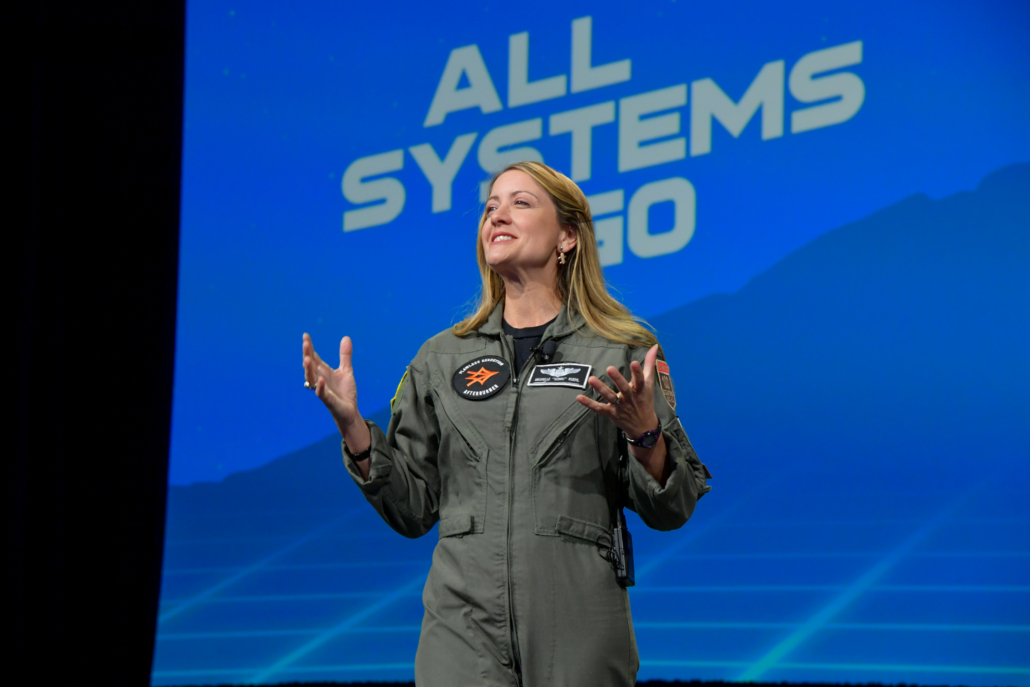
By Christian “Boo” Boucousis, CEO of Afterburner
Here’s the thing about professional management training: most of it doesn’t work. Not because the people attending are broken. Not because the content is wrong. It fails because it’s designed to inspire rather than install. You get two days of motivation, a nice binder, and within three weeks everyone’s back to the same patterns that weren’t working before the offsite.
What is professional management training? At its core, it’s the structured development of practical leadership skills (communication, decision-making, planning, and accountability) that enables leaders to consistently translate strategy into execution. The best programs don’t just teach concepts. They install a repeatable operating system that leaders use every day, long after the event is over. That’s the difference between a program that changes how your team talks about leadership and one that changes how your team actually leads.
I’ve spent twenty years on this problem. Not in a classroom. In the field. After being grounded from flying F/A-18 Hornets due to ankylosing spondylitis, I carried the frameworks that kept fighter pilots alive at 1,200 miles per hour into boardrooms, sales floors, and startup war rooms. I bought Afterburner in 2024 because I’d seen what happens when you give leaders a real system instead of a motivational speech. The results compound. This guide walks you through what makes professional management training effective, how to choose the right program, and what to expect from your investment, based on what I’ve learned training over a hundred thousand leaders across every industry you can name.
Why Most Management Training Programs Fail
Let me tell you what happened with a U.S. bank we worked with. They were implementing a new CRM system. Six-month timeframe, multiple teams, outside vendors, the whole production. Out of the gate, the mood was electric. Everyone was confident. They set their first check-in for a month into the schedule.
When they regathered, nothing substantial had been accomplished.
The execution rhythm was all wrong. The milestone meeting should have been scheduled weeks earlier. Had they done so, they would have caught that team members were lagging behind or veering off schedule. Sound familiar?
This is the gap that most professional management training programs never address. They focus on what leaders should know instead of how leaders should operate. They teach theory and hope behavior changes on its own. But as I’ve learned, and as the research consistently shows, you can’t change behavior without changing the belief driving it. That’s the insight most corporate programs miss.
A 2024 Gallup poll highlighted the consistent decline in global employee engagement to just 21 percent. Manager engagement fell from 30 to 27 percent. Those numbers aren’t falling because people don’t care. They’re falling because no one gave them a system that works.
What Makes Professional Management Training Effective
The programs that actually stick share three characteristics. They’re framework-driven, not theory-driven. They’re practiced in the room, not just presented. And they connect directly to the daily operating rhythm of the organization.
At Afterburner, our approach is built on a methodology we call FLEX, short for FLawless EXecution. FLEX wasn’t designed in a business school. It was engineered from the fighter pilot community, derived from the same operational loop the U.S. Air Force has used for over sixty years. If it’s kept aircrew alive at 1,200 miles per hour, it’ll work in your leadership meeting.
FLEX runs on four phases we call PBED:
Plan: design the mission with precision. Brief: make sure everyone understands the plan and their role. Execute: fly the brief with discipline. Debrief: close the loop and feed the learning forward.
It’s a closed loop, not a checklist. The debrief feeds into the next plan. Each cycle is sharper than the last. That’s how compound growth works at the method level.
Organizations that use FLEX missionize their business. Everything has a purpose. Action replaces busywork. Focus replaces distraction. Destinations replace goals. Every initiative has a start, a middle, an end, and a measurable outcome. That’s what our approach is built to deliver: not temporary inspiration, but a sustainable system for execution.
The Role of Mindset, Method, and Moments
Effective professional management training can’t just address skills. It has to address the operating system underneath those skills. In our Flawless Leadership℠ framework, we call this the Three Ms: Mindset, Method, and Moments.
Mindset delivers internal clarity. It’s the ability to see and interrupt what I call the Perfection Death Spiral, the pattern where perfectionism drives control, control drives overwhelm, and overwhelm pushes you further from an impossible standard, which triggers more perfectionism. Round and round. Most leaders are on this ride and can’t find the brake because they can’t see the ride they’re on.
At the core of your leadership operating system are the Three B’s: Biases, Beliefs, and Behaviors. Your biases are the subconscious filters built from every experience you’ve ever had. Your beliefs are the stories those biases wrote. And your behaviors are the visible output, what everyone else can see but you can’t. Here’s the critical insight: you can’t sustainably change behavior without reprogramming the belief driving it. That’s the gap most leadership programs miss. They focus on the behavior layer and wonder why nothing sticks.
Method is FLEX, the repeatable system that replaces hope with process.
Moments is the ability to lead with intention in the moments that matter most: with your people, in the impact you create, and in the now.
Miss any one of them and the other two can’t carry the load. A leader with method but no mindset is a technician. A leader with mindset but no method is a dreamer. A leader with both but who can’t show up in the moment leaves all of it theoretical.
Why Destinations Beat Goals
Before any training program can be effective, the people in the room need to know exactly where they’re going. Not vaguely. In high definition.
In FLEX, we don’t set goals. We define High-Definition Destinations, or HDDs. An HDD is a crystal-clear picture of what success looks like, specific enough that there’s no ambiguity about whether you’ve arrived. Not “grow the business” but “increase market share in the mining sector by 800,000 gallons of fuel-oil per month by November 30.” One of our clients built exactly that HDD. They hit it within seven months and exceeded it.
The HDD test is simple: Can everyone on your team describe your HDD in one sentence without checking a document? If not, it isn’t defined clearly enough yet.
Goals leave room for exit ramps. Destinations demand course correction until you arrive. That distinction is everything.
Types of Professional Management Training
Not all training serves the same purpose. The right format depends entirely on what you’re trying to achieve.
Immersive Team Experiences
These are high-energy, hands-on sessions designed to solve a specific problem or build team cohesion through shared experience. Instead of talking about theory, your team practices new skills and behaviors together in a focused environment. Think of it like the difference between reading about how to fly and actually strapping into the simulator. Afterburner’s team building experiences are designed to forge stronger, more agile teams ready to tackle complex challenges, using the same FLEX framework fighter pilots use on every mission. These are perfect for leadership offsites or for teams that need to quickly align and learn to execute as a single, cohesive unit.
Comprehensive Leadership Development Programs
If your goal is lasting behavioral change and a consistent leadership culture, a comprehensive program is the right fit. These aren’t one-off events. They’re structured, long-term engagements designed to embed new skills and frameworks into your organization’s DNA. Our leadership development programs integrate learning into the daily workflow through coaching, follow-up sessions, and practical application. A one-day workshop is a catalyst, but a sustained program is what installs the operating system.
Executive Coaching and Strategic Planning
Tailored for senior leaders and their teams, executive coaching provides personalized, one-on-one guidance to help leaders refine their skills, overcome specific challenges, and maximize their impact. Facilitated strategic planning workshops bring the entire leadership team together to build a clear, actionable plan using the Six-Step Mission Planning process, the same process fighter pilots use before every mission.
Skills-Based Online Courses
For building specific, technical skills in individuals, online courses and professional development programs offer flexibility. These are great for individual knowledge acquisition, but they typically don’t address the team dynamics and systemic execution challenges that immersive programs are designed to solve. They’re a valuable piece of the puzzle, not the whole picture.
How to Choose the Right Professional Management Training Program
With so many options on the market, selecting the right program can feel overwhelming. Here’s how I’d approach it, the same way a fighter pilot approaches mission planning.
Define Your Execution Gaps First
Before you can find the right solution, you have to clearly define the problem. What specific leadership or management skills are holding your team back? Are your managers struggling with cross-functional communication, decision-making under pressure, or holding their teams accountable?
In FLEX, we’d call this an X-Gap analysis, the discipline of periodically stepping back from the day-to-day action to ask one question: is what’s actually happening aligned with what we planned? Everything you currently call a leadership meeting is actually an X-Gap waiting to be structured properly.
Gather this information through performance reviews, 360-degree feedback, employee engagement surveys, or simply by having candid conversations with your managers and their teams. The goal is to create a detailed picture of your current capabilities versus your desired future state.
Evaluate the Provider’s Approach
Look for a provider with a proven track record, experienced facilitators, and a methodology that resonates with your company culture. Go beyond the website. Look for case studies, client testimonials, and evidence of real-world results. As one training expert advises, you should read reviews from past participants and make sure they offer support after the initial engagement.
Pay close attention to their core philosophy. Is their approach based on abstract theory, or is it grounded in real-world, high-stakes experience? The most effective programs are built on practical, repeatable frameworks that leaders can apply the very next day.
Align Training with Your Strategic HDD
Management training should never happen in a vacuum. To deliver real value, it must be directly linked to your organization’s most important strategic objectives, your HDD. If your company is focused on rapid growth, your training should equip leaders to scale their teams effectively. If you’re navigating a merger, the program should focus on building alignment and a cohesive culture.
Before committing to a program, ask the provider how their training will help you execute your strategic plan. The right partner will draw a clear line from their curriculum to your bottom-line results.
Confirm What Happens After the Event
Here’s where most organizations get burned. A common pitfall of corporate training is that the lessons learned in a workshop are quickly forgotten once everyone returns to their daily routines. The “event” is over, and old habits creep back in.
In FLEX terms, this is a program without a debrief loop. Without reinforcement (follow-up coaching, accountability sessions, access to ongoing resources) the learning dies on the vine. Look for programs that build momentum over time, not just a momentary spark. Afterburner’s 90-Day Accelerator is designed to embed new habits through repeated practice, because a single mission doesn’t make a fighter pilot. Hundreds do.
What to Expect from Your Investment
Understanding Pricing
The cost of professional management training varies widely. A short university course might run a few thousand dollars per person. A fully customized, multi-day immersive experience for your entire leadership team represents a more significant investment. When you receive a proposal, look closely at what’s included. Does the price cover initial assessments, program materials, facilitator travel, and post-training reinforcement? Understanding the full scope helps you compare options accurately.
Here’s the thing: U.S. companies spent approximately $98 billion on corporate training in 2024, with the global leadership development market valued at over $82 billion. Yet 75 percent of organizations rate their leadership programs as “not very effective.” That’s a staggering amount of money producing mediocre results. Compare that to thirteen weeks of immersive officer training plus a $15 million program to build a single fighter pilot. The gap between investment in military and corporate leadership development is stark, and it explains a lot about the results each system produces.
How to Measure ROI
The best way to justify the investment is to stop treating training as a cost and start treating it as a driver of business results. Before the program begins, identify the specific business metrics you want to improve: project completion rates, employee engagement scores, decision-making speed, or cycle time.
A landmark study by O’Boyle and Aguinis, sampling 632,599 individuals across academia, sports, entertainment, and business, found that high performers are 400 percent more productive than average. McKinsey & Company built on this research, finding that in highly complex leadership roles, that gap rises to 800 percent. Each high-performing leader’s output equates to roughly twelve average employees. That math reframes the conversation entirely: the question isn’t whether you can afford leadership development. It’s whether you can afford not to.
The most effective way to measure training effectiveness combines qualitative feedback with quantitative data. Use pre- and post-training assessments for immediate impact. For long-term value, track changes in KPIs tied directly to the training goals. And here’s a tip from the cockpit: don’t try to measure everything. Pick the two or three metrics that matter most, the ones directly tied to your HDD, and track those obsessively. Everything else is noise.
What Factors Drive Cost
Several key factors determine the final price of a professional management training program. The level of customization is a major one. A tailored program designed to address your specific business challenges will cost more than an off-the-shelf workshop. The duration of the engagement, the number of participants, and the seniority of the facilitators also play a role. Think of it as a strategic choice. Are you looking for a one-time motivational keynote or a long-term partnership designed to instill a culture of continuous improvement and flawless execution? The most effective solutions are ongoing, providing leaders with the tools they need to adapt and grow over time, because as we say in FLEX, you plan small, plan often, and plan together.
The Debrief: Why Training Without a Feedback Loop Is Training Wasted
If there’s one thing I want you to take from this entire guide, it’s this: the debrief is the secret weapon.
Most organizations call their post-project review a “post-mortem.” Even the word is wrong. Post-mortem is Latin for “after the fact.” Who wants that for a daily habit?
The fighter pilot debrief runs on a four-step framework called ORCA: Objective, Result, Cause, Action. Restate what you set out to achieve. Document what actually happened. Trace the root cause to a specific decision or process, not “the market,” not “bad timing.” Then extract one action that feeds directly into the next plan.
ORCA only works in the right culture. When you walk into a fighter pilot debrief room, rank insignia goes into a tray at the door. General, colonel, or brand-new wingman, inside that room, everyone has an equal obligation to the truth. The governing principle: it’s not who’s right. It’s what’s right. The Blue Angels set the standard. The lead pilot stands up first and owns their errors in front of the whole team. When the leader does this, every person in the room understands that owning a result is what’s respected here. The conversation shifts from self-protection to shared diagnosis.
I’ve watched this principle transform organizations. We worked with the New York Giants before they went on to win Super Bowl XLVI. The FLEX debriefs built energy and purpose. The team was coming together in a new way, from the inside out. From a culture where things were being held back, we showed them how to create a culture where people felt comfortable talking. They weren’t just learning a new process. They were tweaking their culture, and that stays with you long after we’ve left.
Any professional management training program worth your investment should install this kind of feedback loop. Without it, you’re just hoping things get better. And hope is not a strategy.
One percent better doesn’t sound like much. But compounded daily, it doesn’t make you 365 percent better by year’s end. It makes you thirty-seven times better. That’s the accelerated learning curve. That’s what separates organizations that compound growth from those that just accumulate time. And that’s what a real leadership development program is built to deliver.
Frequently Asked Questions
What is the difference between a one-day workshop and a longer professional management training program? A one-day workshop is a powerful catalyst. It’s designed to solve a specific problem, align a team quickly, or introduce a new way of thinking. A longer program installs a new operating system. It embeds new skills and behaviors over time through reinforcement and practice, creating lasting change that becomes part of your company’s culture. Both are valuable. They serve very different strategic purposes.
How can I justify the cost and measure the return on investment of management training? Before you begin, identify the specific business metrics you want to improve: project completion rates, employee retention, decision-making speed. Tie the training objectives directly to these key performance indicators so you can create a clear, measurable link between the program and your bottom line. The most effective measurement combines immediate feedback with long-term KPI tracking.
Is management training only for new or underperforming leaders? Not at all. Some of the biggest gains come from developing your experienced leaders. A 2024 Gallup poll showed even manager engagement is declining, to 27 percent globally. The business environment is constantly evolving, and even the best leaders need to refine their skills. Ongoing development ensures your entire leadership team shares a consistent framework for execution. In the fighter pilot world, the most experienced pilots still debrief every single mission.
How do we ensure the lessons from a training program actually stick? What happens after the initial event matters more than the event itself. Look for training that includes a system for reinforcement: follow-up coaching, accountability sessions, or practical tools that integrate learning into daily work. At Afterburner, our FLEX methodology is built as a daily operating rhythm: Plan, Brief, Execute, Debrief. It’s not something you remember from a workshop. It’s something you do every day.
Our leaders are already incredibly busy. How can we fit professional management training into their schedules? This is the most common concern I hear, and the most telling. If your leaders are too busy for the training that would make them less busy, that’s not a scheduling problem. That’s the Perfection Death Spiral in action. The right program doesn’t add to their workload. It gives them a framework that cuts through the noise, replaces unfocused meetings with fifteen-minute briefs, and makes their current work more efficient. The busiest leaders are usually the ones who need it most.
Related Articles: