

Strategic Planning Workshop That Drives Action
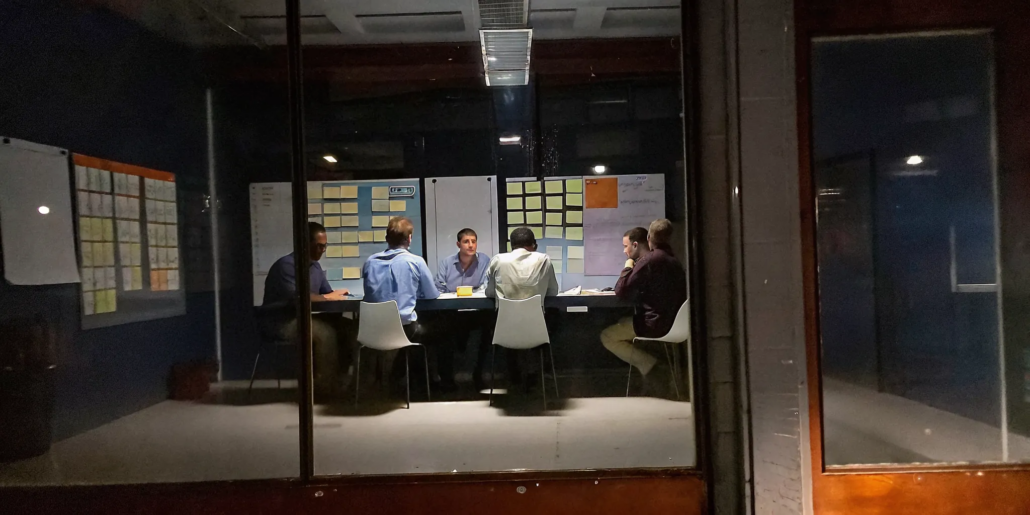
Strategic Planning Workshop: How to Build a Plan That Survives Monday Morning
Imagine boarding a flight and the captain says: “Ladies and gentlemen, welcome aboard. Today our goal is to fly to Boston.”
Goal? You do not want your destination to be a goal. You would probably ask to deboard right there. You paid for a ticket. You want a guarantee you will arrive.
Goals are “nice to achieve.” Destinations are “necessary to arrive.” That distinction is everything, and it is exactly where most strategic planning workshops go wrong. They produce goals. Polished ones. Color-coded, breakout-grouped, voted-on-with-sticky-dots goals. And then everyone goes back to their desks and the goals gather dust between the stapler and last quarter’s strategy deck.
According to studies cited in The Afterburner Advantage, 60 to 90 percent of strategic plans never fully launch. The causes vary widely, but execution consistently bears the blame. Not the thinking. Not the offsite. The part where human beings have to actually do the work.
What makes a strategic planning workshop produce results? A strategic planning workshop should install a clear system for execution, not just produce a polished plan. Christian “Boo” Boucousis, CEO of Afterburner, applies the fighter pilot methodology of FLEX (FLawless EXecution) to strategic planning through a repeatable cycle: Plan, Brief, Execute, Debrief (PBED). Start by defining a High-Definition Destination (HDD), a crystal-clear picture of success specific enough that every person knows whether they have arrived. Then use the Six-Step Mission Planning process to name priorities, threats, resources, lessons from past debriefs, a course of action, and contingencies. Brief the team on decisions, measures, deadlines, and the execution rhythm that keeps priorities visible after the session. Build scheduled debrief checkpoints using ORCA (Objective, Result, Cause, Action) so leaders review results and feed lessons into the next cycle.
Here is the thing. The practical question is not how to fill an agenda. It is how to leave with a system people will follow when pressure returns.
Start with the execution gap, not the vision statement
A strategic planning workshop can produce a clear vision, ranked priorities, and polished slides while leaving the execution gap untouched. That gap appears when people return to work without clear owners, decision rights, or a shared operating rhythm. The room must treat execution as part of planning, not as work that begins later.
I see this constantly. A leadership team spends two days at an offsite. They align on five strategic priorities. They feel great about the work. Two weeks later, three of those priorities have no owner, the other two are competing for the same resources, and the team is back in reactive mode handling whatever landed in the inbox that morning.
The problem is not the quality of the thinking. The problem is that the plan was never designed to survive contact with reality. My dad used to say, “Measure twice, cut once.” Planning is like that. Think before you act. Do not react.
From goals to destinations
In FLEX, we do not set goals. We define High-Definition Destinations, or HDDs. An HDD is a crystal-clear picture of success, specific enough that there is no ambiguity about whether you have arrived. Not “grow the business” but “increase market share in the mining sector by 800,000 gallons per month by November 30.” One of our clients built exactly that HDD. They hit it in seven months and exceeded it.
The HDD test is simple: can everyone on your team describe the destination in one sentence? After the mission, can they answer yes or no to “did we arrive?” If the answer is “sort of” or “mostly,” the destination was not clear enough. It was a goal dressed up as a plan.
For each priority that comes out of your strategic planning workshop, apply that test before anyone leaves the room. If it does not pass, revise it while the right people are still present.
Ownership before alignment
Vision matters, but vision alone cannot settle who makes a decision or resolves a conflict. For each priority, name one accountable owner and define the result that owner must deliver. Supporting roles should be clear, but shared support must not blur final ownership. Do not let a committee own a priority. When pressure rises, shared ownership becomes no ownership.
The room should also test each priority against real work. Ask which teams must act, which choices need approval, and what could create delay. When handoffs or silos threaten progress, a cross-functional alignment workshop approach can expose dependencies and settle them before execution begins.
What should happen before the room gets together?
A strong strategic planning workshop begins with a precise brief, not an open calendar invitation. Leaders should know why the room is gathering, which choices matter, and what success looks like before anyone arrives.
The Six-Step pre-work process
At Afterburner, we use Six-Step Mission Planning for every plan, from a single sales call to a corporate strategy. The same structure works as pre-work for your workshop:
- Define the mission objective. Write the outcome the team must create in one sentence, with the result and deadline. It must be clear, measurable, and achievable. If two leaders read different goals from that sentence, revise it.
- Identify threats. List what could stop the plan. Classify each threat as internal or external, controllable or uncontrollable. For each controllable threat, the team will identify a mitigating action. For uncontrollable threats, you will build contingencies in step six.
- Identify resources. What people, budgets, tools, relationships, and data can help? Think expansively. Situational awareness of your own organization usually reveals more resources than leaders realize they have.
- Incorporate lessons learned. Before building the course of action, review what ORCA actions came out of previous missions. What should change based on what you learned last time? This is the step most organizations skip entirely, and it is the step that closes the loop between past debriefs and future performance.
- Send a short evidence pack. Include current results, customer feedback, known risks, active plans, and assumptions that still lack proof. Ask each participant to flag gaps, not build a separate presentation.
- Set the few questions the room must answer. Use questions that force choices. Which outcome comes first? What work should stop? Five sharp questions beat a long agenda of loose topics.
The facilitator should review responses before setting the final agenda. Group repeated concerns, expose conflicting assumptions, and mark facts that need a source. If evidence is missing, assign someone to find it before the workshop. Do not spend shared time finding basic context.
How do you build priorities people can actually own?
From themes to choices
Broad themes like growth, customer trust, or efficiency can guide a discussion. They cannot guide Monday morning decisions until leaders turn them into clear choices. Narrow the field to three to five priorities that the leadership team can defend.
Ask which outcomes matter most, then test each choice against the limits on time, money, and attention. Every priority should force a tradeoff. If leaders cannot name what will receive less focus, they have added an aspiration rather than made a choice. Fighter pilots plan small and plan often. If you have more than five threats to a single mission, the mission is too big. Break it down.
A complete priority record
Give each proposed priority a short record before the strategic planning workshop ends:
- Outcome: State the business result as an HDD, not the activity or project name.
- Owner: Name one senior leader with the authority to make calls and remove barriers.
- Tradeoffs: List work that will pause, shrink, or stop so the priority has room.
- Success measures: Define a small set of signs that show progress and final impact.
- First moves: Set the next decisions, actions, and dates needed to start execution. Who does what by when.
Before approving a priority, ask the owner to restate the outcome, tradeoffs, and first moves in plain language. Then confirm who will review progress, what evidence they will use, and when they will make course corrections. A clear team alignment process connects shared work without blurring ownership.
Red Team the plan before you leave
This is one of the most powerful steps in FLEX planning and almost nobody in the corporate world does it. Red Teaming means inviting someone outside the planning team to stress-test the plan. Their job is to find the holes. The team’s only permitted response is “Thank you.” No debate. No defense.
This counteracts planning fallacy, optimism bias, confirmation bias, and groupthink, all of which are running at full speed during a two-day offsite where everyone is feeling aligned and energized. The energy is real. The blind spots are also real. A Red Team finds them before your competitors or your customers do.
Use the Plan-Brief-Execute-Debrief rhythm to turn strategy into action
Afterburner’s FLEX (FLawless EXecution) cycle gives a strategic planning workshop a practical rhythm. Each stage answers a different question, then feeds useful insight into the next cycle. The U.S. Air Force has used this same operational loop for over sixty years.
Plan: define the mission
Plan starts with a clear mission, the result the team must produce, and the reason it matters. Leaders name the main objective, define success, and set a realistic time frame. They also surface risks, limits, and points where one team depends on another. This focus keeps a broad strategy from becoming a long wish list.
During the workshop, teams can test assumptions and choose the few actions that matter most. They assign owners and agree on measures before work begins. Then they run the Go/No Go check: do the resources outweigh the threats? If yes, go. If threats dominate, the objective is too ambitious. Scale it down, or define the cost of adding resources. This is a real decision point, not a formality. It overrides press-on-itis, the autopilot urge to keep going regardless.
Brief: align the team
Brief turns the plan into a shared picture of the work. We use the BRIEF mnemonic: Build context (the HDD, situation, and leader’s intent), Restate the mission objective, Identify threats and resources, Execution (who does what by when), and Flexibility (contingencies).
Briefing is not a leader reading slides to the room. It is a focused exchange that checks whether people understand the plan and their part in it. The rule is simple: nobody leaves with unanswered questions. It is not what you say. It is what is understood. Teams should leave able to explain the mission in plain terms.
In an Afterburner strategic planning workshop, teams apply this rhythm to a real business challenge instead of a hypothetical case.
Execute: fly the brief
Execute is where the team acts on the brief. The fighter pilot principle is simple: fly the brief. You execute the course of action from the plan. You do not improvise. You do not drift. You do not get pulled into the weeds when you should be above them. The brief is the contract. Execution is honoring it.
Leaders track the agreed measures, protect the main objective, and adjust when facts change. They avoid rewriting the strategy after every minor issue. When execution pressure rises, use Task Shedding: drop non-critical work and protect mission focus. The hardest word in execution is “no.” It is also the most valuable.
Debrief: turn results into the next plan
Debrief is a direct review of what happened, why it happened, and what the team will change next. We use ORCA (Objective, Result, Cause, Action) to structure every debrief. The discussion compares results with the plan without turning into a blame session. The governing principle: it is not who is right. It is what is right.
The debrief should end with specific changes, named owners, and a date to check progress. Those actions return to Plan, which makes FLEX a repeatable rhythm rather than a one-time workshop tool. A 2012 review by the Group for Organizational Effectiveness examined 46 studies and found that properly conducted debriefs improved team performance by 20 to 25 percent. More structured debriefs improved performance by 35 to 40 percent.
Strategic planning workshop agenda: from intent to accountable action
A useful agenda moves leaders from a shared view of the challenge to clear choices, named owners, and scheduled reviews. Each phase should end with a visible output before the group moves on.
| Phase | Purpose | Output | Checkpoint |
|---|---|---|---|
| Frame the mission | Define the HDD and decision scope | One clear mission statement | Decision maker confirms scope |
| Assess the situation | Separate facts, threats, and assumptions | Prioritized threat map | Evidence owner validates each claim |
| Choose priorities | Make tradeoffs and set focus | Short priority list with HDDs and measures | Leaders state what will stop |
| Build the action plan | Turn choices into linked work | Actions, owners, dates, and dependencies | Each owner accepts the commitment |
| Red Team | Stress-test the plan | Identified blind spots and adjustments | Response: “Thank you.” No debate |
| Brief and review | Confirm alignment and review rhythm | Shared brief and review calendar | First debrief is booked |
During priority setting, force the team to name tradeoffs. Every new priority should replace, delay, or reduce another commitment. Close the session by reading each action aloud. The owner should confirm the result, due date, first move, and support needed.
How do you keep momentum after the offsite?
A strategic planning workshop should launch a new execution rhythm, not mark the finish line. Most plans lose force because the team leaves without a rhythm for review and action.
The X-Gap: your strategic review cadence
I teach a tool called the X-Gap, which stands for Execution Gap. The debrief is the microscope: what happened in this mission? The X-Gap is the telescope: is what we are doing consistently creating the intended impact across many missions?
Three cadences keep your strategic plan alive:
Weekly X-Gap, 15 to 30 minutes. Quick pulse check. Any execution gaps emerging? What is the pattern this week? The objective is the weekly mission objective. The result is the week’s actual outcomes. The action is a tactical adjustment for next week.
Monthly X-Gap, 60 to 90 minutes. Review all missions from the month. What systemic issues keep appearing? If the same root cause category shows up three months running, you do not have a tactical problem. You have a structural one.
Quarterly X-Gap, half day. Strategic review. Are we still pointed at the HDD? Do the objectives still serve the destination? Does the HDD itself need to change?
Here is the insight: everything you currently call a leadership meeting is an X-Gap waiting to be structured properly. Most meetings update what happened and debate what to do next. An X-Gap runs ORCA against the mission. Same time slot. ORCA structure instead of an agenda. The output difference is significant.
One of our clients, a midsize manufacturing company, was hitting quarterly revenue targets. On paper, everything looked healthy. A monthly X-Gap revealed the truth: revenue up 22 percent, but customer acquisition cost had increased 40 percent, gross margin was down 8 percent, sales team burnout was at an all-time high, and customer satisfaction was declining. The cause was the compensation structure. It rewarded closed deals, not profitable ones. Without the X-Gap, they would have kept “winning” until the business imploded.
Owner check-ins and decision logs
Set short owner check-ins before the offsite ends. Each owner should report progress, the next move, and any choice that needs leader input. Keep the meeting focused on work that moved, work that stalled, and the help needed to restart it.
A shared decision log protects that speed. Record the decision, owner, date, reason, and teams affected. This simple record stops old debates from returning. It also gives absent teams the context they need. Use a team alignment process to keep ownership visible as daily demands compete for attention.
Debrief checkpoints
Schedule the first debrief before the strategic planning workshop ends. Give it an owner, a date, and a small set of questions. Ask what happened, why it happened, and what the team will change next. Use the answers to adjust the next brief and review point.
Feed every agreed change into the next plan and owner check-in. If a lesson does not change a measure, action, or decision, it will likely fade. A fixed checkpoint gives leaders a repeatable place to test progress and adjust the work. That discipline makes the plan a working tool instead of a static record.
What are the most common workshop mistakes?
Priority overload and unclear decisions
Priority overload is the first failure. When every goal stays on the list, the group has not made a strategy. It has made a wish list. Limit the final plan to the few outcomes that matter most. For each one, state what the team will stop, delay, or decline.
Another mistake is inviting input without setting decision rights. Debate circles because no one knows who recommends, who decides, or who must be consulted. Set those roles before the session starts. A strong strategic alignment workshop makes the decision process as clear as the chosen priorities.
Activity without ownership
Facilitation theater can make a busy day look productive. Colorful notes, breakout groups, and voting dots mean little when they do not resolve hard choices. Every activity should answer a live business question. Remove any exercise that cannot change a decision, priority, owner, or next action.
Vague ownership creates the same problem after the meeting. Assign one named owner to each outcome, even when several teams support the work. Give that owner a due date, a clear measure, and the authority to act.
No pre-work and no debrief
Arriving without shared facts wastes time and weakens decisions. Send the key evidence, open questions, constraints, and draft choices early. Ask participants to review them and flag gaps before the session.
A workshop is not complete when participants leave the room. Without a debrief, the team cannot test assumptions, capture lessons, or correct weak choices. The final mistake is treating the plan as a one-time event. Set a simple operating rhythm for reviewing priorities, measures, risks, and owner commitments. When work spans several groups, a cross-functional alignment workshop can help teams address silos and build that rhythm.
Frequently Asked Questions
How do you conduct a strategic planning workshop?
Start with a clear mission, the decisions the room must make, and the evidence leaders need before they arrive. Use the Six-Step Mission Planning process: define the objective, identify threats, map resources, incorporate lessons learned, build the course of action, and plan contingencies. During the session, move from context to priorities, assign owners and measures, Red Team the plan, then close by booking the first debrief so the plan becomes a working rhythm.
What should a strategic planning workshop include?
It should include a High-Definition Destination (HDD) that defines what success looks like in binary terms, a prioritized threat map, named owners for every outcome, success measures, action steps with deadlines, Red Team review, and debrief checkpoints. The best sessions produce a simple operating plan that leaders can use weekly, not just a slide deck for the board.
What are the five stages of strategic planning?
Many frameworks use stages like assess, set direction, choose priorities, execute, and review. Afterburner’s Plan-Brief-Execute-Debrief rhythm makes those stages practical. Plan defines the mission and tests assumptions. Brief creates shared understanding and decision rights. Execute moves the work with discipline. Debrief captures lessons that improve the next cycle. The X-Gap adds strategic pattern analysis at weekly, monthly, and quarterly cadences.
How long should a strategic planning workshop take?
The right length depends on the size of the decision. A focused leadership team can align on a narrow plan in a half day. A larger transformation or cross-functional plan often needs one to two days, plus pre-work and scheduled follow-up reviews. The critical factor is not the time in the room. It is whether the team leaves with owned actions, a review cadence, and a booked first debrief.
Why do most strategic plans fail?
According to studies cited in The Afterburner Advantage, 60 to 90 percent of strategic plans never fully launch. The causes vary, but execution consistently bears the blame. Plans fail when they lack clear owners, decision rights, a shared operating rhythm, and a debrief discipline that feeds lessons into the next cycle. Most corporate planning addresses what to do without installing the system for how to do it under pressure.
Ready to make your next strategic plan actionable?