
 https://www.afterburner.com/wp-content/uploads/2026/05/Copy-of-Compass-Group-Plc-25jun2025-TGX-26-at-19.47.39-6-1-scaled.jpeg
1488
2560
Boo Boucousis
/wp-content/uploads/2024/07/Afterburner-Logo-Resize-Fullcolor-300x93.png
Boo Boucousis2026-05-13 08:34:292026-05-17 15:56:138 Characteristics for Building a High-Performance Team
https://www.afterburner.com/wp-content/uploads/2026/05/Copy-of-Compass-Group-Plc-25jun2025-TGX-26-at-19.47.39-6-1-scaled.jpeg
1488
2560
Boo Boucousis
/wp-content/uploads/2024/07/Afterburner-Logo-Resize-Fullcolor-300x93.png
Boo Boucousis2026-05-13 08:34:292026-05-17 15:56:138 Characteristics for Building a High-Performance Team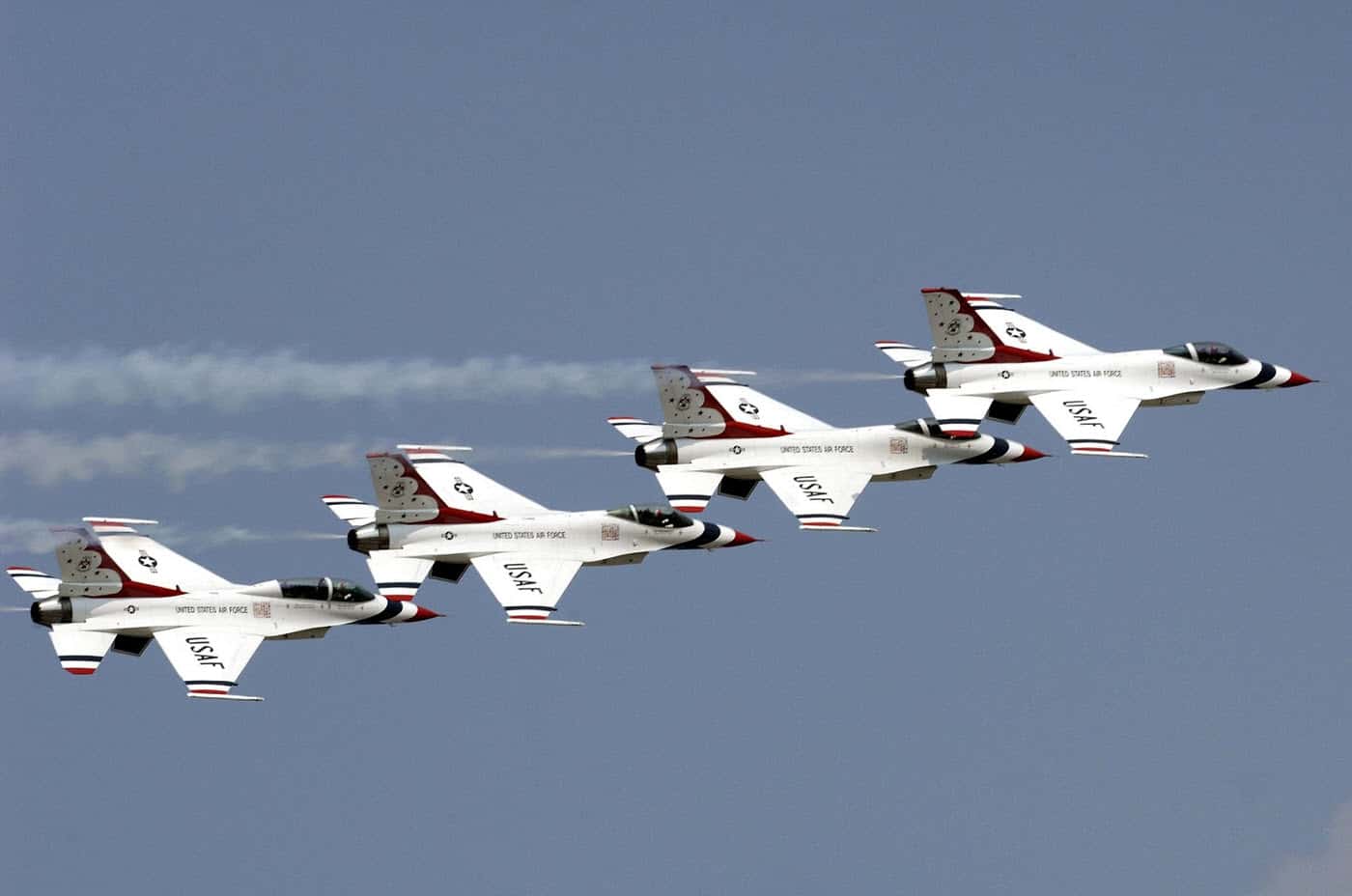
Team Building Training Must Have Its Own Rhythm
Team building training in the business world bears many comparisons to a metronome in the musical world. Take two metronomes and place them at opposite ends of a room. Set them in motion and watch what happens. Both tick away in each other’s own separate rhythm never aligning or getting in sync with each other. But, place both of those metronomes on a smaller, free-standing platform, set the metronomes in unsynchronized motion, and watch what happens. So long as the metronomes can ‘feel’ each other’s vibrations, the two will naturally synchronize.
Why is this? It’s a great metaphor for the importance of team building training: the very subtle vibrations each metronome sends into the platform interact in a complex way affecting the swing of the arms until the two achieve synchrony.
If you are wondering if the physics of two self-regulating metronomes is really related to complex human systems — or can impact team building training — there is strong evidence that suggests it is. In psychology, social conformity is one of the most basic and widely accepted phenomena. Individuals within a group tend to achieve conformance and harmony, much like the metronomes. Putting your teams in intense, high-energy team building training can get individuals in sync, functioning more in alignment with each other and result in building high performance teams.
For instance, the MIT professor Alex Pentland has monitored moment-to-moment interaction between people to discover what we probably always knew – that we are affected most by our close social networks, our friends, and others that we engage socially with on a regular basis. He calls this phenomenon social physics which is explained in his recent book of the same name. Connectivity and proximity are important dynamics in human systems.
As Edgar Schein, a renowned scholar of organizational culture, has pointed out, culture is a phenomenon that operates below the surface, that it is invisible and to a considerable degree unconscious. Like the subtle vibrations that eventually synchronize the two metronomes, culture works behind the scenes, almost imperceptibly, to affect how the organization functions for good or ill.
Just as the metronome provides guidance to a single musician or a group of musicians, simple coordination via a simple process provides the guidance to align an organization. The U.S. military possesses a more apparent means than the invisible or imperceptible influences of culture. In the military, it’s called battle rhythm.
High Performing Teams Master Synchronization
Simply defined, battle rhythm is the span of time between the commander’s decision and the execution of that decision by the action units. But there is much more taking place in the actual practice of battle rhythm in military operations. Not only is there a regular pace of planning followed by iterative execution, learning is formalized through practices such as debriefing and after action reviews (AAR). That learning cascades upward to inform the next iteration of planning – all to a coordinated rhythm and structured collaborations.
The two Japanese management scholars, Ikujiro Nonaka and Hirotaka Takeuchi, recognized the significance of these ‘structured collaborations’ and called them a field of interaction. In their landmark book, The Knowledge Creating Company (Oxford University Press, 1995), they point out the need for a rhythmic field of interaction. In it, they call for “. . . a field in which individuals can interact with each other through face-to-face dialogues. It is here that they share experiences and synchronize their bodily and mental rhythms.” This coordinated rhythm serves to accelerate the achievement of common goals. It helps align the organization from top to bottom.
Train Your Sense of Rhythm to Grow Successful Teams
In the Flawless Execution® methodology, we call this simple idea, Execution Rhythm℠. What does Execution Rhythm look like? How is this field of interaction structured? To be effective, Execution Rhythm should possess certain characteristics. It is cascading, aligning, disciplined, and discreet.
Execution Rhythm is Cascading
Like a crew coxswain, the tempo is orchestrated from the top of the organization and cascades in step with that set rhythm throughout the organization. This cascading character of Execution Rhythm, like reverberating echoes across a canyon, helps close the gaps in learning and execution within successful teams.
Execution Rhythm is Aligning
It is not simply a form of coordination or communication. It seeks to align the total effort of the organization to a common purpose. The outwardly cascading signal provides the information needed for the top decision-making functions to align the activities of the entire organization, creating high performing teams.
Execution Rhythm is Disciplined
All high-performing teams possess discipline. But, as the word ‘rhythm’ implies, the discipline required in an effective Execution Rhythm is one that maintains the pace of interaction set at the top level. Being disciplined in Execution means maintaining a strict regimen that is regular, expected, and structured.
So, if a marketing team has decided to hold weekly meetings to assess progress for a specific campaign, they should hold those meetings at a consistent time and on a consistent day of the week. We are creatures of habit. Execution Rhythm should tap into and leverage that natural tendency. Habituation is the soul of discipline, and discipline the soul of execution and is practiced by successful teams.
Execution Rhythm is Discrete
Discrete means that the rhythm’s individual cascading cycles keep pace with the rate of change. An organization that develops plans at the beginning of the year and assesses its progress at the end of that year does not possess a discreet Execution Rhythm. In a world where major change takes place in some markets over the span of months and world-changing events can impact a business instantaneously, we can’t afford to have a casual Execution Rhythm. High performing teams take execution rhythm seriously and stick to a strict discipline.
Execution Rhythm becomes even more important as a consistent aligning force when chaotic events attempt to throw organizations into disarray. But, disciplined organizations will find that Execution Rhythm can easily be increased or decreased in response to changing circumstances. A disciplined organization can increase or decrease its Execution Rhythm to respond to changing demands, seasonal fluctuations, or other threats and opportunities. Look closely at successful teams, even virtual or casual teams, and you will find an underlying discipline.
Is Collaboration One of Your Team Building Strategies?
Do you know how to collaborate in a disciplined fashion? It’s a great question, isn’t it? The current business and leadership literature touts the importance of collaborating in our turbulent world. Businesses and teams large and small are struggling to wrap their heads around just what disciplined collaboration is. Many see collaboration as a challenge that can be met through technology, whether it’s through social media or virtual conferencing. The answer is that it’s one of the most effective team building strategies you can practice.
Others recognize the benefits of restructuring office space itself to be more open. But technology and physical space are only superficial means to address the challenge of collaboration. Collaboration is not about where or through what media people interact. Instead, it’s about how people interact. And, that how must be disciplined. Disciplined collaboration holds a central place in Jim Collins’ latest work, “Great by Choice.”
The book is the result of a grand research project that seeks to discover why very few companies thrive in spite of uncertainty, chaos, and luck – good or bad. It’s a centrally important issue in our turbulent world where change is so rapid and unpredictable.
Disciplined collaboration has been cited as a centrally important skill for teams and companies to constantly create, innovate, and adapt to change. Innovation is often seen as the fruit of collaboration. But, this is a dangerously limited perspective. Collaboration is much more valuable than just a means to achieve innovation. Disciplined collaboration is an invaluable team-building strategy that allows teams to innovate, solve problems, make decisions, plan, and execute.
Above all, disciplined collaboration is a creative planning and decision-making process. In “Great By Choice,” Collins defines discipline as consistency of action. For teams and companies, Collins’ definition implies that collaboration processes should be consistent.
“The great task, rarely achieved,” Collins writes, “is to blend creative intensity with relentless discipline so as to amplify the creativity rather than destroy it.” He goes on to point out that “the signature of mediocrity is not an unwillingness to change; the signature of mediocrity is chronic inconsistency.” That inconsistency begins in the planning and decision-making process. And, in a world of complex challenges that are best met by teams rather than individuals, that consistency requires a disciplined collaborative process — or a strategy for team building.
Successful Teams Focus on Their Collaboration Skills
A disciplined, collaborative, planning process requires certain elements. Altogether, there are many elements in a planning process. However, a few of the elements that are most important to effective collaboration are that the process is dynamic, iterative, participatory, and cognitively diverse.
Dynamic means that the ability of the planning processes product, the plan, be adaptable. Change happens. So, don’t create a plan collaboratively only to find that the plan needs to change without a clear process of making those adaptations.
A disciplined collaborative process should also be iterative. Iteration is similar to dynamism, but not the same. Iteration is the plan improvement process within the overall planning process. Dynamism refers to the adaptation of the plan after it has begun to be executed. Iteration occurs during planning. Dynamic adaptation occurs during the execution of the plan. Those who collaborate during planning, and iterate the plan before its execution will be able to execute and adapt those plans more effectively and end up being much more successful teams.
Good Team Building Training Means Better Collaboration
Of course, collaboration requires participation by more than one individual. That is what makes good team collaboration so challenging, and proper team building training so important. How does a group of people come together to produce a plan or make a decision? Fundamentally, it requires a process for generating ideas at the individual or very small group (2-5 persons) level, then combining and vetting them at a larger group level (5-15 people). This is called nominal group aggregation.
Normal group aggregation is a delicate process because everyone has their own ideas – some better than others. In collaborative groups, some people push their ideas forcefully while others hold back on valuable insight fearing they won’t be heard or appreciated. But, good collaborative techniques can overcome such obstacles. And, those techniques must be part of a disciplined collaborative process. Disciplined collaboration is not about achieving consensus. Instead, it is about producing the best plan to achieve the objective. Consensus can lead in any direction, while disciplined collaboration yields a plan that leads in the right direction.
Finding that right direction requires another element – cognitive diversity. It does us no good to collaborate with a team of individuals that think alike, has similar backgrounds and experience, occupies the same hierarchical positions, and so forth. Creativity and innovation require divergent thinking and dialogue.
Disciplined collaboration must adhere to a process that harnesses cognitive diversity. Be disciplined in incorporating the right mix of experience, knowledge, and position, in the collaborative process. Consider that two heads are not much more valuable than one if both heads think about and see the world in the same way. To a hammer, everything looks like a nail. Make sure you have a complete toolbox when planning collaboratively.
There is one additional important element: the process must be simple. To collaborate effectively and efficiently, people need a simple process. If a team has to spend time organizing and training about how they are going to collaborate and then struggle to become proficient at that process, then efficiency and effectiveness suffer.
Use a process that is simple to learn and apply – then use that process consistently throughout the organization. Disciplined collaboration will become a widely practiced behavior, and that behavior will ultimately become a healthy collaborative culture and create more successful teams.
Disciplined collaboration yields more than a plan or decision. It’s one of those team building strategies that engages the team to execute successfully. Disciplined collaboration is the first step in owning success as a team. Humans like to be autonomous; to have the freedom to solve problems and perform tasks on their own and in their own way. But our complex, turbulent world requires collaboration in order to create, innovate, and succeed.
a larger whole. Disciplined collaboration is the key to satisfying these often conflicting needs in modern organizations. On one hand, collaboration gives each individual the opportunity to contribute their own insights and then, once a final plan is created, to go forth and execute in their own semi-autonomous way. On the other, what each individual executes becomes a well-coordinated part of the overall objective. But, to fulfill these basic human needs, the team must achieve collaboration through a disciplined process.
Disciplined Collaboration is our expertise, talk to one of our professionals today to craft a program around your needs.
Click here to read the full article: [download id=”3276″]
SUBSCRIBE TO OUR NEWSLETTER
Oops! We could not locate your form.
Will Duke is Afterburner’s Director of Learning and Development. His duties include coordination of the development of intellectual property, training programs, and educational materials. He also serves as a consultant to process and continuous improvement management programs. With Co-author James “Murph” Murphy, he wrote the 2010 release “The Flawless Execution Field Manual. Duke currently serves as a senior Human Resources Officer in the in the U.S. Navy Reserve and has held numerous command and positions throughout his career.
https://www.afterburner.com/wp-content/uploads/2026/05/Copy-of-Compass-Group-Plc-25jun2025-TGX-26-at-19.47.39-6-1-scaled.jpeg
1488
2560
Boo Boucousis
/wp-content/uploads/2024/07/Afterburner-Logo-Resize-Fullcolor-300x93.png
Boo Boucousis2026-05-13 08:34:292026-05-17 15:56:138 Characteristics for Building a High-Performance Team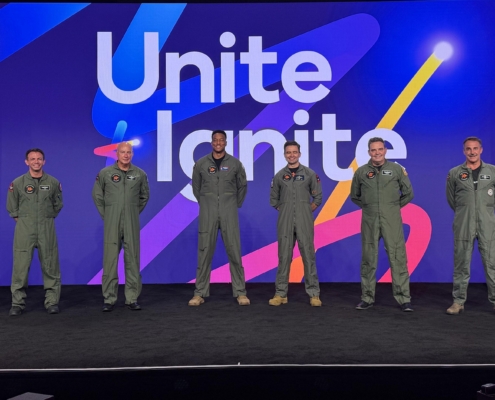 https://www.afterburner.com/wp-content/uploads/2026/05/Copy-of-Compass-Group-Plc-25jun2025-TGX-26-at-19.47.39-1-scaled.jpeg
1061
2560
Boo Boucousis
/wp-content/uploads/2024/07/Afterburner-Logo-Resize-Fullcolor-300x93.png
Boo Boucousis2026-05-12 08:17:322026-05-17 15:56:13How to Use a Team Alignment Template Effectively
https://www.afterburner.com/wp-content/uploads/2026/05/Copy-of-Compass-Group-Plc-25jun2025-TGX-26-at-19.47.39-1-scaled.jpeg
1061
2560
Boo Boucousis
/wp-content/uploads/2024/07/Afterburner-Logo-Resize-Fullcolor-300x93.png
Boo Boucousis2026-05-12 08:17:322026-05-17 15:56:13How to Use a Team Alignment Template Effectively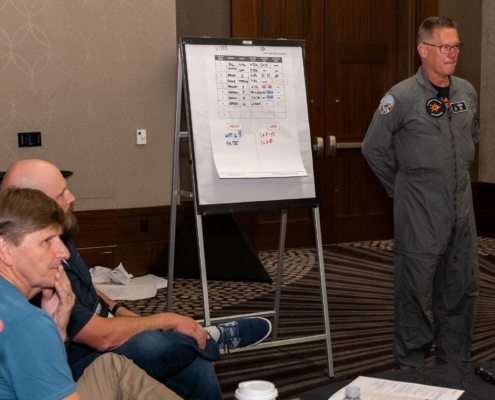 https://www.afterburner.com/wp-content/uploads/2026/04/Copy-of-Crete2024Summit-697-scaled.jpg
1319
2560
Boo Boucousis
/wp-content/uploads/2024/07/Afterburner-Logo-Resize-Fullcolor-300x93.png
Boo Boucousis2026-04-15 09:24:142026-06-05 11:20:16Indoor Team Building Activities That Actually Build Teams
https://www.afterburner.com/wp-content/uploads/2026/04/Copy-of-Crete2024Summit-697-scaled.jpg
1319
2560
Boo Boucousis
/wp-content/uploads/2024/07/Afterburner-Logo-Resize-Fullcolor-300x93.png
Boo Boucousis2026-04-15 09:24:142026-06-05 11:20:16Indoor Team Building Activities That Actually Build Teams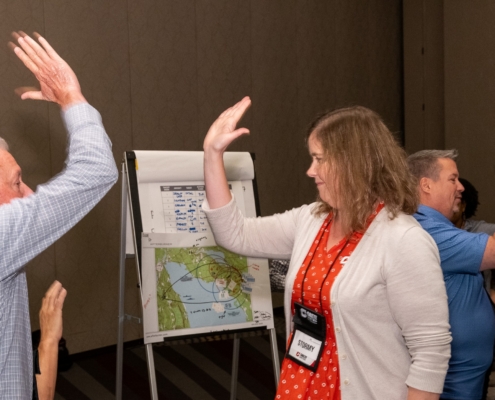 https://www.afterburner.com/wp-content/uploads/2026/04/Copy-of-Crete2024Summit-700-scaled.jpg
1207
2560
Boo Boucousis
/wp-content/uploads/2024/07/Afterburner-Logo-Resize-Fullcolor-300x93.png
Boo Boucousis2026-04-10 20:44:392026-05-17 15:56:25Team Building Activities for Work That Drive Results
https://www.afterburner.com/wp-content/uploads/2026/04/Copy-of-Crete2024Summit-700-scaled.jpg
1207
2560
Boo Boucousis
/wp-content/uploads/2024/07/Afterburner-Logo-Resize-Fullcolor-300x93.png
Boo Boucousis2026-04-10 20:44:392026-05-17 15:56:25Team Building Activities for Work That Drive Results https://www.afterburner.com/wp-content/uploads/2026/04/Copy-of-230331-FFIL-4486-scaled.jpg
1286
2560
Boo Boucousis
/wp-content/uploads/2024/07/Afterburner-Logo-Resize-Fullcolor-300x93.png
Boo Boucousis2026-04-09 21:47:512026-05-17 15:56:25Work Outings That Drive Real Business Results
https://www.afterburner.com/wp-content/uploads/2026/04/Copy-of-230331-FFIL-4486-scaled.jpg
1286
2560
Boo Boucousis
/wp-content/uploads/2024/07/Afterburner-Logo-Resize-Fullcolor-300x93.png
Boo Boucousis2026-04-09 21:47:512026-05-17 15:56:25Work Outings That Drive Real Business Results https://www.afterburner.com/wp-content/uploads/2026/04/Copy-of-Crete2024Summit-690-scaled.jpg
1707
2560
Boo Boucousis
/wp-content/uploads/2024/07/Afterburner-Logo-Resize-Fullcolor-300x93.png
Boo Boucousis2026-04-01 20:08:222026-07-03 05:03:25Corporate Team Building Activities That Actually Build Teams
https://www.afterburner.com/wp-content/uploads/2026/04/Copy-of-Crete2024Summit-690-scaled.jpg
1707
2560
Boo Boucousis
/wp-content/uploads/2024/07/Afterburner-Logo-Resize-Fullcolor-300x93.png
Boo Boucousis2026-04-01 20:08:222026-07-03 05:03:25Corporate Team Building Activities That Actually Build Teams https://www.afterburner.com/wp-content/uploads/2026/03/image1.jpg
823
1241
Boo Boucousis
/wp-content/uploads/2024/07/Afterburner-Logo-Resize-Fullcolor-300x93.png
Boo Boucousis2026-03-31 19:25:222026-06-05 11:12:09Team Building Activities for Work That Actually Drive Results
https://www.afterburner.com/wp-content/uploads/2026/03/image1.jpg
823
1241
Boo Boucousis
/wp-content/uploads/2024/07/Afterburner-Logo-Resize-Fullcolor-300x93.png
Boo Boucousis2026-03-31 19:25:222026-06-05 11:12:09Team Building Activities for Work That Actually Drive Results https://www.afterburner.com/wp-content/uploads/2026/03/Copy-of-U.S.-Renal-Care-5_8_25-KEY-Image-2025-05-08-at-11.48.14-2-scaled.jpeg
2560
1920
Boo Boucousis
/wp-content/uploads/2024/07/Afterburner-Logo-Resize-Fullcolor-300x93.png
Boo Boucousis2026-03-30 20:21:222026-06-05 11:22:5025 Unique Corporate Team Building Activities That Work
https://www.afterburner.com/wp-content/uploads/2026/03/Copy-of-U.S.-Renal-Care-5_8_25-KEY-Image-2025-05-08-at-11.48.14-2-scaled.jpeg
2560
1920
Boo Boucousis
/wp-content/uploads/2024/07/Afterburner-Logo-Resize-Fullcolor-300x93.png
Boo Boucousis2026-03-30 20:21:222026-06-05 11:22:5025 Unique Corporate Team Building Activities That Work https://www.afterburner.com/wp-content/uploads/2026/03/Copy-of-team-photo-2-flight-suits-outside-f2f98b87-6feb-4bfc-8187-596fc3a4cd19.jpg
1152
2048
Boo Boucousis
/wp-content/uploads/2024/07/Afterburner-Logo-Resize-Fullcolor-300x93.png
Boo Boucousis2026-03-26 19:49:022026-06-10 11:25:29Group Outing Ideas for Adults That Build Better Teams
https://www.afterburner.com/wp-content/uploads/2026/03/Copy-of-team-photo-2-flight-suits-outside-f2f98b87-6feb-4bfc-8187-596fc3a4cd19.jpg
1152
2048
Boo Boucousis
/wp-content/uploads/2024/07/Afterburner-Logo-Resize-Fullcolor-300x93.png
Boo Boucousis2026-03-26 19:49:022026-06-10 11:25:29Group Outing Ideas for Adults That Build Better Teams