
The Leader’s Guide to Business Execution Training Programs
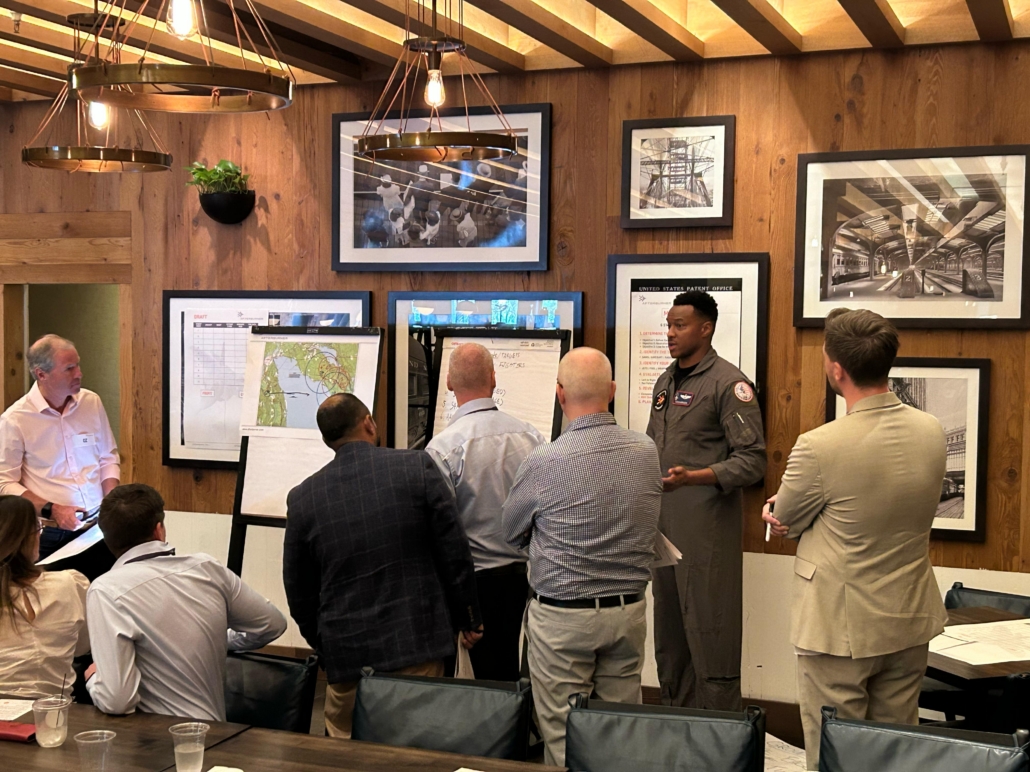
Business execution training programs equip leaders and teams with a shared methodology for turning strategy into coordinated action. If your organization has a solid strategy but keeps falling short on delivery, the problem is almost never the plan. It’s the system used to execute it. The right program installs a repeatable operating rhythm that closes the gap between what you intend and what actually happens. At Afterburner, that system is FLEX, FLawless EXecution, a four-phase cycle of Plan, Brief, Execute, Debrief (PBED) engineered from the fighter pilot community and proven across more than 3,500 organizations worldwide.
The Jet Was Perfect. The Mission Wasn’t.
I’ve been in the debrief room after missions that should have been flawless.
Weather cooperated. Aircraft performed. Every pilot in the formation was competent, prepared, and sharp. And somehow, things still came apart in execution.
When we dug into why, it was rarely a failure of skill. It was almost always a failure of system. People were working hard, making reasonable calls, doing their jobs. But without a shared process for planning, briefing, and checking in during execution, small deviations compounded. By the time anyone noticed the drift, the mission was already off course.
Here’s the thing. I’m Christian “Boo” Boucousis, CEO of Afterburner, and I’ve watched this same pattern play out in boardrooms across five continents. Talented teams. Clear strategy. Genuine commitment. And then, somewhere between the strategy deck and the quarterly results, something breaks down. Not dramatically. Quietly. One miscommunication. One missed checkpoint. One assumption left unstated.
That’s the execution gap. And it’s why business execution training programs exist.
What Is Business Execution Training?
Business execution training equips leaders and teams with a shared methodology for turning strategy into results. It’s not about building another plan. It’s about installing the operating system that makes plans executable.
The most common challenge I see in organizations isn’t a shortage of intelligence or ambition. It’s a shortage of shared process. Everyone has their own method for planning a project, running a meeting, recovering from a setback. Scale that across a leadership team and you get friction. Misalignment. X-Gaps you could fly a formation through.
At Afterburner, we’ve spent nearly three decades solving this problem across thousands of organizations, from Fortune 500 companies to NFL teams. What we’ve learned is simple: when you give people a common language and a repeatable framework for execution, performance improves. Not because you made them smarter, but because you reduced the noise between intention and action.
That’s what effective business execution training does. It gives your entire organization, from the C-suite to the front line, the same playbook for getting things done.
Why Your Team Needs to Master Execution
Here’s a truth I’ve found consistent across every industry I’ve worked in: strategy rarely fails because it’s a bad strategy. It fails because the organization doesn’t have a reliable system for executing it.
Research from Wharton professor Lawrence Hrebiniak and a joint survey with Marakon Associates found that senior executives reported their firms achieved only 63% of the expected results of their strategic plans. A separate Wharton/Economist Intelligence Unit study found that 61% of firms struggle to bridge the gap between strategy formulation and strategy execution. The gap isn’t theoretical. It’s measurable, and it’s expensive.
Think about the last time a major initiative stalled in your organization. Did it fall apart because the idea was wrong? Or did it fall apart because accountability was unclear, communication broke down between departments, and momentum faded after the kickoff?
The fact is, most execution failures are predictable. They happen at the same points in the process, for the same reasons, over and over. Unclear objectives. No shared briefing discipline. No structured way to identify and close gaps during execution. No debrief at the end to capture what worked and what didn’t.
Fix those four things and you fix most of your execution problems. That’s not a theory. It’s what we’ve seen in practice, from the New York Giants preparing for Super Bowl XLVI to global banks deploying enterprise-wide technology systems.
Closing the Gap Between Strategy and Results
In aviation, we call it flying behind the jet. That’s when you’re reacting to what’s happening instead of anticipating what’s coming. You’re always one step behind, playing catch-up, burning fuel and losing altitude. It’s an uncomfortable and dangerous place to be.
The business equivalent is an organization that’s perpetually reactive. Always fighting fires. Never ahead of the mission. Always surprised by outcomes that, with a better execution system, would have been predictable and preventable.
The right training closes that gap. It installs a repeatable framework, what we call FLEX, for turning strategy into action and action into learning. It aligns every team member around a clear objective, gives leaders the tools to track execution in real time, and creates a culture where performance compounds rather than plateaus.
One percent better after every mission doesn’t sound like much. But compounded daily, it doesn’t make you 365% better by year’s end. It makes you thirty-seven times better. Fighter pilots call that the accelerated learning curve, and it’s what separates dynasties from also-rans.
Common Types of Business Execution Training Programs
The format of your training matters as much as the content. What works for a five-person leadership team in a two-day offsite is different from what works for a three-thousand-person organization rolling out a new operating model.
In-Person Workshops
In-person workshops remain the most effective format for driving rapid alignment and behavioral change. There’s no substitute for getting your team in the same room, focused on the same mission, applying a proven framework directly to your real business challenges.
The best workshops don’t teach theory. They teach through application. Your team walks in with a current initiative and walks out with a clear High-Definition Destination (HDD), that’s what we call a crystal-clear, measurable picture of what success looks like, a briefed team, and a structured execution rhythm they can run Monday morning. The learning sticks because it’s immediately tied to something that matters. That’s the difference between a training event and a performance upgrade.
For organizations looking to kick off a major strategic initiative, align a leadership team around a new direction, or reset an execution culture that has drifted, an in-person workshop is the right starting point.
Online Courses and Certifications
For geographically distributed teams or organizations building foundational knowledge across a large population of leaders, online courses offer flexibility and scale. Platforms like Coursera and edX provide solid execution and strategy content. Harvard Business School Online’s Strategy Execution course, taught by Professor Robert Simons, is a well-regarded option at $1,850 for an eight-week program focused on resource allocation, performance measurement, and risk management.
The honest limitation of online-only programs is that they build individual knowledge without building team alignment. If your team members each complete a course independently, they may come out with better personal frameworks, but those frameworks won’t necessarily be compatible. For team execution, a shared methodology applied together is almost always more effective than individual learning done in isolation.
Online programs work best as a complement to a broader team initiative, not a replacement for it.
Immersive Team Experiences
For leadership teams that need to break out of habitual patterns, immersive experiences create the conditions for genuine change. These aren’t classroom sessions. They’re high-energy, high-stakes environments designed to surface how your team actually makes decisions, communicates under pressure, and recovers from setbacks.
The value isn’t the experience itself. It’s the debrief that follows. When you put a team through a challenging shared scenario and then run a structured ORCA (Objective, Result, Cause, Action) debrief on what happened, the insights are direct, personal, and immediately applicable. ORCA is the fighter pilot’s debrief framework, four steps that strip emotion and ego out of the conversation and focus the room on one question: what do we do differently next time?
Used well, an immersive team experience can shift a leadership culture more in two days than a year of quarterly meetings. Our team building experiences at Afterburner are engineered to create exactly this kind of environment, not a day off from work, but a day that fundamentally changes how the work gets done.
What Makes an Execution Program Truly Effective?
Not all execution training programs are built the same. Some create a temporary spike in motivation that evaporates the moment your team returns to their desks. Others fundamentally change how your organization operates. The difference comes down to a few things.
It’s Built on Practical, Actionable Frameworks
The best programs don’t get lost in theory. They deliver a concrete, repeatable system your team can use immediately. Not a binder of concepts to read later. A process they can run tomorrow morning on a real project.
At Afterburner, that process is FLEX, FLawless EXecution. Built on four phases, Plan, Brief, Execute, Debrief (PBED), it’s the same cognitive framework fighter pilots use to manage high-stakes missions. We’ve applied it in everything from NFL training camps to hospital system transformations to specialty retailers. The reason it works across such different environments is that it’s simple enough to use under pressure and structured enough to produce consistent results.
Organizations that use FLEX “missionize” their business. Everything has a purpose. Action replaces work. Focus replaces distraction. Destinations replace goals. Every initiative has a start, a middle, an end, and a measurable win.
When your team has a shared framework, execution stops being a matter of individual style and starts being a matter of collective discipline.
It Installs Systems for Accountability
A great strategy is only as good as the accountability structure behind it. One of the most common execution failures I see is the absence of genuine ownership. Everyone agrees on the plan in the meeting room. Then they walk out the door, life happens, priorities compete, and nobody explicitly owns the result.
Effective execution training installs the systems that prevent this. Clear objectives. Named owners. Defined checkpoints. A structured process for identifying gaps during execution and adjusting course in real time.
That’s what our X-Gap methodology does. X-Gap stands for Execution Gap. It’s ORCA applied at periodic scale. Not one mission, but the pattern across many. The debrief is the microscope: what happened in this mission? The X-Gap is the telescope: is what we’re doing consistently creating the intended impact? It creates a regular execution rhythm, weekly, monthly, quarterly, where teams don’t just report on what happened. They diagnose why gaps exist and commit to the next action. That’s the difference between a status update and a performance conversation.
Here’s the insight: everything you currently call a leadership meeting is an X-Gap waiting to be structured properly. Most meetings update what’s happened and argue about what to do next. An X-Gap runs ORCA against the mission: what did we intend, what’s actually happening, why is there a gap, and what do we change?
It Integrates Planning and Debriefing
Most organizations are reasonably good at planning. Some are good at execution. Very few are good at debriefing.
That missing step is where most performance gains are left on the table.
In fighter aviation, a mission is not complete until the debrief is complete. We don’t land, shake hands, and head to the bar. We go straight to the debrief room, review what happened, and extract the learning before the memory fades. Because that learning feeds directly into the next mission plan. It’s a closed loop, not a checklist.
The business equivalent is a discipline most organizations simply don’t have. They finish a project, declare victory or move on from failure, and immediately jump to the next initiative without ever capturing what actually drove the result.
A meta-analysis of 46 studies conducted by researchers at Rice University and the Group for Organizational Effectiveness found that teams that debrief outperform teams that don’t by approximately 20%. More structured and disciplined debriefs, the kind we teach, push that improvement even higher.
The right training installs a debrief culture. Not a blame session. A structured, nameless-rankless environment where the question is never who caused the problem, but what we do differently next time. In our world, we say it this way: it’s not who’s right. It’s what’s right. You can see how we apply this in our debriefing workshops.
It Delivers a Sustainable Operating System, Not a One-Off Event
Here’s the thing about one-day seminars. They can be energizing. The room is charged, the ideas are flowing, and everyone leaves with good intentions. Two weeks later, the old habits are back.
Real change requires a system, not an event. The most effective execution training embeds a repeatable operating rhythm into your organization’s daily culture. Planning discipline. Briefing standards. Execution checkpoints. A consistent debrief process. These aren’t additions to how you work. Over time, they become how you work.
That compounding effect, one percent better every mission, is what separates teams that build dynasties from teams that just accumulate time without ever getting sharper.
The Real-World Benefits of Execution Training
When you give your organization a shared system for execution, the results show up across the board.
Align Your Entire Organization
A brilliant strategy is useless if it only lives in the boardroom. The most immediate benefit of effective execution training is genuine organizational alignment. Every team member understands the mission. Every leader knows their role in it. Everyone is using the same framework to plan, communicate, and track progress.
That shared language eliminates a significant amount of operational friction. Meetings become more focused. Handoffs between departments get cleaner. The question in every room shifts from “what are we doing?” to “how do we do it better?”
In FLEX, alignment starts with the HDD, the High-Definition Destination. Not a vague goal like “grow the business.” A crystal-clear, binary picture of what success looks like. Can everyone on your team describe your HDD in one sentence? If not, it isn’t defined clearly enough yet.
Develop Stronger, More Decisive Leaders
Execution is a leadership competency. When you equip leaders at every level with a proven methodology for planning, briefing, and debriefing, you give them the confidence to make clear decisions under pressure and hold their teams accountable without creating a culture of fear.
The Fighter Pilot Mindset℠ we teach at Afterburner isn’t about aggression or bravado. It’s about disciplined clarity. Knowing your objective. Knowing your contingencies. Knowing when to adapt and when to hold the course. It’s about focusing on what you can control and adapting intelligently to what you can’t. That mindset, installed through structured training, produces leaders who are proactive rather than reactive. Our Flawless Leadership℠ program is built to develop exactly this kind of leader.
Improve Cross-Functional Collaboration
Silos form when teams don’t have a shared process. When your sales, marketing, operations, and product teams are each running their own internal planning and execution methodology, alignment across functions becomes a constant negotiation rather than a natural outcome.
Execution training solves this by giving every function a common language. The same framework for setting objectives, briefing the team, identifying execution gaps, and debriefing results. In the debrief room, rank and function both disappear. What remains is the mission and everyone’s accountability to it.
Drive Measurable Performance Outcomes
The goal of any training investment is improved business performance. Effective execution training links directly to the metrics that matter: faster project timelines, reduced execution errors, better team engagement scores, and improved profitability.
The key is connecting the training to specific business outcomes from day one. What does success look like? How will you measure it? What’s the before-and-after snapshot? In FLEX terms: define the HDD before you launch the mission. If you answer those questions upfront, you can prove the return on your investment rather than guessing at it.
Common Roadblocks to Successful Implementation
Choosing the right program is step one. Making it stick is where the real work happens.
Overcoming Resistance to Change
People resist change. Not because they’re difficult, but because change requires effort and the outcome is uncertain. When you introduce a new execution framework, some team members will see it as another corporate initiative to outlast.
The antidote is clarity about the “why.” Not the why in a memo from the CEO. The why that resonates personally with each team member. How does this make their work less frustrating? How does it reduce rework, confusion, and the endless cycle of firefighting?
Involve your people in the rollout. Let them shape the implementation. Make them the champions of the methodology rather than the recipients of it. In FLEX, we build the plan collaboratively. The team writes the mission, not just the leader. That’s how you create ownership before execution even begins.
Securing True Leadership Buy-In
This one is non-negotiable. If senior leaders approve the training program and then continue running meetings the old way, the message is clear: this doesn’t really matter.
True buy-in means leaders are the most visible users of the new framework. They run their planning sessions using PBED. They debrief honestly after major initiatives. They use the language in every team meeting. When the people at the top model the behavior, the rest of the organization follows.
Wharton professor Lawrence Hrebiniak’s research underscores this point: in studying hundreds of managers involved in strategy execution, he found that poor execution, not poor strategy, is what derails most organizations. The number-one obstacle? The inability to manage change effectively or overcome internal resistance. That resistance dissolves when leaders go first.
Ensuring Follow-Up and Reinforcement
The forgetting curve is real. Without reinforcement, most of what people learn in a training session is gone within weeks. A single workshop, however well-designed, won’t overcome years of ingrained habits on its own.
The solution is integration, not repetition. Build the framework into your existing operational rhythms. Run the ORCA debrief process in your weekly team meetings. Use PBED as the standard structure for project kickoffs. Make X-Gap reviews a non-negotiable cadence in your monthly calendar.
When the methodology becomes the structure of how you work rather than an add-on to it, the learning compounds rather than fades. That’s the accelerated learning curve in action.
Aligning the Training with Key Business Goals
Training that isn’t tied to a specific business outcome is a cost, not an investment. Before you begin, identify the strategic goal you’re trying to achieve. Are you trying to accelerate a product launch? Improve cross-functional alignment? Reduce execution errors on a critical project?
Define the HDD for your training initiative. Measure the baseline. Track progress against it. That’s how you connect the training to the bottom line and make the case for continued investment.
How to Measure the Success of Your Training Program
The question I hear most often after a training engagement isn’t “did they enjoy it?” It’s “did it work?”
Tracking Team Engagement and Completion
Participation is the floor, not the ceiling. Track attendance and completion rates as leading indicators, but don’t mistake them for proof of impact. High engagement tells you people are bought in. It doesn’t tell you whether the behavior has changed.
Monitoring Key Performance Metrics
Before the program begins, identify the specific KPIs you expect to improve. Shorter project timelines. Reduced error rates. Higher team engagement scores. Faster decision-making cycles.
Measure those before and after the training. If you see movement in the metrics you defined at the start, the framework is working. If you don’t, that data is the foundation of your next ORCA debrief. What did we intend? What actually happened? Why is there a gap? What do we change?
Assessing Knowledge Retention
True success means the training has created lasting habits, not just a temporary burst of awareness. Follow-up assessments, observation of planning and debrief sessions, and behavioral indicators like reduced escalations or improved cross-team communication tell you whether the learning has stuck.
In our work at Afterburner, we often see the sharpest performance improvements not immediately after the training, but three to six months in, when the framework has been applied enough times to become second nature. That’s when the compounding begins.
Calculating the Return on Investment
Connect the investment to the outcomes. If the training reduced project delays, calculate the cost savings. If it improved retention on a key team, calculate the cost of avoided recruitment and onboarding. If it helped close a major deal or accelerate a strategic initiative, attribute that result.
Most leaders undersell this because they’re measuring the inputs (cost, time, headcount) rather than the outputs: performance, revenue, retention. Define the outputs first. Then the ROI calculation is straightforward.
Understanding the Investment in Execution Training
Pricing for execution training varies widely based on format, customization, and scope.
Workshops and Seminars
In-person workshops are priced based on duration, group size, and the level of customization applied to your specific business context. A standard workshop will naturally cost less than a program built around your current strategic priorities with a custom HDD and mission plan baked in. The question isn’t what it costs. The question is what it costs you not to close your execution gap.
The most effective workshops deliver immediate, practical output. Your team leaves with a clear mission plan and a structured execution rhythm for a current initiative. That immediate application is what separates a performance investment from a training expense.
Online Programs
Online courses offer flexibility and scale at a lower per-person cost. They’re effective for building foundational knowledge across a broad leader population and for individuals who need to close specific skill gaps.
The honest limitation is customization and alignment. An online course can educate an individual. It can’t align a team. For that, you need a shared experience and a common process applied together.
Enterprise-Wide Solutions
For organizations looking to fundamentally change how they operate, an enterprise-wide engagement goes beyond a training event. It’s a partnership designed to install a new execution operating system across the entire organization. This typically involves a combination of consulting, coaching, and customized training delivered over months, sometimes years.
The investment reflects the depth of the change. And the return, when it’s done properly, reflects it too. At Afterburner, our 90-Day Accelerator is designed for exactly this: embedding FLEX into your organization’s DNA over a focused, structured engagement.
Looking Beyond Price to Long-Term Value
The most important question when evaluating execution training isn’t what it costs. It’s what performance improvement is worth to your organization.
A less expensive program that creates a temporary buzz and then fades is a poor investment. A more intensive program that installs a durable execution system and compounds performance over time is not a training cost. It’s a capability asset.
How to Choose the Right Program for Your Organization
With the options available, the selection process can feel overwhelming. Start with clarity about your own execution gaps before you evaluate what any provider offers.
Identify Your Specific Execution Gaps
Where does your strategy break down? Do projects lose momentum after the kickoff? Does miscommunication between departments create delays? Do your leaders struggle to hold their teams accountable without it becoming personal? Do debriefs happen honestly, or are they exercises in damage control?
Pinpoint the specific gaps. That diagnostic clarity allows you to evaluate a training provider’s methodology against the actual problem you’re trying to solve, rather than against what sounds impressive in a proposal.
Evaluate the Provider’s Core Methodology
Every training program is built on a philosophy for how execution happens. Some are academic. Some are operational. Some are heavily technology-dependent. You need a methodology your team can actually use under pressure, one simple enough to remember and structured enough to produce consistent results.
Ask any provider to walk you through their core system. How do they define a clear objective? How do they brief a team? How do they run a debrief? If the answers are vague or overcomplicated, keep looking.
Match the Program Format to Your Team’s Needs
Your team’s size, structure, and current situation should guide your format choice. An intensive in-person workshop is right for aligning a leadership team around a major initiative. A scalable online program is right for building common language across a large organization. An immersive experience is right for breaking established patterns and creating a cultural reset.
Don’t choose the format that sounds most impressive. Choose the one that addresses your specific problem.
Find a Partner Who Can Help You Execute
The best training providers don’t just teach you a methodology and leave. They stay engaged through implementation, provide coaching and reinforcement, and help you embed the framework into your operational rhythms.
A single training event creates a spark. A long-term partner builds a fire.
At Afterburner, we’ve seen what happens when organizations treat execution training as a one-time event. The energy fades. The habits don’t form. The gap remains. The organizations that see sustained performance improvement are the ones that commit to the methodology across multiple cycles and let the compounding effect do its work.
Related Articles
- The ORCA Debrief Method: The Key to High-Performing Teams
- Closing the Execution Gap: Transforming Meetings and Strategies
- How to Connect Strategy and Execution to Achieve Mission Success
FAQ
How quickly can we expect to see results from business execution training?
Some results are immediate. After a focused workshop, your team will leave with a clear, actionable plan for a current initiative and a shared language for execution. Broader results, like a genuine shift in how your organization plans, communicates, and holds itself accountable, take longer. They emerge as your teams apply the frameworks repeatedly and the new behaviors become ingrained habits. In our experience at Afterburner, the sharpest performance improvements tend to show up three to six months after the initial training, when the cycle of Plan, Brief, Execute, Debrief has become the standard way of operating rather than a new initiative.
Is this type of training only for senior leaders, or can our entire organization benefit?
It starts at the top and works best when it cascades down. Senior leaders set the execution culture. When they model the planning discipline, the briefing rigor, and the honest debrief process, the rest of the organization follows. But the real value of execution training is the shared language and shared process it creates at every level. When your managers and front-line contributors are using the same framework as your executive team, alignment becomes structural rather than aspirational.
What’s the real difference between a one-day workshop and a longer-term program?
A one-day workshop is a catalyst. It’s excellent for aligning a team around a specific initiative, introducing a shared framework, or resetting a culture that has drifted. A longer-term program is an operating system installation. It’s designed to embed the mindsets and methods of flawless execution into your company’s culture through repeated application, coaching, and reinforcement. One creates a spark. The other builds the capability that sustains it.
How do we make sure this training actually sticks and isn’t just a temporary fix?
Integration, not repetition. The most common mistake organizations make is treating execution training as a standalone program rather than as the new structure of how they work. The planning and debriefing methods shouldn’t be reserved for special occasions. They should be the standard format for your weekly team meetings, project kickoffs, and quarterly reviews. When the framework becomes indistinguishable from normal operations, the learning has truly stuck.
Our biggest issue is that our departments operate in silos. Can execution training help with that?
Yes, and this is one of the most significant benefits of a shared execution framework. Silos form when teams don’t have a common language or a common process. When your sales, marketing, and operations teams each plan and execute using the same methodology, the friction between them decreases significantly. The framework creates a neutral, structured way for different functions to collaborate on shared objectives. In the debrief room, rank and function both disappear. What remains is the mission, and everyone’s accountability to it.
References
[1] Hrebiniak, L.G. “Three Reasons Why Good Strategies Fail: Execution, Execution…” Knowledge at Wharton. https://knowledge.wharton.upenn.edu/article/three-reasons-why-good-strategies-fail-execution-execution/
[2] Hrebiniak, L.G. “Got a Good Strategy? Now Try to Implement It.” Knowledge at Wharton. https://knowledge.wharton.upenn.edu/article/got-a-good-strategy-now-try-to-implement-it/
[3] Harvard Business School Online. Strategy Execution Course. https://online.hbs.edu/courses/strategy-execution
[4] Tannenbaum, S., Beard, R. & Cerasoli, C. “Team Development: The Power of Debriefing.” Rice University / Group for Organizational Effectiveness. https://news.rice.edu/2018/05/14/workplace-teams-that-debrief-outperform-those-that-do-not-by-20-percent/
[5] Boucousis, C. The Afterburner Advantage. Afterburner, Inc.
[6] Boucousis, C. Flawless Leadership℠. Afterburner, Inc.