

5 Wins from a Corporate Flight Simulator Team Event
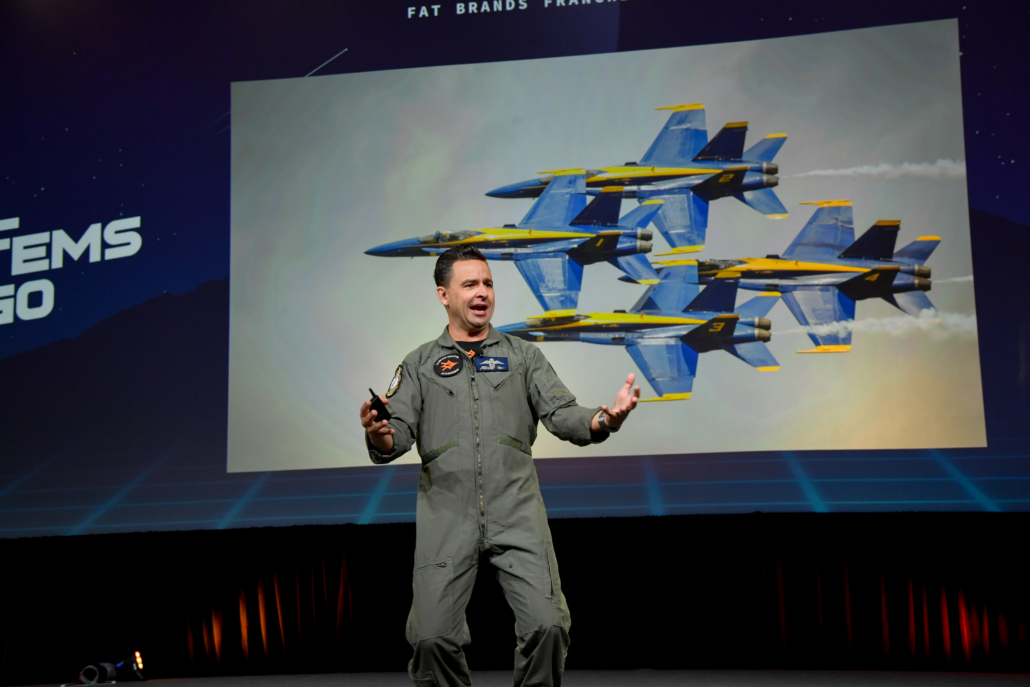
Corporate Flight Simulator Team Events: What a Real Fighter Pilot Thinks Your Team Actually Needs
I’ve spent thousands of hours in a cockpit. Real ones, where the decisions happen at 1,200 miles per hour and the consequences of miscommunication aren’t a missed quarterly target but something far more permanent. So when people ask me about a corporate flight simulator team event, I have a perspective that most facilitators don’t.
A corporate flight simulator team event is a structured, high-pressure team experience that uses professional-grade flight simulators to test and develop your team’s communication, decision-making, and execution skills in a controlled environment that mirrors the complexity and urgency of real business operations.
Here’s the thing: the simulator itself isn’t the point. The cockpit is just the tool. What matters is what happens inside the cockpit, how your team communicates when the pressure spikes, who leads when roles get assigned, whether anyone speaks up when they see a problem, and most critically, what happens after the mission when you sit down and debrief. That debrief is where everything changes.
I’m Christian “Boo” Boucousis, CEO of Afterburner, former Royal Australian Air Force F/A-18 Hornet fighter pilot, and author of The Afterburner Advantage and Flawless Leadership℠. I’ve watched more than 2.2 million leaders go through our programs. And I can tell you that the teams who transform aren’t the ones who had the most fun in the simulator. They’re the ones who learned to debrief with honesty, curiosity, and discipline.
What Actually Happens in a Corporate Flight Simulator Team Event?
Let me clear something up: this is not about learning to fly an airplane. I don’t care if you can’t tell an aileron from an altimeter. The flight skills are irrelevant. What’s relevant is how your team operates when they’re dropped into a complex, time-pressured scenario where every person has a specific role and the mission depends on all of them executing together.
The experience follows the same structure we use for every mission in the fighter pilot world, a methodology called FLEX, which stands for FLawless EXecution. FLEX runs on four phases we call PBED: Plan, Brief, Execute, Debrief. It’s the same operational loop the US military has used for over sixty years. If it keeps aircrew alive at the speed of sound, it works in a simulator. And it works in your boardroom.
The Briefing: Where the Mission Begins
Before anyone touches a simulator, the team gets briefed. In the fighter pilot world, a briefing is not a meeting. It’s a precision communication tool with one purpose: make sure everyone understands the plan and their role in it. Nobody leaves with unanswered questions.
We use a structure called the BRIEF mnemonic: Big picture (connect the mission to the larger objective), Restate the mission objective (what are we trying to achieve, stated in binary terms: yes or no), Identify threats and resources, Execute (who does what by when), and FLEXibility (what are the contingencies if things go sideways). Your team learns this structure before they step into the cockpit, and they take it back to the office.
The Mission: Controlled Pressure, Real Behavior
This is the hands-on part. Every team member gets a specific role: Pilot Flying, Pilot Monitoring, Navigator, Communications. Nobody is a passenger. Nobody gets to hide in the background. The mission is designed to create realistic pressure, tight timelines, incomplete information, unexpected malfunctions, shifting conditions, so that real behavior surfaces.
And it will surface. I’ve watched senior executives freeze when they realize their communication style doesn’t work under pressure. I’ve seen quiet team members step up and make the call that saves the mission. I’ve watched teams that looked great on paper fall apart because nobody wanted to be the one to say, “I think we’re off course.”
In our world, we call that last one “silent awareness,” and it’s the most expensive real estate in any organization. When people see a problem but don’t speak up, you’re flying blind. The simulator reveals that gap in a way no engagement survey ever will.
The Debrief: Where the Real Learning Happens
I cannot overstate this: the debrief is the most important part of the entire experience. The mission creates the data. The debrief extracts the learning.
We use a framework called ORCA, which stands for Objective, Result, Cause, Action. You restate the mission objective. You assess what actually happened, facts, not feelings. You trace the root cause of any gap between intention and reality. And you commit to one to three specific actions, each owned by a named person, that feed directly into the next mission.
The debrief operates under what we call the nameless, rankless principle. In a fighter squadron, rank insignia come off before you enter the debrief room. The lead pilot owns their mistakes first, out loud, in front of everyone. The US Navy Blue Angels have debriefed this way after every demonstration for decades: I made a mistake. I fess up. I fix it. I’m happy to be here. When the leader goes first, fear of admission drops to zero. The conversation shifts from self-protection to shared diagnosis. The governing question is never “who screwed up?” It’s always “what’s right, not who’s right.”
This isn’t a soft skill exercise. It’s a precision tool for turning experience into wisdom and wisdom into action. Research published through the National Library of Medicine confirms that post-simulation debriefing is one of the most effective components of simulation-based education and the cornerstone of the learning experience. The structured conversation after the event is where participants convert experience into lasting behavioral change.
Why This Works When Everything Else Hasn’t
You’ve tried team-building before. The escape rooms. The cooking classes. The ropes course where everyone bonded for an afternoon and then went back to their silos on Monday. I know, because the leaders who call us have usually tried all of it, and they’re calling because none of it stuck.
The reason those experiences don’t transfer is simple: they don’t connect to the way your team actually works. There’s no real pressure. There’s no structured way to extract the lessons. And there’s no framework your team can take back and use every day.
A corporate flight simulator event built on FLEX is different because it targets the specific mechanisms that drive team performance. Here’s what it actually builds:
Communication That Survives Pressure
In the cockpit, communication can’t be vague, slow, or assumed. It has to be clear, concise, and confirmed. The simulator forces this in real time. You’ll see immediately who over-communicates, who goes silent, who assumes their message landed without checking.
When I was flying the F/A-18, data came at me as lights, tones, voices, digital readouts, symbology, and physical inputs, from a dozen other jets connected via real-time data link. Processing all of that while making split-second decisions required a specific kind of communication discipline. The simulator creates a miniature version of that environment. Your team practices the kind of communication that holds up under stress, not the kind that works in a quiet conference room.
Decision-Making Under Load
Task saturation is one of the most studied precursors to accidents in aviation. It’s also one of the most ignored causes of execution failure in business. It happens when the volume, speed, or complexity of demands exceeds your team’s cognitive capacity to prioritize and make quality decisions. When teams are saturated, they don’t slow down. They speed up in the wrong direction.
In the cockpit, when a fire warning light illuminates, the trained response is to sit on your hands for ten to fifteen seconds. Think. Is it real? What does the data say? Then act. Not react. Respond. The simulator teaches your team to build that gap between stimulus and response, the gap where quality decisions live.
Trust That’s Been Earned, Not Assumed
Here’s what I’ve learned: trust isn’t a team-building exercise. It’s a track record. You trust someone because you’ve watched them perform when it mattered. The simulator creates a shared, high-stakes experience where your team sees each other’s real behavior under pressure. The person who speaks up when the mission is drifting. The person who adapts their plan when new information arrives. The person who owns their mistake in the debrief instead of hiding behind excuses.
That’s the foundation of psychological safety. Google’s Project Aristotle studied over 180 teams and found that psychological safety, the shared belief that the team is safe for interpersonal risk-taking, was the single most important predictor of team effectiveness. The simulator and the debrief build exactly this, because the nameless, rankless culture makes it safe to be honest about what went wrong.
Roles That Reveal Real Dynamics
In the simulator, your corporate title stays at the door. Roles are assigned deliberately, and not to where people are most comfortable. The CEO might be navigating while a junior manager flies the aircraft. A typically quiet team member might be assigned the critical communication role. This dynamic levels the playing field and surfaces the real dynamics your team operates with.
In our world, we call this the wingman principle. We know that when you’re leading the mission and deep in the details, it’s easy to lose your situational awareness. That’s what your wingman is for: they hold the big picture when you can’t. The simple rule is that whoever has the best situational awareness at any point in time has the lead. It’s dynamic, and it prevents tunnel vision. The simulator teaches your team how this works in practice.
Choosing the Right Simulator Experience
Not all simulator events are the same, and the right choice depends on what your team needs to develop. Here’s how to think about it:
Fighter Jet vs. Commercial Airline Simulators
Fighter jet simulators, like those used in The Top Gun Experience, create a dynamic, high-tempo environment that tests agile thinking, rapid decision-making, and individual accountability within a small team. The name isn’t just marketing, by the way. Tom Cruise made Top Gun famous, but its origins were rooted in survival. Founded in 1969, the real TOPGUN was created to institutionalize the structured debrief as a response to unacceptable losses in the air. Before TOPGUN, US Navy fighter pilots were winning air-to-air engagements at a ratio of 2.5 to 1. After TOPGUN institutionalized the debrief, that ratio jumped to 12.5 to 1. Same pilots. Same aircraft. Better learning system.
Commercial airline simulators offer a different experience, one focused on methodical processes, checklist discipline, and multi-crew coordination. The environment is more structured, emphasizing standardized communication and precision. Think about what your team needs most: a test of their adaptability and speed, or a reinforcement of process-driven collaboration.
Matching the Experience to Your Business Goals
The most effective simulator events are customized to your specific objectives. Before you book, get clear on what you’re trying to achieve. Are you improving communication between departments? Developing your next generation of leaders? Aligning a team around a new strategic plan? Preparing for a high-stakes product launch?
In FLEX, we call this defining your HDD, your High-Definition Destination. Not a vague goal like “better teamwork.” A crystal-clear picture of what success looks like. “Our leadership team can brief, execute, and debrief a cross-functional initiative in a single session without communication breakdowns.” That clarity is what makes the simulator experience purposeful and the debrief actionable. It’s the same principle behind our strategic planning workshops, because you can’t hit a target you haven’t clearly identified.
What You Take Back to the Office
The skills practiced in the simulator are directly transferable because they are the same skills your team needs under real pressure. But the lasting value isn’t in the simulator experience itself. It’s in the framework.
A Shared Language for Execution
After the event, your team will have a common vocabulary for how they plan, communicate, and learn together. PBED becomes the rhythm: Plan every initiative with clear objectives and contingencies. Brief until everyone understands their role and the mission’s intent. Execute with discipline, shedding tasks that aren’t mission-critical when the pressure rises. Debrief immediately, honestly, with ORCA as the structure and the High Note as the close.
That shared language eliminates the ambiguity that causes most execution failures. When everyone on the team knows what a “brief” means versus a “meeting,” when they know how to run a sixty-second ORCA after a key decision, when they understand that the person with the best situational awareness leads the moment regardless of title, you’ve installed something that outlasts any single event.
The Debrief as a Daily Habit
The most valuable thing your team will take away isn’t a memory of flying a simulator. It’s the debrief. ORCA applied consistently, after every meeting, every project milestone, every quarter, creates the accelerated learning curve that separates high-performing teams from everyone else. One percent better per day doesn’t make you 365 percent better by year’s end. It makes you thirty-seven times better. That’s the compounding effect fighter pilots have been running for six decades.
One of our clients runs a gold mine. The mine manager has two metrics: production and safety. After adopting ORCA with the High Note closing, his team went from dreading debriefs to requesting them. Production rose. Safety incidents fell. The debrief became the team’s most valuable thirty minutes. That transformation didn’t happen in a simulator. It happened because the simulator taught them a method they kept using every day.
Leaders Who Perform Under Pressure
Your leaders will leave the event with a trained response to pressure situations. In the cockpit, when things go wrong, you don’t rise to the level of the crisis. You fall to the level of your training. That’s why FLEX exists: it builds the preparation that makes real-time execution feel almost automatic. The simulator is where your team gets to practice that response in a safe-to-fail environment, building the muscle memory and confidence they need for the moments that actually matter.
No Flight Experience Required. Seriously.
Let me be clear: you don’t need to know anything about aviation. The simulator is the vehicle, not the lesson. Our facilitators handle the technical side so your team can focus entirely on the dynamics that matter, how they communicate, how they make decisions, how they lead and follow, and how they learn from the outcome.
This isn’t a game, either. It’s professional development delivered through one of the most effective learning methods available: experiential, high-stakes, and immediately debriefed. That’s why it works when lectures, workshops, and offsites haven’t. You can’t learn to perform under pressure by reading about it. You have to practice it.
These immersive team-building experiences are designed to be intensive and directly applicable. The framework your team learns in the simulator is the same one we’ve delivered to more than 2.2 million leaders, 94 percent of the Fortune 1000, and over 18 NFL teams. The method is proven. The simulator is just the most engaging way to learn it.
What Does a Corporate Flight Simulator Event Cost?
The investment varies based on team size, program length, and level of customization. A half-day session for a small leadership group has a different price point than a multi-day immersive experience for an entire department. What doesn’t change is the structure: every package includes the pre-event planning session, the FLEX briefing, the simulator missions, and the professionally facilitated ORCA debrief.
The better question isn’t what it costs. It’s what your team’s current communication gaps, execution failures, and repeated mistakes are costing you. A single project delay caused by misalignment between functions can dwarf the investment in an afternoon that gives your team a shared language and a repeatable method for execution. The return shows up in faster decision-making, clearer communication, fewer repeated mistakes, and leaders who know how to learn from every outcome instead of just moving to the next one.
Traditional team-building gives you a fun day and a few photos. A flight simulator event built on FLEX gives you a framework your team uses every day afterward. That’s the difference between spending a budget and investing it.
Frequently Asked Questions
What is a corporate flight simulator team event? A corporate flight simulator team event is a structured, high-pressure experience that uses professional-grade flight simulators to test and develop your team’s communication, decision-making, and leadership skills. It follows the fighter pilot FLEX methodology, Plan-Brief-Execute-Debrief, and includes a professionally facilitated ORCA debrief that teaches your team a repeatable framework for continuous improvement. No flying experience is required.
How is this different from an escape room or other team-building activities? Escape rooms and similar activities rarely connect to how your team actually works. A flight simulator event built on FLEX creates realistic pressure that mirrors the complexity of your business environment: tight deadlines, incomplete information, and interdependent roles. The structured debrief connects the simulator experience directly to workplace behaviors and processes. You leave with a practical framework for execution, not just a fun memory.
What if some of my team members are introverted or uncomfortable being the center of attention? The experience is designed to engage every personality type. Each person gets a specific, critical role with clear responsibilities. Success depends on the entire crew working together. The focus is on clear, task-oriented communication, not on who has the loudest voice. In fact, the nameless, rankless debrief often gives quieter team members the space to share observations that wouldn’t surface in a normal meeting environment.
How much time should we plan for? A standard session for a single crew (typically three to six people) runs about three hours, including the FLEX briefing, the simulator mission, and the ORCA debrief. For larger organizations, multiple sessions can run in parallel or back-to-back. We recommend connecting with our team to discuss your specific objectives and group size so we can structure the experience for maximum impact.
Can the missions be customized for our industry and challenges? They are most effective when customized. The mission scenarios can be tailored to create pressures that mirror the specific challenges your team faces, whether that’s improving cross-functional collaboration, developing emerging leaders, aligning on a new strategy, or preparing for a high-stakes launch. Connect with our team to discuss The Top Gun Experience and how we can align it with your organization’s objectives.
Christian “Boo” Boucousis is the CEO of Afterburner, a former Royal Australian Air Force F/A-18 Hornet fighter pilot, and author of The Afterburner Advantage and Flawless Leadership℠. He helps leaders and teams close the gap between strategy and execution using the same methodology that keeps fighter pilots alive at 1,200 miles per hour.

