

How to Run a Leadership Debriefing Workshop
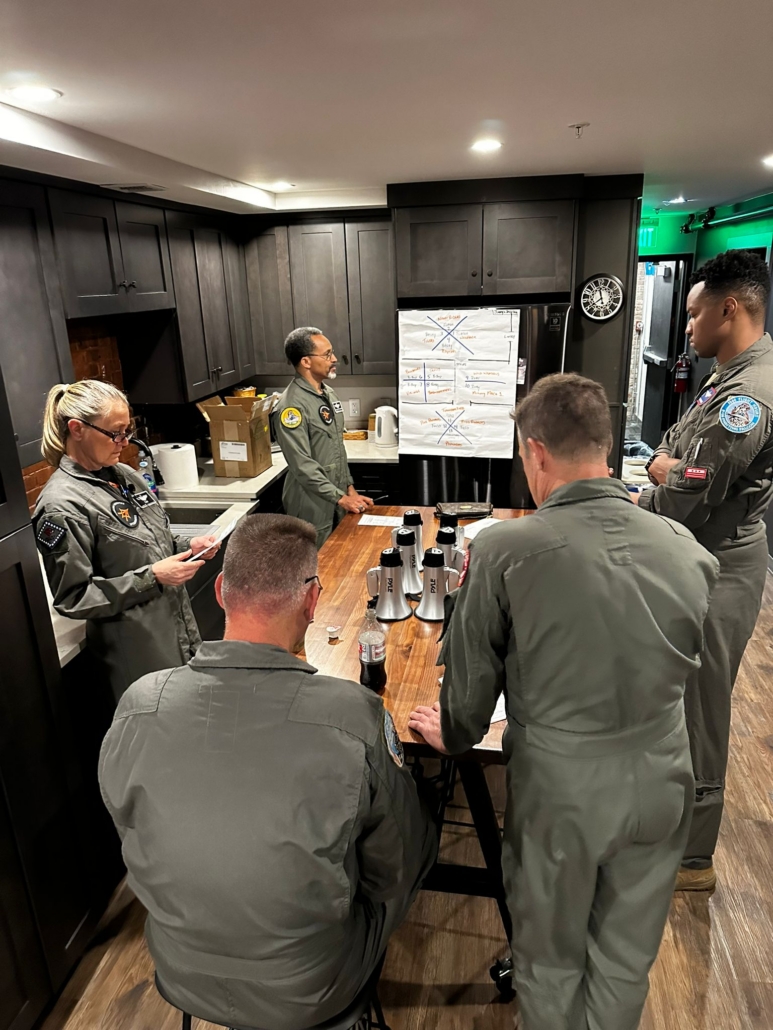
Leadership Debriefing Workshops: The Fighter Pilot Method That Turns Every Outcome Into Growth
Most business post-mortems are exercises in finger-pointing disguised as learning. Even the word is wrong. Post-mortem is Latin for “after the end.” Who wants that for a daily habit?
A leadership debriefing workshop teaches your team the structured, blame-free process fighter pilots use to analyze every mission, extract the root cause of both successes and failures, and convert those lessons into concrete actions that make the next mission better. It’s the single most effective tool I’ve ever seen for building trust, closing execution gaps, and creating teams that compound their performance over time.
Here’s the thing: when I ask rooms full of leaders, “Does anyone see the same problems again and again and again?” every hand goes up. That’s the cost of not debriefing. Not some dramatic failure, but the quiet, daily compounding of small errors that nobody catches because nobody stops to look.
I’m Christian “Boo” Boucousis, CEO of Afterburner, former Royal Australian Air Force F/A-18 Hornet fighter pilot, and author of The Afterburner Advantage and Flawless Leadership℠. The debrief is the fighter pilot’s secret weapon. It’s the reason we’ve been able to deliver a 98.99% mission success rate in combat. And it’s the tool that took the New York Giants from a middling NFL season to winning Super Bowl XLVI. It works because it’s not about blame. It’s about learning faster than the competition.
What Is a Leadership Debrief, and Why Is It Different from Everything Else You’ve Tried?
A leadership debrief is not a meeting. It’s not a post-project review. It’s not your manager giving you notes. It’s a structured, team-wide learning conversation that happens immediately after a mission, win, lose, or draw, with one purpose: to turn experience into wisdom and wisdom into action.
The difference between a debrief and everything else is the difference between watching and learning. A “review” is passive. You watch the tape, someone tells you what went wrong, people grumble, and nothing changes. A debrief is active. It’s a disciplined process where the team collectively examines what happened, traces the root cause, and commits to specific actions that feed directly into the next mission’s plan. That’s the closed loop that makes the whole system work.
In the fighter pilot world, we debrief after every single mission. Not quarterly. Not when the project wraps. After every mission. Before Top Gun institutionalized this discipline in 1969, US Navy fighter pilots were winning air-to-air engagements at a ratio of 2.5 to 1. After Top Gun made the structured debrief standard practice, that ratio jumped to 12.5 to 1. Same pilots. Same aircraft. Better learning system. During Operation Rolling Thunder (1965-1968), roughly 900 aircraft were lost. During Operation Linebacker, after the debrief was institutionalized, losses dropped to approximately 134 in a denser, more lethal environment. The difference wasn’t technology. It was the ability to learn faster than the other side.
That’s what a leadership debriefing workshop installs in your organization: not a one-time event, but a repeatable method for accelerated learning that compounds over every mission.
Debriefing vs. Feedback: They’re Not the Same Thing
People use these words interchangeably, but they’re fundamentally different. Feedback is typically one-directional, focused on an individual’s performance, like a manager giving notes to a direct report. A debrief is collaborative, team-wide, and focused on a shared mission. Everyone contributes. Everyone learns. The focus is on the process, not the person. Feedback gives you data points. The debrief is the structured analysis that turns those data points into a coherent picture and an actionable plan for the entire team.
The Anatomy of an Effective Debrief: ORCA and the Culture That Makes It Work
A great debrief has two components: the right framework and the right culture. Get one without the other and you’ve wasted your time.
ORCA: The Four Steps That Change Everything
The framework is called ORCA, which stands for Objective, Result, Cause, Action. It’s the same four-step process fighter pilots have used for decades, and it works on any mission, any project, any outcome.
O, Objective: Did we do what we set out to do? Restate the mission objective exactly as it was defined in the plan. Binary answer: yes or no. Then walk the course of action step by step. Was each action completed? Build the picture systematically before anyone starts interpreting. Around 83 percent of corporate debriefs stall at this step because the objective was never clear enough to produce a yes or no answer.
R, Result: What actually happened? Facts, not feelings. Numbers, data, observable outcomes. Link results directly to the objective with zero ambiguity. What was done, not done, or done incorrectly? This is not the place for opinions yet.
C, Cause: Why was there a gap? This is the most demanding step and the most valuable. Ask “why” until you find a person who made a decision or took an action. Not a system. Not “the market.” A decision someone made. That’s the root cause.
We use the Root Cause Matrix to trace it. The matrix has three columns: Organisation (knowledge, experience, tools, strategy, leadership, culture, trust), Plan/Communication (objectives, resource allocation, communication, standards, roles, metrics), and Execution (prioritization, distraction, error, situational awareness, motivation). Trace the root cause down to a single person or process within one of these columns. The discipline is to never stop at “market conditions” or “bad timing.” Those are conditions. Root causes live in decisions.
A, Action: What specifically changes next time? One to three actions maximum. Each must be effective (targeted at the actual root cause), explicit (no ambiguity), actionable (realistic), and owned by a named person. One strong action that gets implemented is worth more than ten that get documented and forgotten. And critically: every ORCA action feeds directly into Step 4 of the next mission’s plan. That’s the loop closing. That’s the 1 percent compounding.
The Culture: Nameless, Rankless, and the Leader Goes First
ORCA only works inside the right culture. Run it in a culture of blame and it becomes a witch hunt. Run it in a culture of curiosity and personal accountability and it becomes the most powerful growth tool your organization has.
The governing principle: it’s not who’s right. It’s what’s right.
In a fighter squadron, rank insignia go into a tray at the door before the debrief begins. General, colonel, or brand-new wingman, everyone has an equal obligation to the truth inside that room. The standard is set by the Blue Angels: the lead pilot stands up first and owns their errors in front of the whole team. I made a mistake. I fess up. I fix it. I’m happy to be here. When the leader does this, fear of admission drops to zero. The conversation shifts from self-protection to shared diagnosis.
Research published through the National Library of Medicine confirms that post-simulation debriefing is one of the most effective components of simulation-based education and the cornerstone of the learning experience. But the research also makes clear that the facilitator’s ability to create psychological safety is what determines whether the debrief produces real learning or just goes through the motions.
The High Note: Why Every Debrief Must End Well
Every debrief finishes on what we call the High Note. We use D.O.S.E., which stands for Dopamine, Oxytocin, Serotonin, Endorphins, the four neurochemicals associated with positive emotional states. Acknowledge what was achieved (Dopamine). Recognize the human effort (Oxytocin). Celebrate the learning (Serotonin). End with forward energy (Endorphins).
The debrief that ends well is the one people come back to willingly. The one that ends in blame is the one people avoid. D.O.S.E. protects the culture that makes ORCA possible. One of our clients runs a gold mine. After adopting ORCA with the High Note closing, the mine manager’s team went from dreading debriefs to requesting them. Production rose. Safety incidents fell. The debrief became the team’s most valuable thirty minutes.
The Three Myths Holding Your Team Back from Debriefing
Myth 1: “We only need to debrief when things go wrong.”
This is one of the most damaging myths. Wins get debriefed with the same rigor as losses. A successful project is packed with lessons about what you did right that you might not even be aware of. If you don’t debrief the win, you can’t replicate it. You got lucky, not good. The Beer Cartel, a specialty retailer, grew revenue 400 percent in a year by committing to daily debriefing, of wins and losses alike. The debrief works in any environment where humans execute a plan and need to improve.
Myth 2: “We’re too busy to stop and talk about it.”
I’ve heard every version of this excuse. “There’s no time.” “We need to get to the next thing.” “We’re already a week behind.”
The reason you don’t have time to debrief is because you’re not debriefing. The backlog, the firefighting, the constant catch-up, those are the symptoms of a system that never stops to examine itself. The same problems recur because no one identified the root cause. The same meetings happen again because last week produced no actions worth implementing. A fifteen-minute debrief after a one-hour meeting is not overhead. It’s the investment that makes next week’s meeting shorter, sharper, and more likely to produce a result.
Manheim Car Auctions sells 2,300 cars per day at their Hayward, California facility. When we introduced a daily ORCA debrief, they were skeptical about the time. Within two weeks, the debriefs had generated enough lessons for the selling day to finish two hours earlier. They were moving cars faster, in the right order, with fewer mistakes. That’s not lost time. That’s time earned.
Myth 3: “It’s just a session for finger-pointing.”
If your debriefs devolve into blame sessions, they aren’t being run correctly. The nameless, rankless principle exists specifically to prevent this. The focus is never on who went wrong but on what went wrong in the process and how to fix it. The governing question is always “what’s right, not who’s right.” When the leader models this first by owning their own mistakes, the culture shifts from self-protection to shared learning. Blame asks “who screwed up?” Curiosity asks “what caused the gap between our intention and our reality?” One shuts people down. The other opens them up.
What Happens Inside a Leadership Debriefing Workshop
Before: Building the Baseline
The most impactful workshops begin before everyone gathers in the room. We work with your leadership team to understand the specific execution gaps, communication breakdowns, and cultural dynamics that are holding performance back. This isn’t a generic program. The scenarios, examples, and facilitation are tailored to the challenges your team actually faces. The goal is to walk in with a clear picture of where the gaps are, so the workshop can target them directly.
During: From Theory to Practice
This is where insight turns into action. The workshop is hands-on and interactive, not a passive lecture. Your team learns the full ORCA framework, practices applying it to real scenarios (their own, not hypothetical case studies), and experiences the nameless, rankless culture firsthand. The facilitator models the behavior: owning mistakes first, redirecting blame to curiosity, managing the dominant voice and drawing out the silent one who holds the key insight.
The experience is built on FLEX, which stands for FLawless EXecution, the four-phase methodology of Plan, Brief, Execute, Debrief (PBED) that fighter pilots have used for over sixty years. The debrief isn’t a standalone tool. It’s the fourth phase of a complete operating system. Your team learns how ORCA actions feed directly into the next mission’s plan, creating the closed loop that drives compound improvement.
Our facilitators bring real-world credibility. They’ve applied these principles in high-stakes environments, from cockpits to NFL sidelines to Fortune 500 boardrooms. That experience means they can connect the fighter pilot methodology to your team’s actual challenges with specificity and practical guidance that resonates. It’s a core part of our Flawless Approach to building sustainable team performance.
After: Making It Stick
The workshop’s true value is measured by what happens after everyone leaves. The final phase is dedicated to making the learning permanent. Your team leaves with a concrete plan: specific ORCA actions, a commitment to a debriefing cadence (daily, weekly, or both), and clear ownership of who drives the process.
But a plan alone isn’t enough. Lasting change requires the rhythm to sustain it. We help your team build the X-Gap, which stands for Execution Gap, into their operating cadence: weekly pulse checks, monthly pattern reviews, and quarterly strategic assessments. This rhythm replaces unfocused status meetings with disciplined ORCA conversations that compound learning over time.
Making the Debrief a Permanent Part of How Your Team Operates
Tie Debriefs to the Numbers That Matter
If your debriefs feel like abstract conversations disconnected from business results, they won’t last. Every debrief should connect to the metrics that matter: project timelines, error rates, customer satisfaction, revenue per unit, whatever your team is measured on. When the ORCA action from Tuesday’s debrief shows up as a measurable improvement in Friday’s numbers, the team sees the value. That’s what makes the debrief non-negotiable. It’s a core part of strategic planning and execution, not a separate activity.
Empower Your People to Run Their Own Debriefs
You can’t be in every room. For debriefing to become a true organizational habit, your team leads and managers need to be able to facilitate ORCA themselves. The workshop teaches the framework, but the real transfer happens when your people start running their own debriefs using the same structure: nameless, rankless, leader goes first, Root Cause Matrix, one to three actions, High Note close. When people feel ownership over the process, they use it consistently. That creates a ripple effect across every level of the organization.
Build the Accelerated Learning Curve
One percent better per mission doesn’t sound like much. But compounded daily, it doesn’t make you 365 percent better by year’s end. It makes you thirty-seven times better. That’s the accelerated learning curve fighter pilots have been running for sixty years. It’s what separates teams that accumulate time from teams that compound growth.
The debrief is the engine of that curve. Without it, wins are wasted because no one knows how to repeat them. Mistakes recur because no one analyzed the cause. With it, every mission becomes a deposit in the performance bank and every debrief becomes interest.
Individual ORCA compounds one person’s growth. Team ORCA compounds collective growth. Every person hears the root cause, every person absorbs the lesson, and the learning rate multiplies across the team simultaneously. Leaders who skip the team debrief aren’t saving time. They’re burning compound returns for the whole team. A thirty-minute weekly ORCA is the highest-ROI meeting on your calendar. Nothing else comes close.
How to Choose the Right Workshop Partner
Look for a Proven, Repeatable Methodology
A great debrief isn’t a free-form conversation. When evaluating partners, ask to see the methodology. Is it a clear, repeatable system anyone on your team can learn and apply after the workshop ends? ORCA with the Root Cause Matrix, the High Note closing, and the feed-forward loop into the next plan is a complete system, not a set of discussion prompts.
Vet the Facilitator’s Real-World Experience
The person leading your workshop matters as much as the material. Look for facilitators who have applied these principles in high-stakes environments, not just taught them in a classroom. Real-world experience brings credibility and practical insight that theory alone can’t match. At Afterburner, our facilitators are former fighter pilots and military leaders who have made critical decisions under pressure and then spent decades applying those same methods to business. That combination of operational and corporate experience is what makes the methodology land with your team.
Find a Format That Matches Your Objectives
Your team is unique, and your workshop should be tailored to your specific challenges. Whether you need an immersive in-person session, a virtual workshop for a distributed team, or a multi-day team-building experience that combines the debrief methodology with hands-on simulation, the format should serve the objective. The best workshops are customized around your industry, your language, and your actual execution gaps.
Frequently Asked Questions
What is a leadership debriefing workshop? A leadership debriefing workshop teaches your team the structured, blame-free process fighter pilots use to analyze every mission and turn the lessons into concrete actions. Built on the ORCA framework (Objective, Result, Cause, Action) and the nameless, rankless principle, it installs a repeatable method for continuous improvement that your team can use on every project, every meeting, and every outcome.
How is a debrief different from a project post-mortem? A post-mortem usually happens once, long after the project ends, and often focuses on assigning blame for what went wrong. A debrief happens immediately after the mission, examines both successes and failures with equal rigor, and produces specific actions that feed directly into the next plan. The focus is never on who went wrong but on what caused the gap between intention and reality.
How long does a debrief take? The effectiveness of a debrief is about structure, not length. For a daily task or a weekly meeting, a focused ORCA debrief can take as little as fifteen minutes. For a major project or quarterly review, you might dedicate sixty to ninety minutes. The goal is consistency: a short, disciplined debrief after every mission compounds faster than a long review once a quarter.
What if my team isn’t comfortable being honest? Building psychological safety starts with the leader. You model the behavior by being the first to own a mistake in the debrief. Every time. The nameless, rankless principle and the High Note closing create the conditions for honest conversation. When your team sees that admitting errors leads to process improvements and recognition (not punishment), the honesty follows. It takes a few cycles, but the shift is measurable.
Can debriefing work for small, everyday tasks, or is it only for big projects? It’s designed for both, and the real power comes from using it on the small stuff. A quick ORCA after a sales call, a client meeting, or a team standup builds the muscle so it’s automatic when the stakes are high. At Manheim Car Auctions, daily ORCA debriefs on their selling process shaved two hours off the operating day within two weeks. The debrief works at any scale because the framework is the same: what did we intend, what happened, why, and what changes next?
Christian “Boo” Boucousis is the CEO of Afterburner, a former Royal Australian Air Force F/A-18 Hornet fighter pilot, and author of The Afterburner Advantage and Flawless Leadership℠. He helps leaders and teams close the gap between strategy and execution using the same methodology that keeps fighter pilots alive at 1,200 miles per hour.

