

What Is a Red Team Workshop for Leadership?
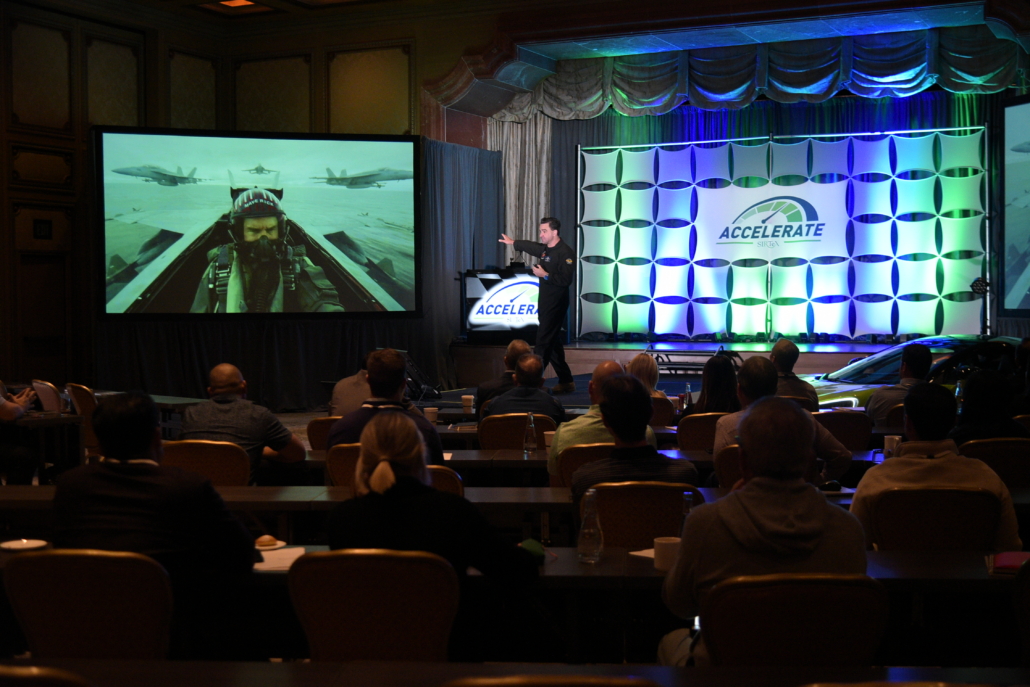
Red Team Workshop for Leadership: Stress-Test Your Strategy Before Reality Does
A red team workshop for leadership is a structured session where an independent group pressure-tests your most critical business strategies by challenging assumptions, probing for hidden risks, and exposing blind spots before you commit resources and reputation. In the fighter pilot community, we say it this way: shoot holes in the plan, not the aircraft. If you have a strategy that your team has agreed on but never truly challenged, this is the intervention that turns a hopeful plan into a resilient one.
Shoot Holes in the Plan, Not the Aircraft
In the world of fighter pilots, no one flies a mission without first wargaming the plan. We anticipate enemy moves, identify potential points of failure, and build contingencies for what happens when things go wrong. Every single mission, without exception, goes through a red team review before we strap in.
Business leaders, on the other hand, often commit millions of dollars and countless hours to a strategy without ever putting it under real pressure. They mistake agreement for alignment and a good presentation for a resilient plan.
I have seen it hundreds of times. Christian “Boo” Boucousis, CEO of Afterburner and former Royal Australian Air Force F/A-18 Hornet fighter pilot, sits down with a leadership team. The strategy deck is polished. The numbers are compelling. Everyone in the room nods along. Then he asks one question: “Who in this room has been specifically asked to find the flaws in this plan?” Silence.
That silence is the most expensive sound in business. Because every flaw that goes undetected in the planning room will be discovered in execution, and by then, the cost of fixing it has multiplied by an order of magnitude.
A red team workshop applies the same mission-ready discipline to your business strategy. It is a safe-to-fail environment where you can discover your strategy’s weaknesses before your competitors do, ensuring your team is prepared to execute with confidence.
What Is a Leadership Red Team Workshop?
Red teaming is Step 6 of the FLEX (FLawless EXecution) six-step mission planning process. It is the final and arguably most critical step before a plan moves from the planning room to the real world.
In the FLEX framework, a red team review is a break-it-down, find-the-flaws stress test of the plan conducted by a totally fresh set of experienced eyes. If a key specialist cannot be included in the planning team, make sure they are on the red team. Red teaming manages one of the biggest threats to planning: our cognitive biases and beliefs, the things that prevent us from seeing our own flaws.
Here is the thing most organizations get wrong about planning. They build the plan with the same team that will execute it, using the same assumptions they have always used, and then call it done. That is like a fighter pilot planning a mission and never asking anyone outside the cockpit whether the plan makes sense. We would never do that. And the reason is simple: the biases baked into the planning process are invisible to the people doing the planning.
The red team interaction is deliberately simple. The red team says: “Have you considered XYZ?” The planning team says: “Thank you.” No debate. No defense. You take on what is useful. You discard what is not. You challenge the plan before you are challenged on your results.
The Four Biases Red Teaming Destroys
At its core, red teaming is a psychological countermeasure. It acknowledges that people are prone to overconfidence, groupthink, and shortcuts in reasoning. The specific biases it targets are well documented.
Planning fallacy. First identified by Daniel Kahneman and Amos Tversky, this is the universal tendency to underestimate the time, resources, and risks required to complete a task, even when past experience proves otherwise. People plan as though everything will go right, ignoring the evidence that things rarely unfold smoothly.
Optimism bias. The natural tendency to overestimate the likelihood of positive outcomes and underestimate the probability of negative ones. Leaders want to believe their initiatives will succeed. Their jobs depend on it. That optimism can be motivating, but unchecked, it creates unrealistic timelines, inflated expectations, and brittle strategies.
Confirmation bias. Leaders and planning teams seek information that validates their assumptions while discarding evidence to the contrary. They find the information to support their perspectives, then project them into an overly rosy picture of the future.
Groupthink. The social pressure to conform to the dominant opinion in a team. Entire organizations can march confidently toward failure without realizing it because dissenting voices have been quietly suppressed.
Red teaming acts as a safeguard against all four. It introduces structured dissent: an independent group or individual is tasked with questioning the plan, probing assumptions, and imagining scenarios the original team might avoid. The goal is not negativity. It is resilience. When dissent is expected and institutionalized, individuals feel safer raising objections. Instead of being seen as disloyal or pessimistic, skeptics are recognized as contributors to the team’s success.
What Your Leaders Will Build in the Room
A red team workshop is not a lecture. It is an active, hands-on session where your leaders develop the specific skills needed to execute with precision in complex, high-stakes situations.
The Discipline of Challenging Assumptions
Every organization has its unquestioned truths and hidden biases. A red team workshop forces leaders to identify and challenge these assumptions using a structured framework. Instead of defaulting to groupthink, your leaders learn to ask the tough “what if” questions and explore alternative perspectives. This builds a habit of intellectual rigor that ensures your strategies are built on a solid foundation, not just on collective optimism.
The Ability to Pressure-Test Strategy in Real Time
The best time to find a flaw in your plan is before you execute it. The red team workshop is designed to do exactly that. By simulating a competitor or an internal adversary, the workshop helps your team pressure-test every aspect of a strategy. This proactive risk assessment moves your team from hoping a plan will work to knowing it has been tested against realistic pressure.
Clarity Under Pressure
In high-stakes environments, hesitation and uncertainty are costly. Red teaming equips your leaders to make critical decisions with greater clarity and confidence. When your team has already explored potential failure points and debated worst-case scenarios in a controlled setting, they are far better prepared to act decisively when it counts. This skill is central to the Flawless Execution approach, which turns complex challenges into clear, actionable steps.
Cross-Functional Communication and Alignment
Misalignment is a silent killer of execution. Red teaming breaks down communication barriers by creating a forum where every voice is heard. It gives permission to those who are naturally skeptical or see potential problems to speak up, turning their critical eye into a valuable asset. This process helps find points of friction between departments before a project even begins.
What to Expect From the Experience
The Prep: What Happens Before the Workshop
A successful workshop begins long before your team walks into the room. We work with you to define clear objectives and success metrics. This is not a generic, off-the-shelf training day. We take the time to understand your organization’s specific challenges, strategic goals, and existing team dynamics. We identify the core issues you want to address, whether it is a breakdown in cross-functional communication, a bottleneck in decision-making, or a strategy that has never been genuinely challenged.
The Mission: Immersive, Real-World Scenarios
This is where your team puts their skills to the test. Participants are immersed in dynamic, adaptive scenarios that mirror the high-stakes challenges they face every day. These missions test organizational resilience and decision-making under realistic pressure. Instead of talking about strategy, your leaders have to execute it against a thinking, adapting adversary.
The red team should consist of two to five people who are external to the planning team. They need situational awareness of the mission and the ability to suggest additional threats, resources, and lessons learned. They cannot be participants in the mission, and they must want the mission to succeed. The session must be held in person or over a live video link. Every time we have weakened that rule, it has not worked.
The Debrief: Actionable Feedback in Real Time
Immediately following each mission, your team enters a structured, blame-free debrief. This is the most important part of the learning process. Using ORCA (Objective, Result, Cause, Action), facilitators guide the conversation to uncover root causes and identify specific, actionable lessons. The feedback is immediate, relevant, and tied directly to the objectives defined during the prep phase.
The Follow-Through: Turning Insights into Action
The workshop does not end when the last debrief is complete. The real value comes from turning insights into a concrete plan for action. We help your team translate the lessons from the workshop into a clear execution plan with defined next steps and accountabilities. The Flawless Execution framework provides a repeatable process for planning, briefing, executing, and debriefing (PBED) that your team can apply to any project or initiative.
What This Looks Like in Practice
The companies that get the most from red teaming are the ones that use it on their highest-stakes initiatives, the strategies where the cost of getting it wrong is measured in millions.
Southwire ran a red team session that exposed gaps in their sales execution. The insights led to the adoption of briefing and debriefing practices that resulted in a 100% sales close rate and annual goal achievement within a month.
When IBM and VMware needed to pressure-test their alliance strategy, a red team workshop exposed misaligned incentives and stalled initiatives. The result: 117% of plan achievement within 90 days and a pipeline forecasted to deliver 150% of target.
DSI was facing serious market disruption during the COVID downturn. A red team workshop uncovered overlooked revenue risks and identified a viable pivot strategy, enabling the company to exceed revenue targets by 22% in 30 days and avoid downsizing entirely.
The common thread is not industry or company size. It is the willingness to invite challenge before the market delivers it for you.
How to Measure the Impact
Track Behavioral Changes First
The most immediate impact of a red team workshop is on how your leaders think. You will see a shift from automatic agreement to healthy skepticism. After the workshop, look for signs that your team is challenging assumptions more openly and asking tougher questions in strategy meetings. Track performance metrics like faster decision-making cycles and a reduction in costly project revisions.
Connect to Business Outcomes
The C-suite needs to see bottom-line impact. The ROI of a red team workshop becomes clear when you connect it to hard numbers: sales conversions, project completion times, cost savings from avoided mistakes. These workshops prevent costly failures and uncover hidden opportunities that would have remained buried inside unchallenged assumptions.
Build the System, Not Just the Event
The biggest mistake is treating a red team workshop as a one-off event. True organizational resilience comes from adopting it as a continuous discipline. Build regular “pre-mortem” sessions into your planning rhythm. Schedule red team reviews before every major initiative. Make the “Have you considered?” protocol a standard part of how your team operates.
One percent better every cycle. That is the compounding effect that separates organizations that learn from those that just repeat.
How to Choose the Right Partner
Evaluate the Facilitators and Their Framework
Focus on who will be in the room with your team. You need facilitators with credible experience in high-stakes environments where clear decisions matter. The workshop must be built on a proven, repeatable framework, not just a series of disconnected activities. This is what gives your team a shared language and a structured process they can use long after the workshop ends.
Ask the Right Questions
Before you commit, ask direct questions to vet a provider’s process. How do you customize scenarios to our specific challenges? What does your pre-workshop preparation look like? How do you ensure the debrief leads to actionable takeaways? What support do you offer after the workshop to help us implement change? A true partner will have confident answers focused on creating measurable results, not just delivering a memorable day.
Set Your Team Up for Success
Success starts before the workshop begins. Define clear objectives for the session. What specific plan are you testing? What team behaviors need improvement? Get stakeholder buy-in and select the right participants. The upfront work is what separates a good workshop from a transformative one.
Frequently Asked Questions
How is a red team workshop different from our usual strategic planning sessions?
Think of your typical strategy session as designing a car in a lab. Everyone agrees on the design, and it looks perfect on paper. A red team workshop is like taking that car to a test track with a professional driver who is paid to find its breaking point. We introduce a thinking adversary and realistic pressures to see how your plan holds up. It moves beyond theoretical discussion and group consensus to actively pressure-test your strategy in a controlled, safe-to-fail environment.
I am worried this will create conflict. Is the workshop adversarial?
The workshop is designed to be collaborative, not confrontational. The focus is always on making the plan stronger, not on criticizing people. The “adversary” is a role people play to challenge ideas, not to attack individuals. The entire process is guided by a structured, blame-free debrief that encourages open dialogue and psychological safety. In our language: it is not who is right, it is what is right.
What kind of business challenges are best suited for this workshop?
Red teaming is most valuable when the stakes are high and you cannot afford to get it wrong. It is ideal for pressure-testing a major new product launch, a market entry strategy, a complex merger integration plan, or a critical change initiative. If you have a plan that relies on a lot of assumptions or requires seamless cross-functional alignment to succeed, this workshop will quickly reveal any hidden risks or points of friction.
How much preparation is needed from my team before the workshop?
The heaviest lift is on our end, but the process is collaborative. Before the workshop, we work closely with you to understand your specific strategic goals and the exact plan you want to test. Your team’s main role in the prep phase is to provide the context we need to build a realistic and relevant scenario.
How do you ensure the insights lead to real change?
The workshop is designed to be a catalyst, not a conclusion. The real value is created in the structured debrief and the follow-through plan. We do not just identify problems. We facilitate a process to find their root causes using ORCA and create a concrete action plan with clear ownership. The experience provides your team with a repeatable framework for planning and debriefing that they can apply to any future initiative, turning a single event into a new, more resilient operating rhythm.
Christian “Boo” Boucousis is the CEO of Afterburner and author of The Afterburner Advantage and Flawless Leadership℠. A former Royal Australian Air Force F/A-18 Hornet pilot, he applies fighter pilot methodology to business execution across industries. Learn more at afterburner.com.
Explore Afterburner’s Red Team Workshop
Related: The ORCA Debrief Method: The Key to High-Performing Teams

