

Strategic Planning & Execution Workshops That Work
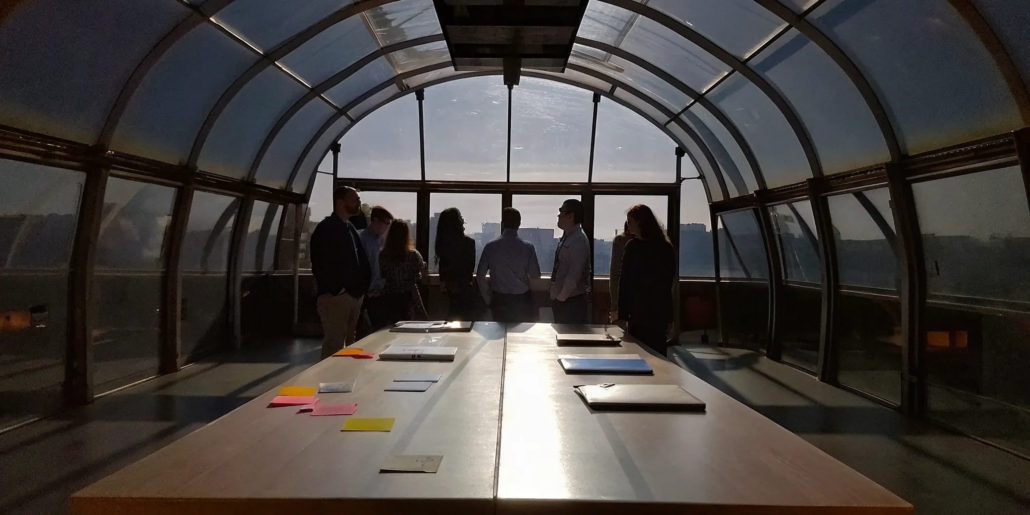
Strategic Planning and Execution Workshop: The Practical Guide
A strategic planning and execution workshop is an intensive, hands-on session where your leadership team builds a concrete system for turning strategy into daily action. It installs a shared framework for setting clear destinations, aligning teams, and creating a repeatable rhythm of planning, executing, and learning. If your organization has a strategy that lives in a slide deck but not in your team’s daily work, this is the intervention that closes the gap.
The Problem With Most Strategic Plans
Here is a question I ask a lot of leaders when we first sit down together: “Do you have a strategy?” Almost all of them say yes. Then I ask: “Can every person on your team describe it in one sentence?” The room gets quiet.
That silence tells you everything.
I have walked into a lot of companies over the past two decades. In hospitality. Logistics. Healthcare. Publishing. In almost every case, the senior team has a strategy. It is usually well-crafted. Sometimes it is beautifully designed. And it is doing absolutely nothing.
Christian “Boo” Boucousis, CEO of Afterburner and former Royal Australian Air Force F/A-18 Hornet fighter pilot, has seen this pattern across thousands of organizations. The problem is almost never the plan itself. It is the massive gap between the boardroom where the plan is made and the front lines where the work actually happens.
The fact is, strategy without execution is just a hypothesis. A well-intentioned guess about the future. And in business, you do not get points for good guesses. A strategic planning and execution workshop is designed to close that gap by installing the operating system your strategy has been missing.
What a Strategic Planning Workshop Actually Does
Think of it less as a meeting and more as a mission planning session.
A project plan is a single flight plan for a single trip. A strategic planning workshop installs the air traffic control system for your entire organization. It forces the tough conversations and critical decisions that are often avoided in day-to-day operations. It provides a structured environment to align leadership, define clear objectives, and establish a rhythm of accountability.
A good workshop does four things most organizations cannot do on their own.
It creates total clarity. When teams do not understand the strategy, or cannot see how their daily work connects to the big picture, they work hard and go sideways. A workshop translates your company’s mission into clear, cascaded goals that everyone on the team can articulate. One sentence. No document required.
It drives real accountability. Confusion is the enemy of execution. A workshop removes that confusion by defining who is responsible for what, by when. Not as a way to assign blame, but as a way to empower people to take ownership and make decisions confidently.
It installs a shared language. When your CFO, your CMO, and your COO are all using the same framework to plan and the same process to debrief, you stop having turf wars and start having real conversations about execution.
It builds a rhythm that compounds. No plan survives contact with reality. A good workshop installs built-in rhythms for review and adjustment, so your team can pivot without losing direction. That rhythm, run consistently, compounds into something much more powerful than any single strategic plan.
The FLEX Method: The Engine Behind the Workshop
At Afterburner, we build our workshops around FLEX, which stands for FLawless EXecution. It runs on four phases: Plan, Brief, Execute, Debrief (PBED). This is the same operating cycle the U.S. Air Force has used for over six decades, adapted for business by Afterburner since 1996.
The planning phase is built on what we call the Six-Step Mission Planning Process. This is where the workshop gets concrete.
Step 1: Set a mission objective aligned to your HDD. In FLEX, we do not set goals. We define High-Definition Destinations, or HDDs. An HDD is a crystal-clear picture of success, specific enough that there is no ambiguity about whether you have arrived. Not “grow the business.” More like “increase market share in the mining sector by 800,000 gallons per month by November 30.” One of our clients built exactly that HDD. They hit it in seven months and exceeded it. The test is simple: can everyone on your team describe it in one sentence? If not, it is not clear enough yet.
Step 2: Identify threats, internal and external. What is in the way? If you have more than five threats, the mission is too big. Break it down.
Step 3: Identify resources. For each high-priority threat, attach a resource. Fight optimism bias deliberately. Most leaders overestimate what they can achieve and underestimate what it will take.
Step 4: Evaluate lessons learned and make a Go/No Go call. Review ORCA (Objective, Result, Cause, Action) actions from previous missions. Do the resources outweigh the threats? If yes, go. If not, scale down. This is a real decision point, not a formality.
Step 5: Build your course of action. Who does what by when. Collaboratively. Binary. No “sort of” in execution.
Step 6: Build contingencies and Red Team the plan. A contingency has three parts: the event, the trigger, and the action. Then invite challenge. Red teaming is a deliberate process of asking an independent person to stress-test the plan, probe assumptions, and expose blind spots. The interaction is simple: “Have you considered XYZ?” “Thank you.” No debate. No defense. Challenge the plan before you are challenged on your results.
The cascade is the chain reaction that makes everything connect: HDD shapes objectives. Objectives focus actions. Actions generate impact. When this cascade works, every action on every team connects upward to the destination. When it breaks, teams execute energetically toward nothing in particular.
Dan McAtee used this exact process when he became president of a major international steel company with operations in 35 countries. The Afterburner team helped him build a shared HDD with everyone who had a lever to pull. McAtee called it a 75 percent plan, and that was enough. When the 2008 financial crisis hit, his company’s demand dropped by 20 percent, but they still grew at 5 percent because their people understood the HDD and could execute and adapt locally.
You can dig deeper into the full FLEX methodology here.
What Your Team Actually Walks Away With
A strategic planning workshop is not a lecture. It is a working session where your team applies the FLEX framework to your real business challenges. Here is what changes.
A Strategic Mindset, Not Just a Strategic Document
Thinking strategically is a discipline, not a talent. Your team will learn to cut through noise, set clear priorities, and connect daily tasks to the company’s long-term destination. This means learning to ask the right questions: What is the mission? What does success look like? What is in the way? What do we do about it? That framework, internalized, transforms managers into leaders who guide their teams with purpose and clarity.
A Shared Execution Operating System
A brilliant strategy is useless without a reliable system to implement it. Your team will learn the FLEX cycle, Plan, Brief, Execute, Debrief, as a repeatable process for getting work done. The Brief phase alone is transformative. We use the BRIEF mnemonic: Big Picture (why this mission matters), Restate the Mission Objective, Identify Threats and Resources, Execution (who does what by when), and Flexibility (contingencies). Nobody leaves a brief with unanswered questions. That is the non-negotiable rule.
Alignment That Actually Cascades
Organizational misalignment is one of the biggest barriers to success. When departments have competing goals or individuals cannot see how their work contributes to the bigger picture, momentum stalls. In the workshop, your leaders will learn to cascade the strategic vision from the HDD down through mission objectives to daily actions. The result is an organization where every person can trace their Tuesday afternoon task upward to the company’s destination in two steps.
A Debrief Habit That Compounds
The ORCA debrief is where the learning lives. After every mission, your team runs four questions: What was the objective? What actually happened? What caused the gap? What is the one action we take next? This habit, run consistently, produces one percent improvement after every cycle. That compounds to thirty-seven times improvement in a year. Teams that only review when things go wrong repeat the same mistakes in slightly different packaging.
Who Needs This Workshop?
C-Suite and Executive Teams
Executive teams set the course. A strategic planning workshop transforms a high-level vision into a concrete plan with a shared HDD that every leader can articulate and act on. The outcome is a unified leadership team with a common language and a clear execution rhythm.
Senior Managers and Department Heads
Senior managers are the critical link between strategy and execution. They translate the C-suite’s vision into tangible tasks, and this is often where plans fall apart. A workshop gives these managers a practical framework for breaking down strategic goals, assigning ownership, and tracking progress using the X-Gap cadence.
Whole Teams
Strategy is a team sport. The most effective plans are those where everyone, not just the leaders, feels a sense of ownership. When entire teams learn the framework together, you create instant alignment and accelerate adoption. The strategy stops living in the boardroom and starts living in the culture.
Making Your Strategy Stick After the Workshop
The energy after a powerful workshop is real. The challenge is keeping it alive when everyone is back at their desks on Monday morning.
Turn Insights Into a Simple Plan
The first step is to translate the high-level vision into a plan so clear that every team member can answer three questions: What is our primary goal? What is my specific role in achieving it? What is the very next action I need to take?
Build an Execution Rhythm
A plan needs a pulse. A consistent cadence of structured briefs before action and disciplined debriefs after creates a continuous feedback loop. This rhythm keeps everyone aligned, surfaces problems early, and ensures the team consistently improves. It is the heartbeat of the Flawless Execution approach.
Sustain Momentum With Accountability
Initial enthusiasm for a new strategy is easy to generate but hard to sustain. The key is creating a culture of ownership. Start with clear communication from leadership that consistently reinforces the strategy’s importance. Celebrate small wins along the way. And protect the debrief habit. The organizations we have seen sustain high performance are not the ones that had the best offsite. They are the ones that built the debrief habit and never let it go.
For teams that want to accelerate this embedding process, our 90-Day Accelerator program takes the workshop output and installs it as a permanent operating system across the leadership team.
How to Choose the Right Workshop
A Proven, Actionable Framework
Theories are great, but you cannot execute a theory. Look for a workshop built on a simple, scalable, and repeatable framework. If the methodology seems overly academic or complex, it probably will not survive contact with the realities of your day-to-day business. The goal is to leave with a playbook, not just a pile of notes.
Experienced Facilitators
The person leading the room matters. You need someone who has actually led teams where the consequences of failure were real and immediate. That firsthand experience brings credibility and pragmatism that cannot be faked. These facilitators cut through the noise and focus on what works in the real world.
Customization and Follow-Through
Your organization’s challenges are unique, so a one-size-fits-all workshop will not cut it. The right partner will take the time to understand your specific goals, your team dynamics, and the obstacles you face. More importantly, what happens after everyone goes home? A single event rarely creates lasting change. Look for a commitment to post-workshop support, whether that is coaching, follow-up sessions, or longer-term programs.
Frequently Asked Questions
How is this different from the annual strategic planning meetings we already do?
Think of your typical planning meeting as creating a map. Our workshops do that, but they also build the high-performance engine your team needs to complete the journey. We focus less on creating a dense document and more on installing a simple, repeatable system for execution. The goal is to equip your team with a shared process for planning, communicating, and holding each other accountable, which turns your strategy into daily, focused action.
What does my team actually walk away with?
Your team leaves with two critical things: a clear, simple strategic plan that everyone understands and a shared framework for how to execute it. This is not just about a document. It is about building a new capability. They will have a common language for discussing priorities, a consistent rhythm for tracking progress, and the practical skills to keep the entire organization aligned and moving forward.
Our biggest challenge is getting different departments to work together. How does a workshop fix that?
Misalignment is a common and expensive problem. A workshop addresses it by creating a single source of truth for your company’s priorities, the HDD. By guiding your leaders through the Six-Step Mission Planning Process, we help them define clear objectives and clarify roles and responsibilities for everyone involved. This process removes ambiguity and ensures that every team is aiming for the same target.
We have tried new initiatives before that lost momentum. How do you ensure this strategy sticks?
A strategy fails when it is treated as a one-time event. We focus on building a sustainable execution rhythm, a cadence of communication and accountability that becomes part of your team’s weekly and daily habits. By teaching a simple framework for briefing before tasks and debriefing after, we help create a culture of continuous improvement that keeps the strategy alive and adapting to reality.
Is this type of workshop only for our executive team?
While we often start with executive teams to establish the high-level vision, the real impact happens when you involve leaders at every level. When entire teams learn the framework together, you create instant alignment and accelerate adoption across the organization. This ensures the strategy does not just stay in the boardroom. It gets translated into action on the front lines where the work actually gets done.
Christian “Boo” Boucousis is CEO of Afterburner and a former Royal Australian Air Force F/A-18 Hornet pilot. He is the author of The Afterburner Advantage and Flawless Leadership℠. Learn more at afterburner.com.
Explore Afterburner’s Strategic Planning Workshop
Related: The ORCA Debrief Method: The Key to High-Performing Teams

